Exhibitions
Photography after certainty
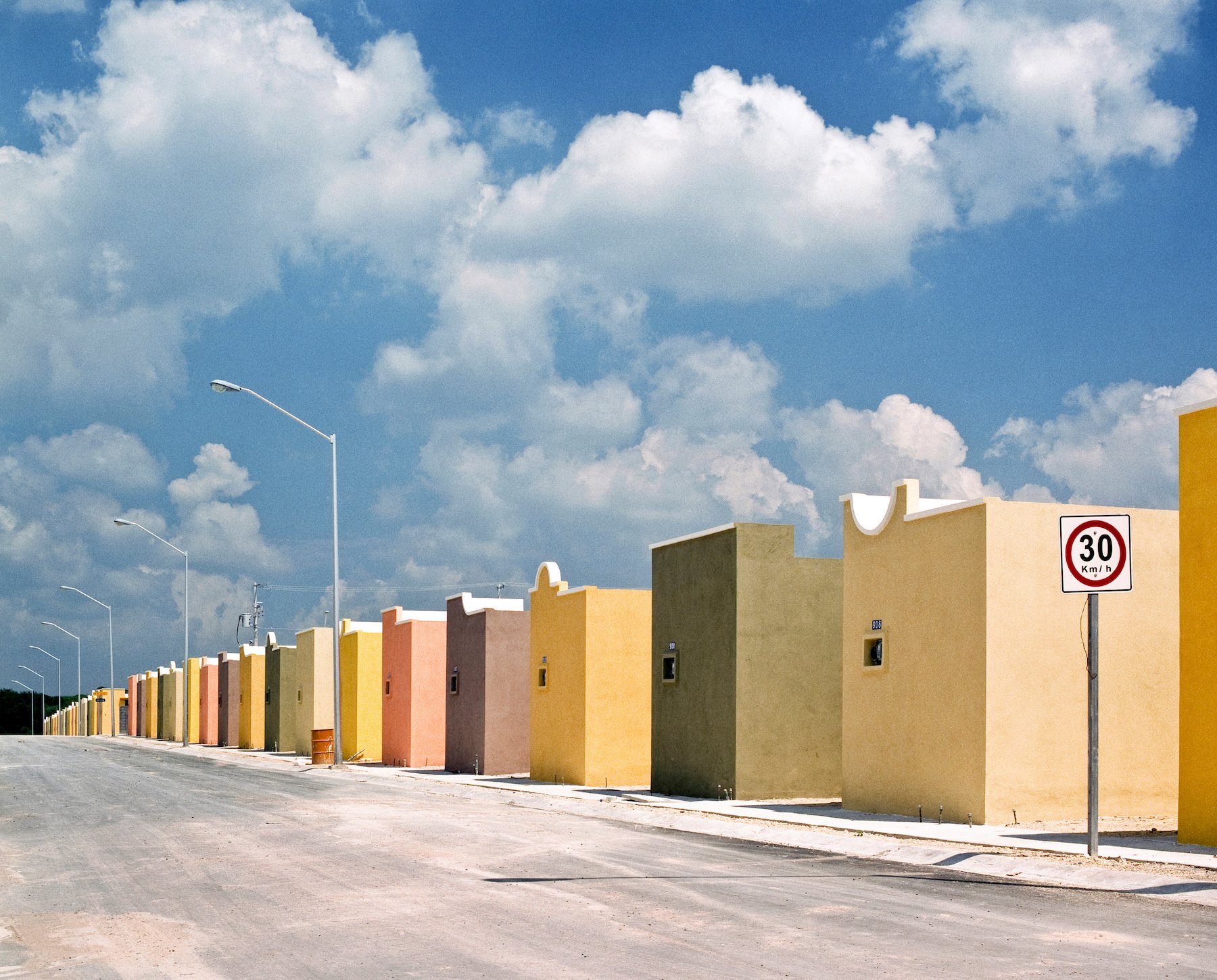
What happens when we stop fully trusting what we see? This question runs through Hyperlinks: Alejandro Cartagena 2005-2026 , an exhibition that brings together two decades of work by the Mexican photographer at Patricia Conde Gallery, in Mexico City, from September 3, 2026 to January 16, 2027.
Cartagena belongs to a generation that has inherited the documentary tradition of the 20th century, but has chosen to question its certainties. He himself has defined it as "the generation of doubt." From Suburbia Mexicana and Carpoolers to Rivers of Power , his work examines the urban, labor, and border structures that determine contemporary life, but also the mechanisms through which photography constructs our perception of that reality.
Accumulation and repetition are among her main tools. In series like Accumulations or in her research with institutional archives, Cartagena demonstrates that a single image can tell a story, but that the sum of images reveals patterns, relationships, and power structures that remain hidden at first glance. The archive, far from being neutral, also becomes a territory that must be interrogated.
The exhibition traces this process from analog photography to the digital world and artificial intelligence, including a conception of the photobook as a narrative space. In her hands, the images function not only as individual documents, but as pieces that acquire meaning through their interrelationships.
The recent foray into artificial intelligence takes this reflection into new territory. If an image can represent something that never happened, photography definitively loses its status as irrefutable proof. Cartagena uses this uncertainty to emphasize an idea that was already present in his early work: photography has never simply been about recording the world.

You may be
interested
...