
Opinion
The last photograph
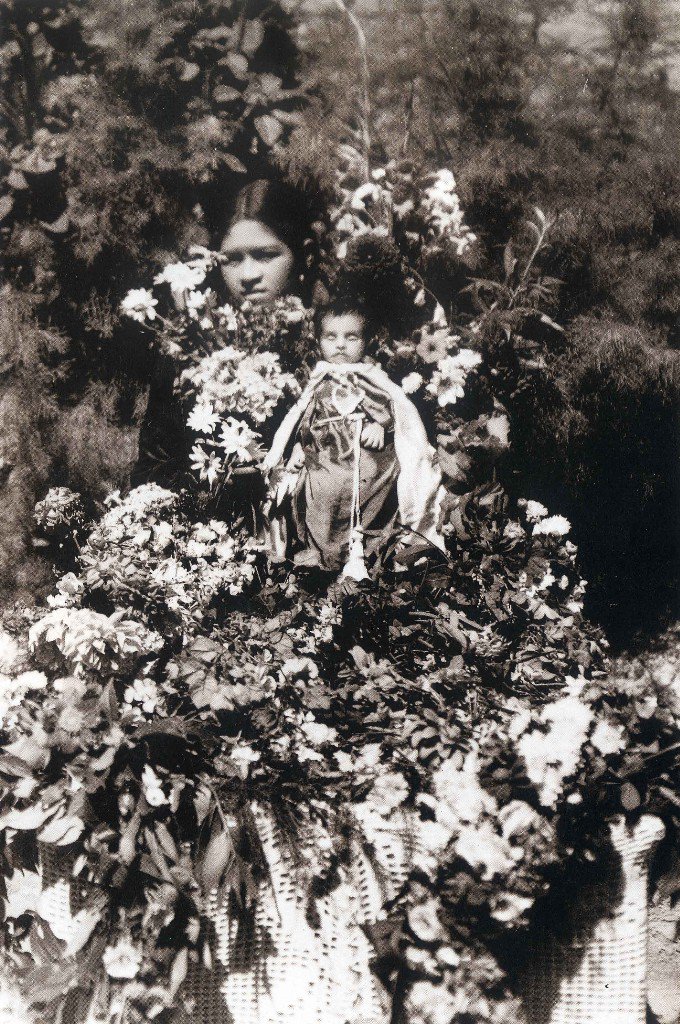
There was a time when a photograph could be much more than a portrait. It could become the only image of a person, the last link to someone who had just died, and sometimes the only way to preserve their presence within a family. In 19th-century Mexico and the first decades of the 20th century, photographing the deceased was part of mourning rituals and a particular way of confronting death. Among these images, those of deceased children, popularly known as "angelitos" (little angels ), stand out: bodies dressed, adorned with flowers, and portrayed with a solemnity that today might seem unsettling, but which at the time reflected a deep religious, familial, and emotional tradition.
Post-mortem photography did not originate in Mexico. From the earliest years of photography, death also became a subject that could be captured by the camera. In an era when having one's portrait taken was a privilege not available to everyone and when infant mortality was high, death could, paradoxically, be the opportunity for a family to obtain an image of one of its members. The portrait of the deceased thus occupied a space that until then had belonged primarily to painting and other forms of representation.
In the Hispanic world, there were precedents. The pictorial tradition of the so-called crowned nuns, which originated in Spain and developed with particular intensity during the American viceroyalty, had established a relationship between representation, ritual, and death. Photography inherited some of these visual codes and transferred them to a much more accessible medium. The camera allowed for the preservation of a presence that death had taken away and offered families a tangible image for remembrance.
In Mexico, this practice gained particular prominence in the mid-19th century and continued, in different forms and with varying degrees of intensity, throughout the first decades of the 20th century. Photographers would sometimes visit homes or funeral venues to take the final portrait. This was not necessarily a photograph intended for public display, but rather an intimate, family image, conceived as a memento and as part of the funeral ritual itself.
The tradition reached one of its most unique expressions in children's portraits. The death of a child was interpreted within popular religious belief through the figure of the little angel . The young age of the deceased allowed them to be imagined as a pure being leaving the earthly world to reach the celestial one. Photography then did not merely record a lifeless body: it constructed a symbolic image of that transformation.
Flowers, wreaths, candles, and white dresses all held specific meanings. White evoked the purity of childhood; flowers could allude to paradise and the fleeting nature of existence; candles introduced the dimension of light and eternal life. Intertwined hands and carefully arranged bodies contributed to creating an image of serenity. In some cases, the child appeared reclining, as if asleep; in others, seated or surrounded by family members, flowers, and religious elements.
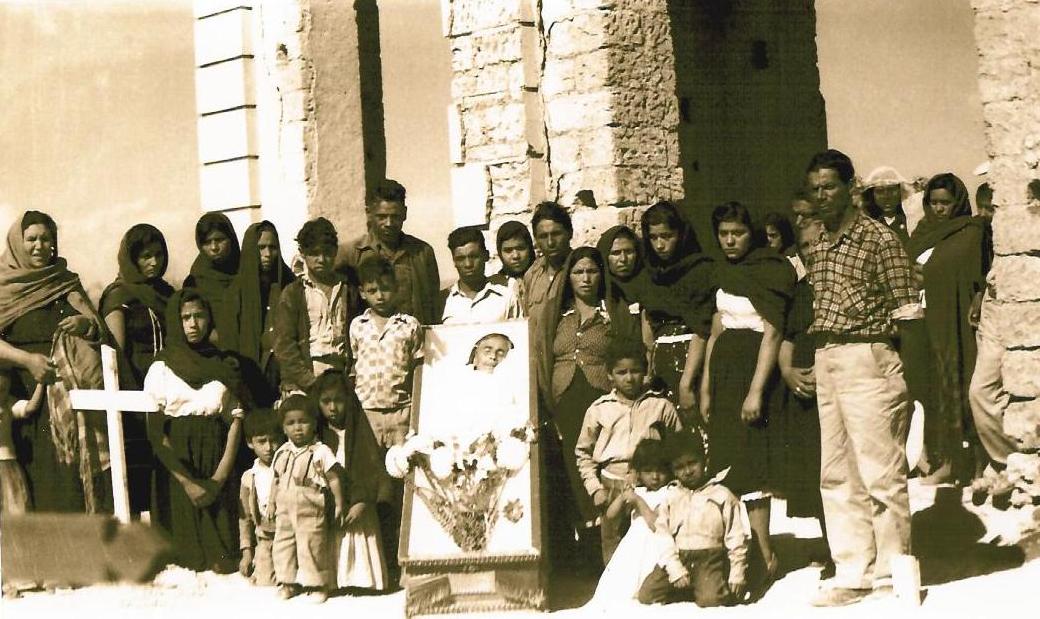
Composition, therefore, was of fundamental importance. The photographer did not merely document the corpse, but participated in constructing a scene intended to preserve an identity. The body was dressed in its finest clothes and placed in a carefully prepared space. The result could resemble a portrait of someone asleep, suspended between presence and absence. It is precisely there that much of the power of these photographs lies: in the tension between the physical evidence of death and the family's desire to keep the memory alive.
Among the photographers associated with this tradition, Romualdo García, born in Guanajuato, stands out. His extensive archive is now one of the fundamental testimonies for understanding Mexican society of his time. Alongside him, names like Juan de Dios Machain, José Antonio Bustamante Martínez, and Rutilo Patiño contributed to developing different forms of representing the deceased, especially in the field of children's photography.
The practice known as " child death" was not, however, limited to a single social group. Although economic means limited access to photographic portraits, there is evidence from various sectors of Mexican society. The photographer's presence at the funeral reveals the extent to which photography had begun to be incorporated into family rituals and to modify the relationship between memory and representation.
In the 1920s and 1930s, Mexico underwent profound social and cultural transformations. Modernization, changes in funeral customs, and new health practices gradually displaced this type of imagery. Family photography became increasingly associated with life events—births, celebrations, marriages, travel—and less so with death. At the same time, certain health and legal restrictions contributed to limiting some traditional funeral practices.
The physical relationship between families also changed. The expansion of mail and communication networks allowed photographs to circulate among geographically separated relatives. In this context, a photograph could even serve as a testament to a death: an image sent to those far away allowed for communication and, at the same time, visually certified a loss. The portrait of the deceased thus became a piece of family memory and a document of a reality that those who were absent had not been able to witness.
The gradual disappearance of this custom did not, however, mean the disappearance of the photographs. Many remained stored for decades in family albums, and others later became part of public archives and collections. The General Archive of the Nation and institutions linked to Mexican photographic heritage preserve records that allow us to approach a practice that today may be difficult to understand from a contemporary perspective.
Images of child deaths force us to look at the past without mechanically applying our current categories. What might seem strange or even repulsive today was, for those families, a form of love, memory, and farewell. Photography didn't necessarily seek to defy death, but rather to make it bearable through an image. Where absence began, the portrait attempted to preserve a presence.
Mexico's relationship with death has produced a vast repertoire of rituals and representations throughout the centuries. The Day of the Dead, altars, offerings, and the incorporation of gastronomic and visual elements into the remembrance of the deceased are some of the manifestations that have survived to this day. Post-mortem photography belongs to another era and has practically disappeared as a social practice, but its images remain as traces of a different way of understanding grief.


You may be
interested
...