News
Bonart International launches its No. 3 with Colombia as the protagonist
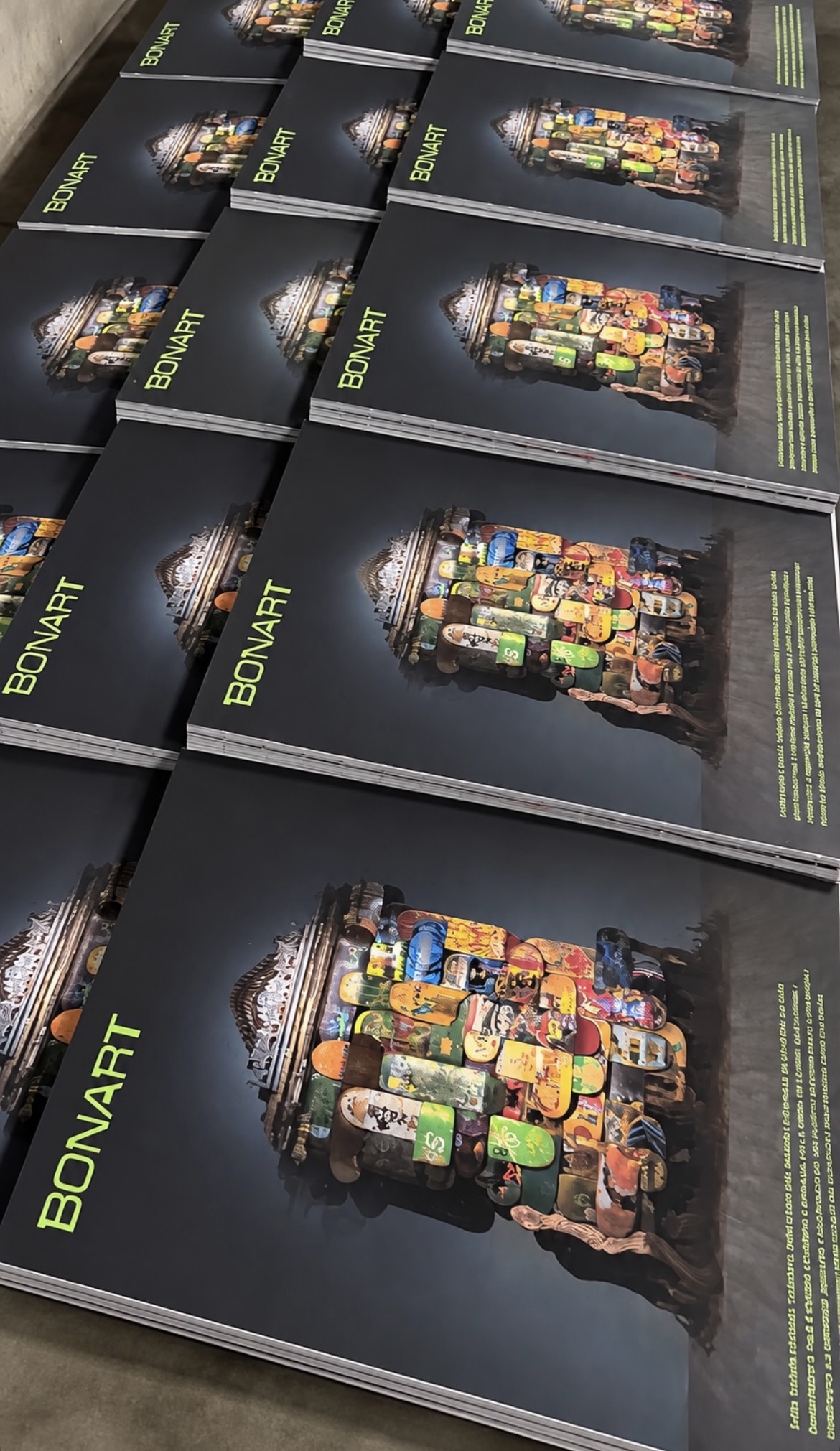
Colombia serves as the starting point for the launch of issue number 3 of Bonart International , a new edition that continues to broaden the magazine's scope to encompass diverse geographies, artistic scenes, and debates shaping contemporary creation. Bogotá and Medellín are the chosen venues for the presentation of a publication that finds one of its main editorial hubs in the Colombian context, both for the diversity of the proposals featured and for its commitment to fostering dialogue among artists, institutions, independent spaces, critics, and researchers.
Colombian presence permeates much of this new issue through a series of articles that offer insight into an art scene marked by the relationship between territory, memory, community, public space, and experimentation. The journey begins in Medellín with "From Medellín, Art and Community Unite ," by María del Rosario Escobar P., an exploration of the new forms of relationship between cultural institutions, citizens, and the land. This article is followed by Carlos Rojas Cocoma's perspective on "Body and Gaze in the Work of Leonel Castañeda" ; Sigrid Castañeda's analysis of the work of Sandra Rengifo and Kostas Tsanakas in "Echoes of Kwet Tul Hill "; and Silvana Tobón Cardona's contribution, " Alejandro Tobón: Monuments of the Future ."
This issue also delves into spaces and practices that have contributed to shaping contemporary Colombian culture from less institutionalized positions. Christian Padilla contributes "Altars and Counterculture ," while Jerson Murillo explores the trajectory of Espacio KB in "More Than 10 Years Without Sleep ." Alex Brahim, in "Producing the Border: Art, Mediation, and the Public Sphere," reflects on the relationships between creation, territory, mediation, and the construction of the public sphere. The Colombian section is rounded out by "Genius or Frankenstein?" by Carles Toribio, which examines the work of Xuper Negre in collaboration with the Museu Edgar Negret.
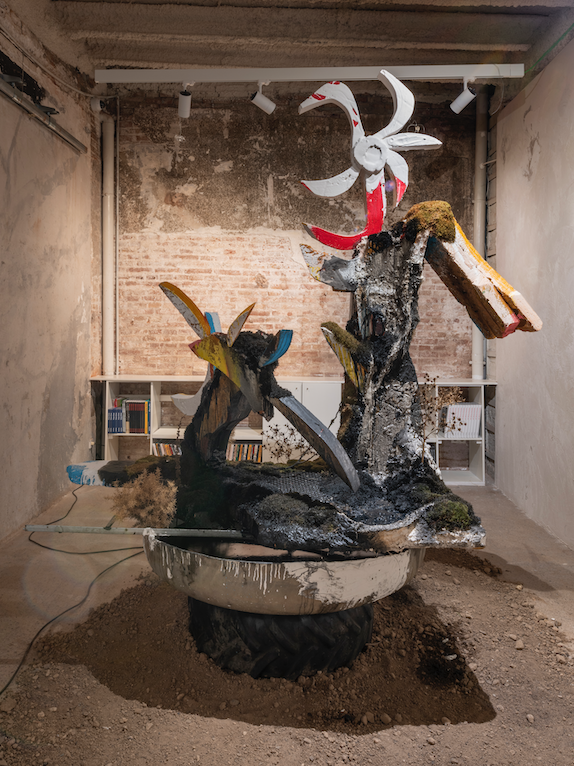
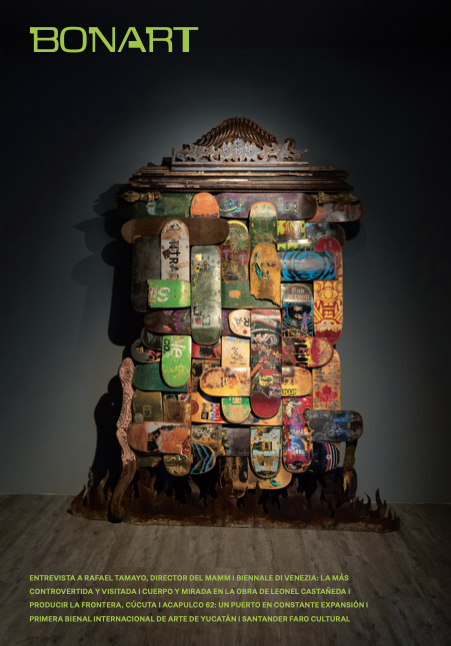
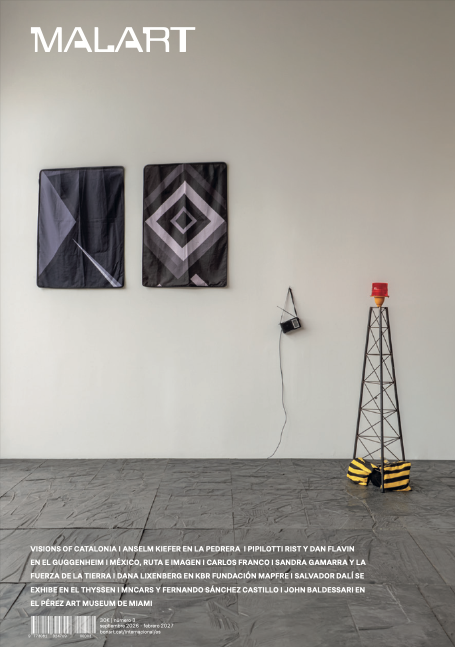
This special focus on Colombia also has a visual dimension. The two covers linked to the international edition prominently feature some of its leading figures. The cover of Bonart Internacional presents a work by Alejandro Tobón, while the cover of Malart Internacional features a piece by Sandra Rengifo and Kostas Tsanakas. These two visual proposals serve as gateways to an issue built upon a plurality of languages and approaches to contemporary art.
The dialogue with Colombia is completed with an interview by Ricard Planas Camps with Rafael Tamayo, director of the MAMM in Medellín, The internationalization of the MAM also with museums of the Global South , which focuses on the international dimension of museum institutions and the need to generate new networks of collaboration between territories traditionally located outside the major hegemonic circuits of art.
Beyond its focus on Colombia, issue number 3 of Bonart International maintains a decidedly international vocation. The opinion section brings together voices such as Marisol Salanova, author of *Allergy to Art Criticism* and *The IVAM as a Springboard* ; Fernando Castro Flórez, who presents *Something Rotten in Museums *; Sonia Borrell, with *From Marfa to London: Texas Crosses Borders* ; Diana Padrón, author of *Attempt to Laugh Out Loud (or Practical Aesthetic Laughter)* ; and David G. Torres, who closes this section with *To Quit* . These are diverse approaches that share a desire to question certain inertias of the art system and to reclaim the space of criticism as a tool for analysis.
The features section further expands the magazine's geographical and conceptual scope. Kekena Corvalán poses "Contemporary Art: Some Questions ," while Roberta Bosco analyzes the 2026 Venice Biennale in "The Most Controversial and the Most Visited ." César Martínez explores Acapulco 62: A Port in Constant Expansion , and Luz Massot addresses the birth of Mexico's first International Biennial of Contemporary Art, the Yucatán Biennial. These contributions are complemented by Rubén Ortiz-Torres's "Aliendigenism and Transtemporality ," which introduces a reflection on forms of temporal and cultural displacement in contemporary art.
The journey continues through diverse geographies and issues. Miguel Bertojo presents "The Coffered Ceiling, the Mudéjar Pearl" and "Tea Ceremony in Honor of Gaudí ," while Rosa Gutiérrez Herranz addresses the Santander Cultural Lighthouse project. Rosario Arteaga Abogabir writes about "Factories and Creative Spaces for Children ," and Óscar Cornago presents "Glosses and Postcards: Innocent Step ," a project by Rosa Casado and Núria Güell. Emilio Tarazona revisits the Fugaz experience in Callao , and Anna Pérez Milán proposes "The Right Not to Represent ," broadening the debate on the mechanisms of representation and the relationships between art, society, and identity.
The issue also includes an interview with Jesús Martínez Clarà and photographer Jacques Olivar, "The Cult of Beauty: Complexity and Truth ," a conversation that introduces into the publication issues related to the image, beauty, the photographic experience, and the tensions between appearance and truth.


You may be
interested
...