Exhibitions
Paulo Bruscky finds chance in Brusque
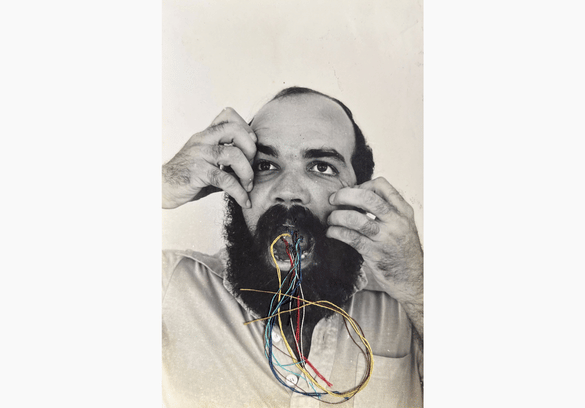
Coincidence can also be a form of creation. For Paulo Bruscky (Recife, 1949), one of the great pioneers of Brazilian conceptual art, chance, wordplay, and unexpected connections have been fundamental to his work since the 1970s. His career has been built precisely in that borderland where art, communication, and technology meet to generate new possibilities for thought and experimentation.
The Zé dos Bois Gallery in Lisbon presents, until September 30 , Bruscky in Brusque , an exhibition that revisits one of the most unique series from the extensive body of work by the Brazilian artist. The project originated from a trip Bruscky took in the early 1980s to Brusque, a city in the Brazilian state of Santa Catarina whose name bears a striking resemblance to his own. This seemingly anecdotal coincidence became the starting point for an investigation into identity, territory, and the poetic possibilities of communication.
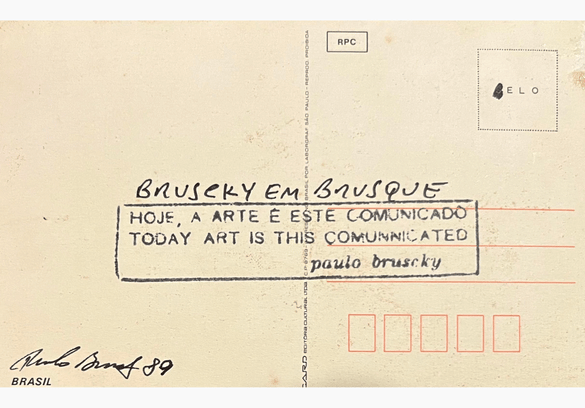
During that visit, Bruscky began collecting materials related to the city: postcards, photographs, information signs, street signs, and other elements found in public spaces. These objects, initially devoid of artistic merit, were later manipulated and reorganized to construct a series in which everyday reality is permeated by conceptual play. Bruscky in Brusque thus transforms a linguistic coincidence into an artistic operation based on observation, appropriation, and transformation.
The episode is particularly representative of a practice that Bruscky has developed over more than five decades. Since the early 1970s, the artist has explored visual and sound poetry, performance, the artist's book, film, installations, urban interventions, and new media, in addition to conducting significant research on Xerox art and fax art. His work is also closely linked to the process poetry and mail art movements, fields in which the circulation of messages, images, and objects becomes an essential part of the work itself.
In Bruscky's work, communication never appears as a mere instrument. It is, in itself, an artistic territory. The artist has used technologies and transmission systems that at different times were considered peripheral or foreign to conventional artistic practices to question the boundaries between original and copy, presence and absence, author and receiver. Faxes, photocopies, mail, and reproduction devices are thus incorporated into a language in which the circulation of information can be as important as the final image.
This experimental dimension is accompanied by a profoundly semiotic conception of creation. Bruscky doesn't necessarily seek literal meanings, but rather associations capable of opening up new interpretations. Play, chance, and coincidence function as mechanisms for producing meaning. A word can activate an image; an image can generate a shift; a found object can become a work of art through minimal intervention.
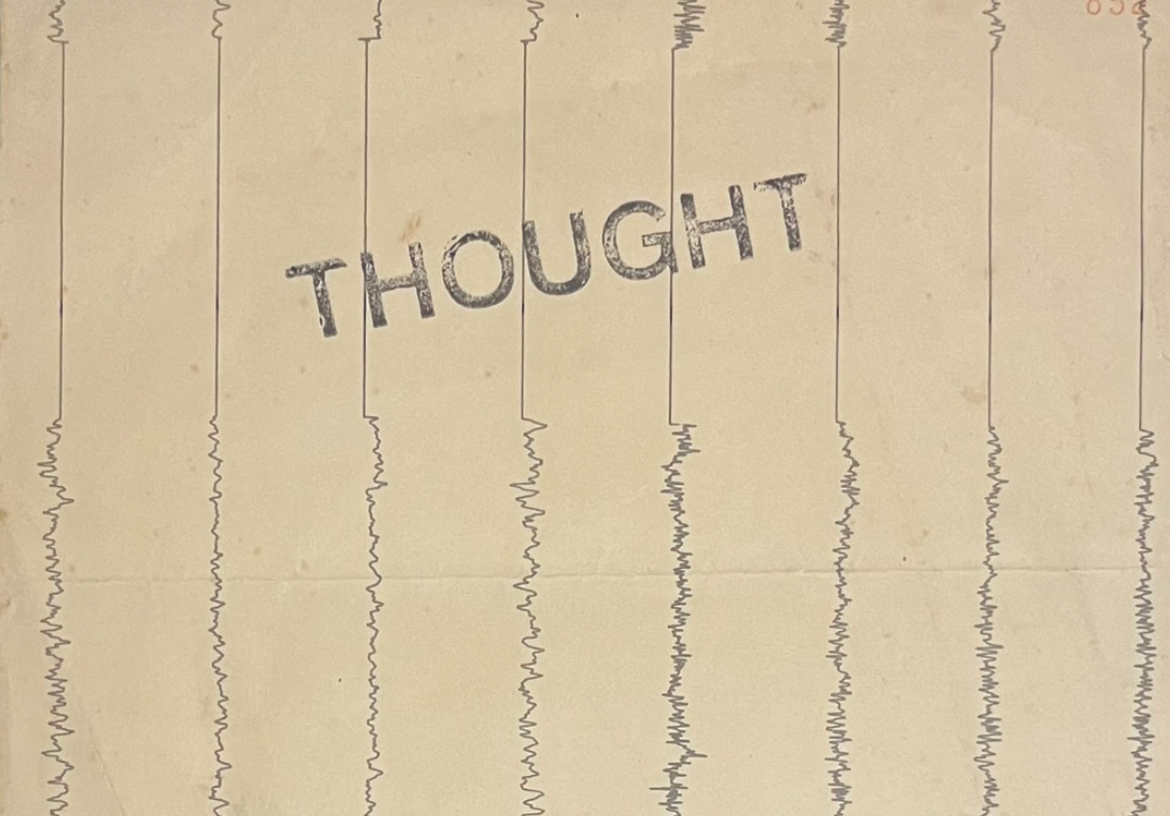
It is precisely this relationship between chance and logic that allows us to understand Bruscky in Brusque beyond the anecdote of its title. The similarity between the artist's name and that of the city acts as a trigger, but the true interest of the series lies in how Bruscky transforms this fortuitous encounter into a system of observation. The city becomes an archive, and its everyday elements become part of a personal cartography constructed from fragments.
The Zé dos Bois exhibition thus recovers a body of work in which the territory is not merely a setting, but an active agent of creation. Postcards, signs, photographs, and urban symbols cease to function as simple documents and become pieces in a conceptual game where reality and representation mutually influence each other.
Throughout his career, Bruscky has maintained this desire to experiment with the limits of art and with the channels through which a work is produced, transmitted, and received. Bruscky in Brusque encapsulates much of this methodology: starting from a coincidence, observing its possibilities, intervening on what emerges, and allowing the result to remain open to new interpretations.
You may be
interested
...