Exhibitions
Silence takes shape
Jordi Gich, Viktor Kostenko and Clàudia Mañas come together at Mosaic Art in an exhibition that vindicates slowness, matter and contemplation.
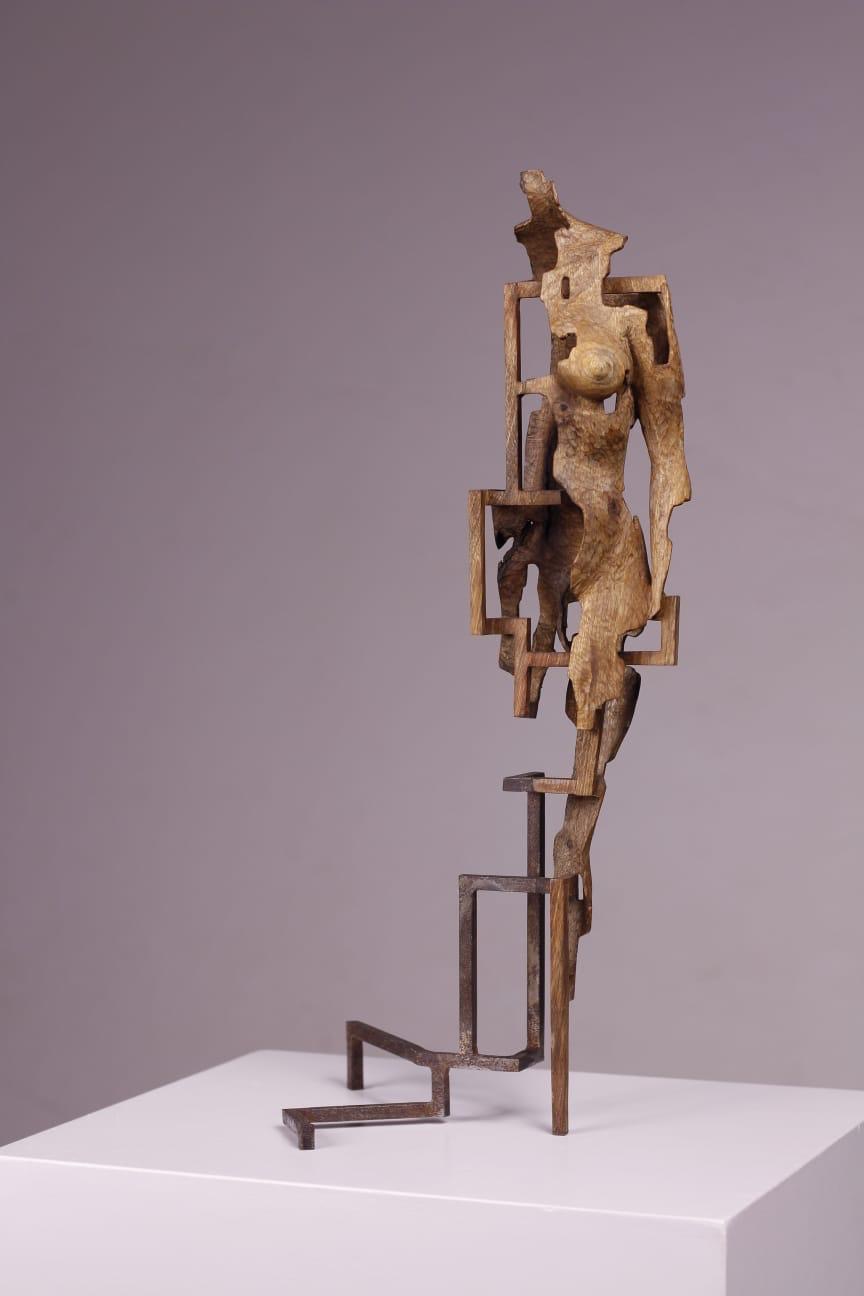
Silencis , the exhibition with which Mosaic Art inaugurates the new season, starts from the capacity of art to construct a territory of pause in the midst of contemporary speed. In the Girona gallery, the sculptures and works on paper of Jordi Gich dialogue with the photographs of Viktor Kostenko and the paintings of Clàudia Mañas in an exhibition curated by Carmen Simon that relates three apparently different languages based on the same attitude: looking carefully, trusting the process and letting the material reveal what it contains.
The exhibition, which can be visited until October 15, brings together pieces in which emptiness, light, horizon, surface and stillness acquire an almost physical presence. The silence it proposes is therefore not synonymous with absence. It is rather a state of attention, a mental space that allows forms to appear without the need to impose themselves.
In the case of Jordi Gich, this relationship with matter is literal. The artist works from the entire trunk and penetrates its interior, removing wood, hollowing it out and opening it up until the form seems to emerge from the very structure of the tree. His sculptures are not so much constructions as processes of subtraction. The void acquires as much importance as the wood that remains, because it is through these openings that air, light and outside space enter the work and transform it.
This same gesture of removing, eroding and revealing appears in the collages and grattages that complete his participation. On paper, Gich replaces the depth of the sculpture with fragmented surfaces, scratches, cracks and large dark concentrations. Texture thus becomes another form of memory of the material. His pieces seem to contain a slow time, the time necessary for the hand to insist on the material until it finds a form that was already there, but that had to be discovered.
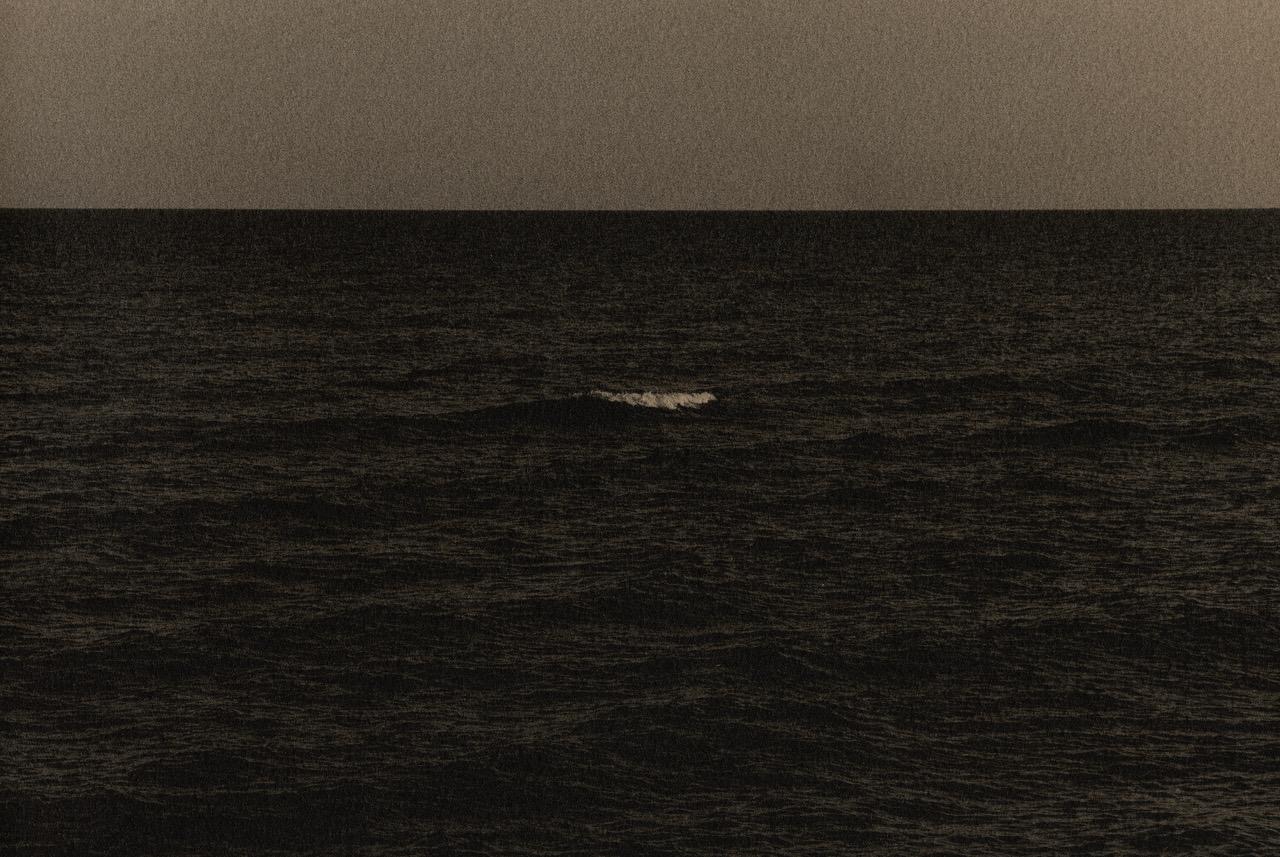
Viktor Kostenko's photographs transfer this experience to the landscape. The sea, a horizon line, an isolated architecture or an almost imperceptible presence are reduced to their most essential elements. Surface, line, repetition and stillness construct images in which space ceases to be simply a place to become a contemplative experience. Kostenko does not seem to seek the landscape so much as its minimal structure, that moment in which reality can be summarized in a line, a texture or a variation of light.
The frames are also part of this concept. Handcrafted by the artist himself, they do not function as a neutral boundary between the work and the outside space, but as a physical extension of the photograph. Their presence reinforces the objectual character of the pieces and at the same time establishes an unexpected link with Gich's sculptures: in both cases, the artist works with the material from the awareness of the craft.
Clàudia Mañas's painting introduces another way of understanding silence. Her landscapes, built from dark, earthy and contained ranges, start from recognizable places but move them towards a more ambiguous territory. Strips of land and sky, uncertain horizons and tiny figures reduce the human presence to almost a note within an immense space. The representation thus approaches abstraction and the landscape ceases to be a description to become an atmosphere, a sensation or an inner state.
It is at this point that Silencis finds its coherence. It is not simply a matter of bringing together three artists who work with different media, but of discovering the correspondences that appear when these languages share the same way of looking. The irregular grid and vertical openings of Gich's sculptures can dialogue with the isolated architectures or walls photographed by Kostenko. The black masses of his papers find continuity in the dark surfaces of the sea and in the almost nocturnal fields of Mañas. And the open verticality of the sculpture contrasts with the compact horizons of photography and painting.
This network of correspondences causes the works to stop functioning as independent presences and begin to construct a single perceptual space. Gich opens up matter; Kostenko suspends the horizon; Mañas reduces the landscape to its most essential beat. Three ways of approaching the void that end up speaking of the same need: to stop.

You may be
interested
...