Opinion
More than just simple esparto grass
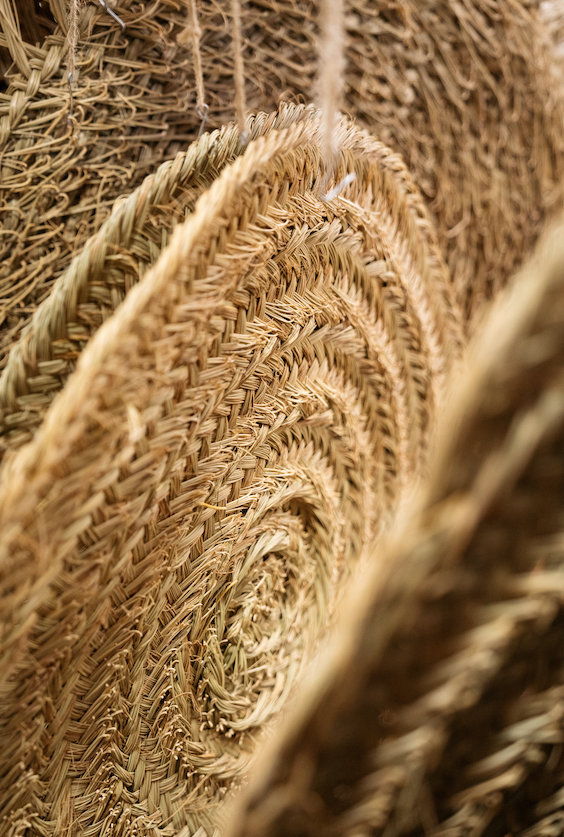
With traditional techniques and innovative proposals, Pedro Antonio Blanco (Úbeda, Jaén, 1968), master craftsman, sixth generation of a family saga dedicated to esparto grass since 1825, has turned Ubedíes Artesanía into an unusual model of successful micro-enterprise due to its links with art, fashion or design.
For his contribution to the transmission of a traditional craft and its recognition as intangible cultural heritage, Blanco received the National Crafts Award in 2025. "I revive traditional products made from esparto grass and other fibers—whether basketry, footwear, furniture—and create more contemporary ones," Blanco explains.
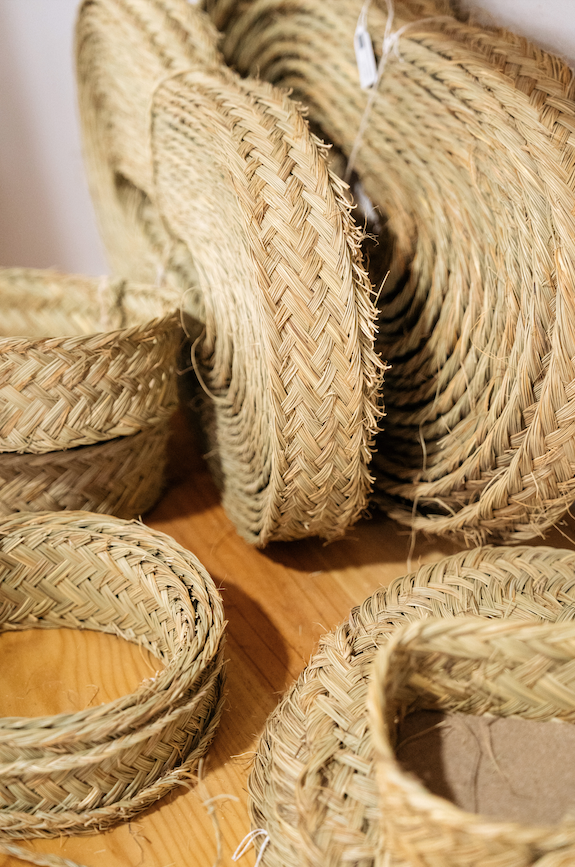
"I learned from my grandfather Pedro. After recovering the Úbeda carpets, which date from the 11th century, he was a supplier to the Paradores Network from 1928 through the mediation of Zenobia Camprubí, designer of the entity and wife of Juan Ramón Jiménez. Moreover, as he needed workers, he provided free teaching at the local school of arts and crafts."
Since 1946, "at the current workshop location, about 40 young people and one man who prepared the necessary braided strips or plaits worked. In the 70s, my father, Enrique, presented a project to standardize the first regulated training that existed in Spain and which was ratified by the Ministry of Education. I am one of the few with a degree in Artistic Esparto Weaving, five courses and a revalidation exam, analogous to an Art diploma."
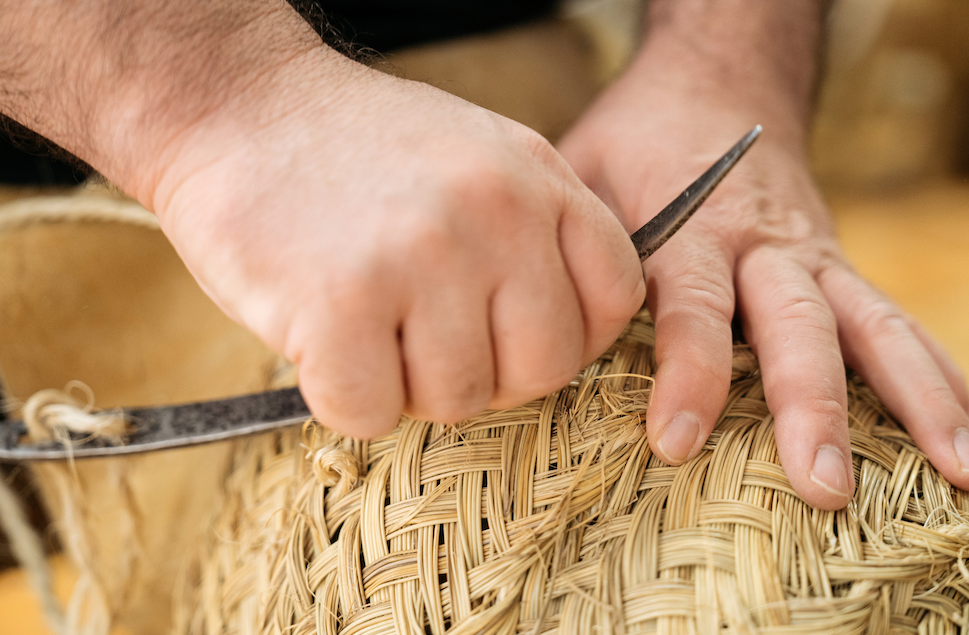
Plastic devastated the industry. "Without any sense of innovation, many workshops disappeared. We kept going for a while and then closed; even so, I've been here for 20 years now." In the meantime, "I studied drafting and rethought the trade. My father used to lay out 10 x 4 m rugs on the floor with pencil, paper, ruler, string, and nails; I use AutoCAD and print the pattern. I reduced his six-day process to 45 minutes..."
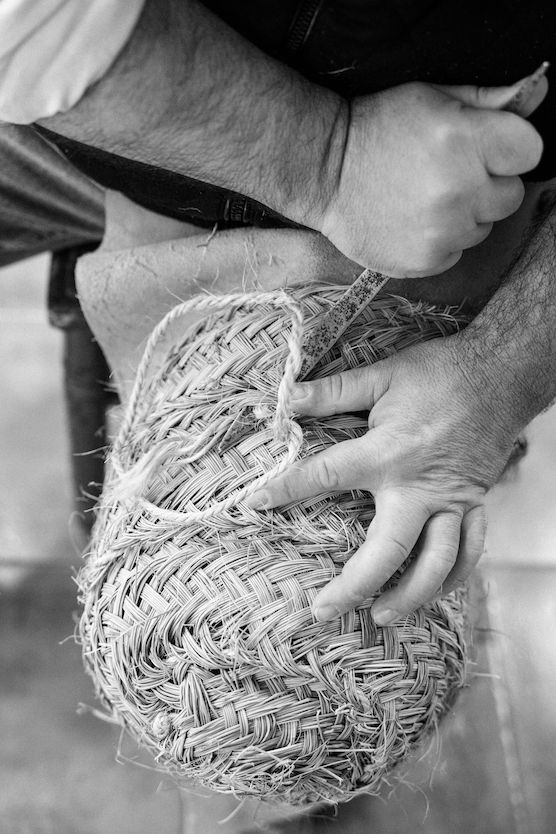
Blanco uses raw, cooked, or chopped esparto grass; coconut, seaweed, paper, vegetable gold—always alive with an unalterable golden hue—, rush, raffia… But also synthetic fibers, leather, recycled materials… “As for braiding, I use twine, with two strands of esparto to sew strips; folded cord; or flat ones like the tomiza, with three strands; the crizneja or clineja, with between five and seven strands of crushed esparto… From nine strands onward, always an odd number, it becomes a plait. I also use a square braid with four strands, the only one with even numbers.” Regarding stitching, “I use the stitch of the olive-crushing mats, the esparto grass stitch… depending on the final product,” he explains.
"I met Laure Julien, a French visual artist, in 2024. She commissioned me to create the base for a sculpture, Memory of the Trade , inspired by the snail seller. It was exhibited at the 2024 Paris Olympics and at Estampa (Madrid) last year. In another sculpture, winner of the Andalusia Crafts Award, I combined esparto grass, sisal, and the Fibonacci sequence."
"I have made suits, hats and accessories for the designer Leandro Cano —in fact, they have been shown at Cibeles or Paris Fashion Week—; or a bag for Moisés Nieto, a local designer… I reproduced The Punch and Judy Puppets , by García Lorca, almost 90 cm tall and articulated, in sisal and agave fiber. I used three strips to 'glue' shoulders and knees, like bullfighter jackets."
Blanco also supplies retailers and individuals in Japan, France, the United Kingdom, Germany, the USA, Latin American countries... "The truth is that society is beginning to value quality and sustainable differentiation; that is, natural products made with craftsmanship. Circularity is intrinsic to the activity; nothing is wasted," he asserts.


You may be
interested
...