Exhibitions
Dreaming of fire
María Abaddon transforms body, memory, and matter into hybrid landscapes.
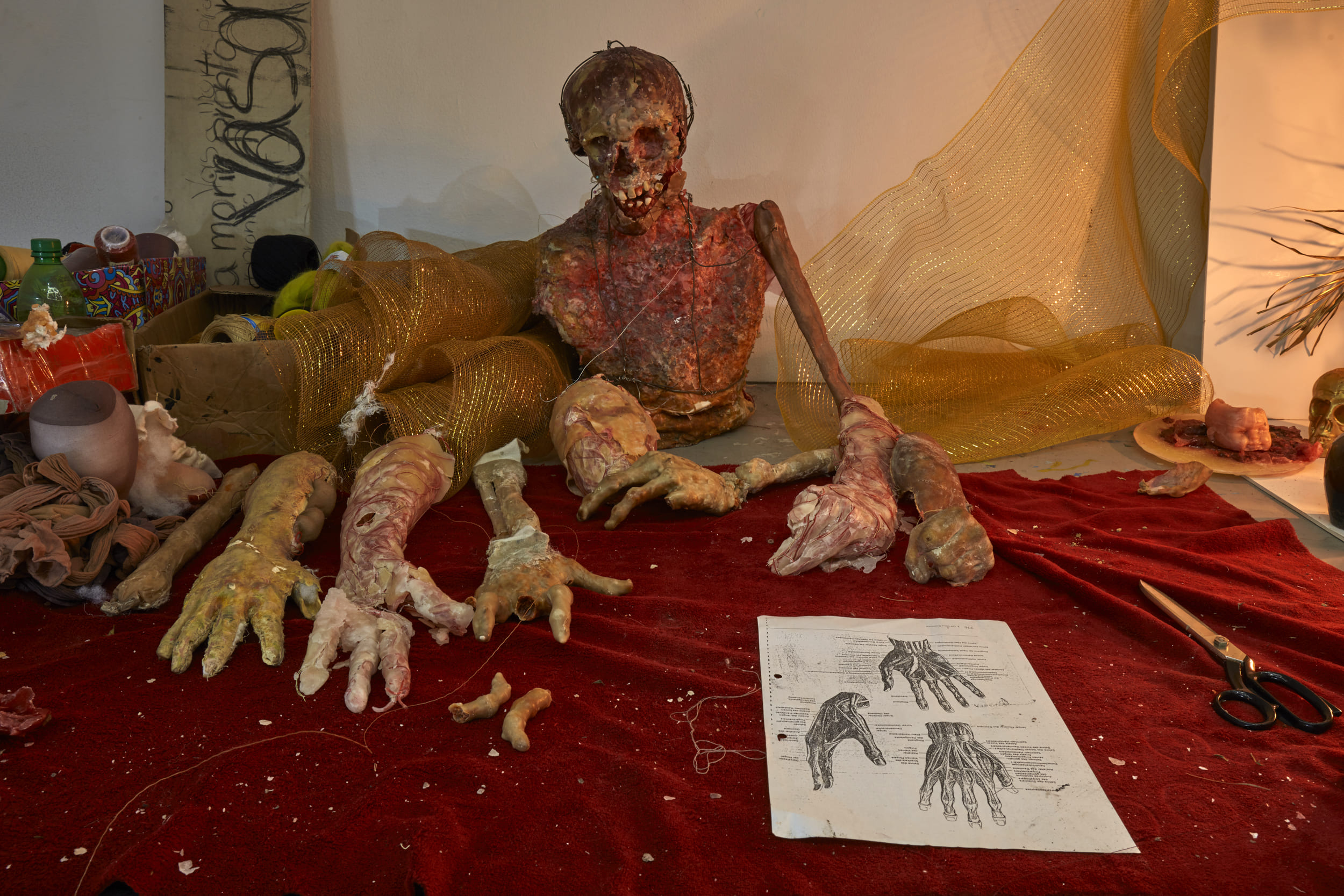
In María Abaddon's work, the body appears as a territory in transformation. Fragmented, vulnerable, and permeated by memory, it also becomes material for imagining other forms of existence. Under this premise, "Dreaming with Fire " brings together a selection of works created by the Peruvian artist between 2020 and the present at the Venancio Shinki Space of the ICPNA Cultural Center in Lima, marking her first solo exhibition in a Peruvian institution.
Curated by Miguel López, the exhibition offers a journey through pieces that evoke anatomical fragments, scenes of mourning, and organisms difficult to classify. Far from representing the body as a stable structure, Abaddon understands it as a space open to transformation, where the human coexists with the animal and the plant. Fragility, loss, and the traces of personal experiences permeate works that invite us to reflect on what remains when the body changes or disappears.
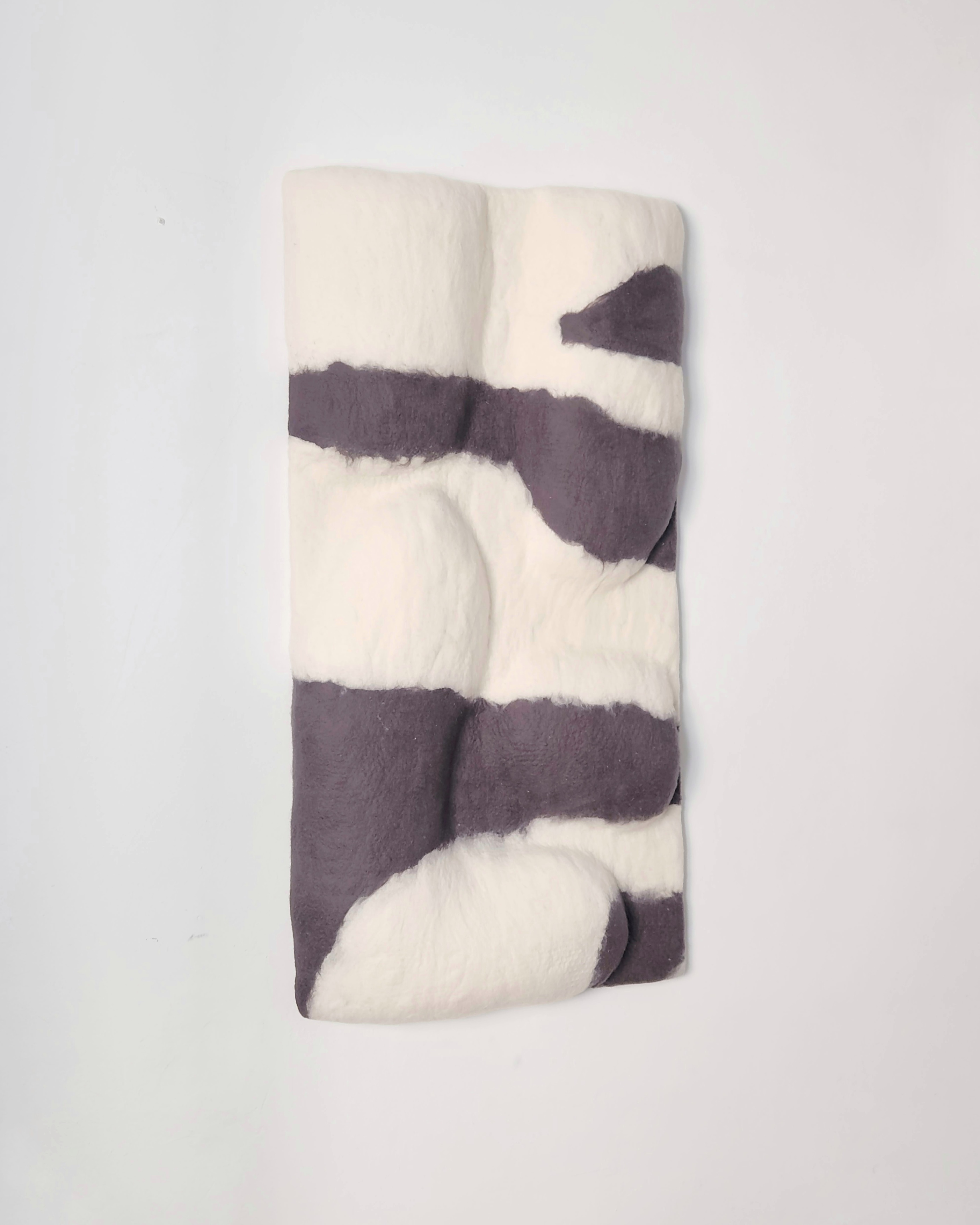
The artist constructs this universe through a combination of techniques and materials that expand the possibilities of sculpture. Wet felt, crochet, embroidery, and soft sculpture coexist with low-tech elements, sensors, and electronic devices. The result is organic forms and strange architectures that seem to exist halfway between a living organism, an imagined landscape, and a remnant from an uncertain future.
In these pieces, skin and viscera cease to be merely anatomical references, becoming surfaces from which to explore violence, fragmentation, and transformation. Abaddon thus develops a kind of fantastical anatomy in which animal and plant forms blend with imagery from popular culture and science fiction. His sculptures can simultaneously feel familiar and unsettling, as if they belonged to a world we know but that has undergone a mutation.
The textile dimension occupies a central place in this research. Thread, weave, and soft surfaces allow the artist to construct bodies that escape traditional sculptural rigidity. They are organisms that seem to grow, deform, or survive, establishing relationships of coexistence between different species and materials. Technology also introduces an almost sensory dimension to these landscapes, reinforcing the feeling of being in the presence of bodies that are constantly changing.
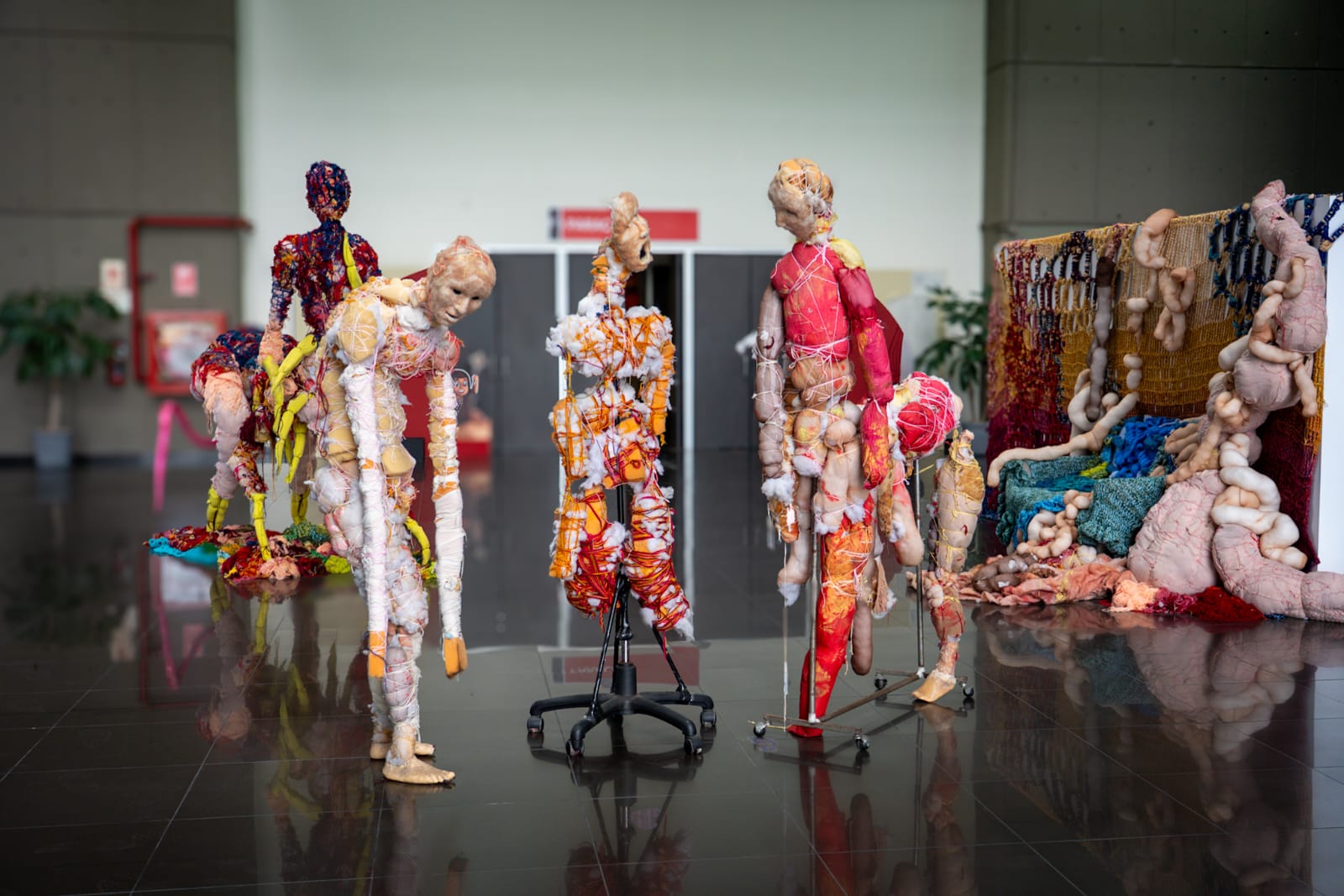
Abbadon's 'Soft Inside' exhibition a few months ago.
References to fungal fantasies, dystopian narratives, and post-collapse imaginaries broaden the exhibition's interpretive scope. Rather than simply depicting destruction, Abaddon posits the possibility that new forms of life may emerge after the rupture. The fragmented body then ceases to be merely an image of loss and becomes, in turn, the starting point for transformation.
Born in Lima in 1988, María Abaddon is a visual artist, sculptor, and textile designer. A graduate in Fine Arts from the National Autonomous Higher School of Fine Arts of Peru, her practice explores experiences related to religion, motherhood, ritual, and death. In Dreaming of Fire , these personal concerns take on a broader dimension, constructing a universe where the intimate meets the fantastical.
The exhibition, which can be visited until September 27, 2026 at the ICPNA Cultural in Lima, thus poses a question about our own bodily condition: what remains of us when matter is transformed and how far can a body go before becoming something else.
You may be
interested
...