Exhibitions
Miró, art and territory are found in twenty museums in Catalonia
The Art Museums Network of Catalonia is promoting a series of dialogues to commemorate the 50th anniversary of the Joan Miró Foundation and explore new readings of the artist's work and thought.
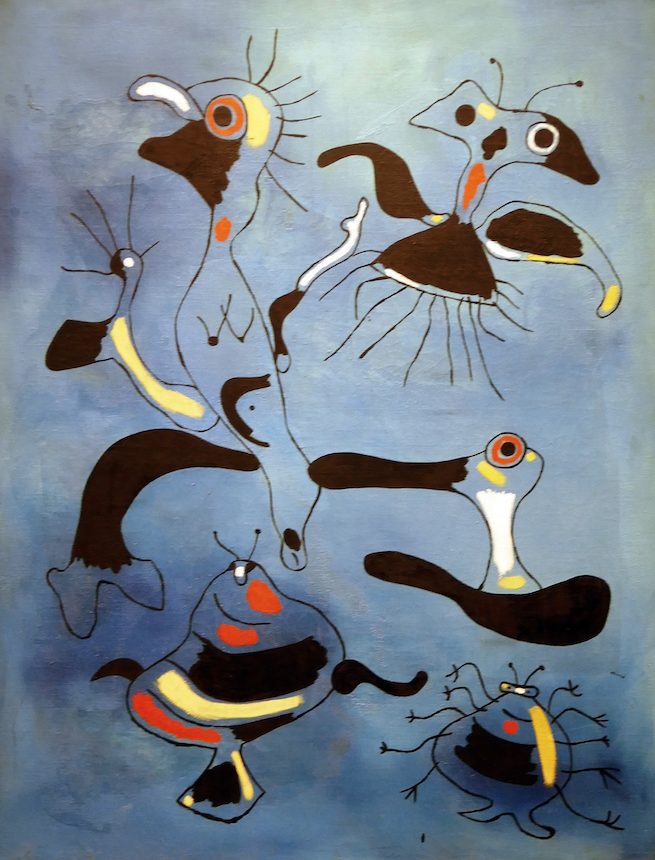
The figure of Joan Miró will once again tour Catalonia this autumn through Miró. Art and Territory , a cycle of twenty dialogues that will connect the artist's creative universe with the collections, stories and lines of work of museums across the country. The initiative, promoted by the Art Museums Network of Catalonia, is part of the commemoration of the fiftieth anniversary of the Fundació Joan Miró and will take place between September and December.
The project takes over from Tàpies. Art and Territory , celebrated in 2024 as part of the Tàpies Year on the occasion of the centenary of the artist's birth. That first experience consolidated a model of shared work between the museums of the Network, which is now being resumed to approach Miró's work from a collective and contemporary perspective.
More than a strictly chronological journey through the artist's career, the cycle proposes to establish connections. Twenty museums will relate their own collections and discourses to different aspects of Miró's work and thought. The result will be a map of complicity, influences and resonances that will allow us to review Miró's legacy from the cultural and territorial diversity of the country.
Each meeting will feature two specialist voices from the fields of art, research, literature or philosophy. In total, forty participants will take part in the conversations, which will address issues such as Miró's relationship with the land and landscape, the links between art, literature, music and spirituality or his creative complicity with figures such as Picasso, Josep Lluís Sert and Leandre Cristòfol.
The cycle will also allow us to get closer to less obvious episodes and aspects of Miró's career. Ceramics, tapestries, serial production, public space, the Baroque, the Catalan language and the relationship with other artists and creators will form part of a programme that seeks to show Miró's capacity to establish dialogues beyond the traditional limits of painting.
The first chapter will be on September 10 at the Museum of Modern Art of the Diputació de Tarragona, with Teixir el gest: Miró i el tapís de Tarragona , a conversation between Josep Massot and Andreu Dengra. The tour will run until December 12 at the Museu Apel·les Fenosa, where Pilar Bonet and Sebastià Mascaró will close the program with Miró. Spirituality and parallel realities .
Between each event, the cycle will pass through Lleida, Mollet del Vallès, Barcelona, Montserrat, Reus, Solsona, Vic, Girona, Sitges, Granollers, Valls and other points in the territory. In this way, the museums become not only spaces for conservation, but also places for debate and interpretation of Catalan artistic heritage.
A journey through twenty perspectives on Miró
The program will begin on September 10, at 6:30 p.m., at the Museum of Modern Art of the Provincial Council of Tarragona, with Weaving the Gesture: Miró and the Tapestry of Tarragona , by Josep Massot and Andreu Dengra.
On September 24, at 7 p.m., the MORERA. Museum of Modern and Contemporary Art of Lleida will host Miró - Cristòfol. The footprint of the earth , with Martí Rom and Mercè Ibarz. Six days later, on September 30, the Abelló Museum will propose Miró at the Dalmau Galleries (1918): the origin of an incomprehension , with Joan Maria Minguet and Dolors Rodríguez Roig.
On October 8, at 7 p.m., it will be the MACBA's turn, with Miró l'altre , a conversation between Teresa Grandas and Claudio Zulian. On October 17, the Montserrat Museum will host Silence and Transcendence: Miró and Contemporary Spirituality , with Teresa Blanch and Raül Garrigasait.
The program will continue on October 21, at the Design Museum-DHub, with Fire and Form: Miró and Ceramics , with Joan Gardy Artigas and Ricard Bru. The following day, October 22, the Palau Foundation will bring together Véronique Dupas and Sònia Villegas to talk about Miró-Picasso. Dialogue between Constellations .
On October 24, the Museu del Baroque de Catalunya will propose Miró and the Baroque , with Enric Casasses and Ricard Mas, while on October 29, the MEV, Museum of Medieval Art, will address Symbol and identity: Miró and the Catalan language , with Xavier Antich and Marta Marín-Dòmine.
The month of November will begin at the Museu de l'Empordà, which on November 5 will host Multiplying the Gesture: Miró and Serial Production , with Rosa Maria Malet and Elena Escolar. On November 7, the Museu d'Art de Girona will put Miró and Joaquim Sunyer in dialogue with Miró, Urgell and the Horizon Lines , by Pepa Balsach and Cori Mercader.
On November 11, the Fundació Joan Miró will be the setting for Architecture of a Friendship: Miró and Sert , with Martina Millà and Domènec. The following day, November 12, the Reus Museum will look to Mont-roig as its origin: Miró's intimate laboratory , with Cèlia del Diego and Oriol Vilapuig.
On November 14, the Diocesan and Regional Museum of Solsona will explore the relationship between Miró and Schönberg in Miró-Schönberg: mirades (a)tonals , with Marta Ricart and Josep Barcons. On November 19, the Víctor Balaguer Museum Library will host Crossed Dialogues: Ricart and Miró , with Esther Alsina and Anna del Valle.
The final stretch of the cycle will pass through the National Art Museum of Catalonia, which on November 21 will present Miró and public space: the mural for IBM and modernity , with Teresa Montaner and Àlex Mitrani. On November 26, the Sitges Museums will propose Miró-Rusiñol, journey and escape , with Vinyet Panyella and Xavier Albertí, and the following day, November 27, the Granollers Museum will host Explosion and freedom: Miró in the seventies , with Carles Guerra and Nora Ancarola.
On December 10, the Valls Museum will close the autumn tour with Fer , a conversation between Perejaume and Jordi Dot. The final point will arrive on December 12, at the Apel·les Fenosa Museum, with Miró. Spirituality and Parallel Realities , starring Pilar Bonet and Sebastià Mascaró.
The set of twenty dialogues will thus configure a multiple perspective on Joan Miró, built from different geographies, disciplines and sensibilities. A journey that vindicates the validity of a universal artist and, at the same time, returns his work to the territory that nourished much of his imagination.
You may be
interested
...