News
The impact of the Dakar-Niger railway on art and literature
The railway connecting Dakar with the interior of West Africa has been a key element in the region's history, both economically and culturally. In his novel 'God's Bits of Wood', published in 1960, Ousmane Sembène recounts one of the most significant labor struggles in French West Africa, which took place between 1947 and 1948. This novel, coinciding with the year of independence for Senegal and Mali, depicts his work challenging the colonial hierarchies that separated Europeans and Africans.
The railway, whose eastern section was completed in 1904 and which opened the connection between Kayes and Dakar in 1924, became a symbol of the struggle for equality and unity between communities. Sembène uses this means of transport not only as a backdrop but also as a tool for connecting different cultures and social struggles. His narrative transcends the simple description of a labor conflict by addressing broader themes of social justice and identity.
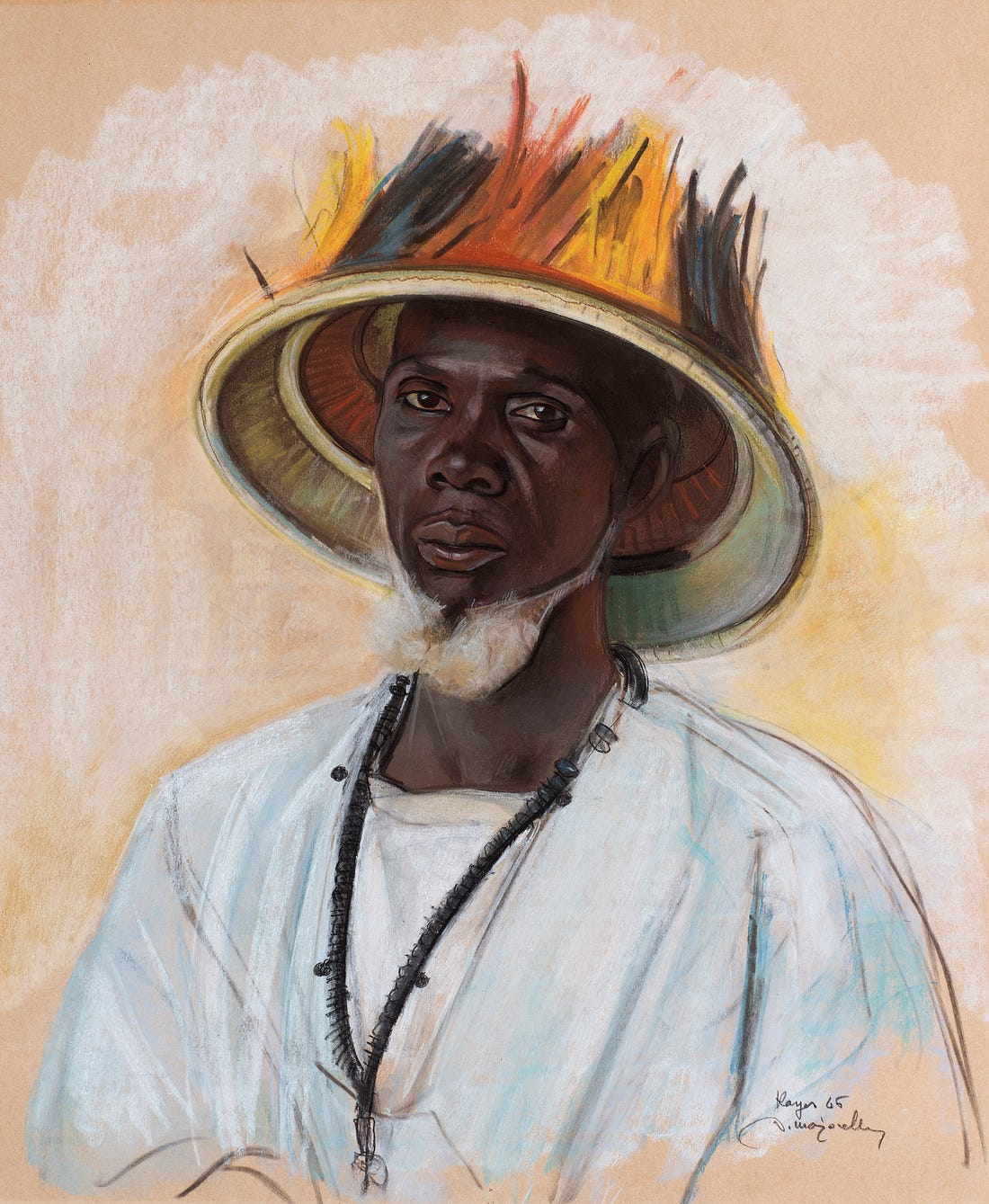
Jacques Majorelle, a French painter who traveled through West Africa, captured the essence of the region in his works. During his 1945 journey, Majorelle painted a portrait of a Kayes man that reflects not only his artistic skill but also his deep connection to the land and African culture. The portrait, depicting a man wearing a Fulani fiber hat, speaks to the traditions and cultural identity of the region while also reminding us of the complexities of colonial relations.
Despite their differing perspectives, both Sembène and Majorelle offer profound insights into life in West Africa during a period of profound change. The railway, as colonial infrastructure, becomes a symbol of the tensions between colonial authoritarianism and Africans' aspirations for freedom and equality. Their works invite us to reflect on the importance of history and culture in shaping contemporary identity.
This intersection between art and literature, as well as its relationship with the Dakar-Niger railway, reminds us that history is not just a story of the past, but a living element that continues to influence our lives today.
You may be
interested
...