News
The Vasconcelos Library celebrates its 20th anniversary among the most incredible buildings of the 21st century
The Vasconcelos Library in Mexico City celebrates its 20th anniversary in 2026, having become one of the most unique cultural buildings in contemporary architecture. Designed by Mexican architect Alberto Kalach and inaugurated in May 2006, the library has transcended its function as a space dedicated to books to become a truly immersive architectural experience.
Its uniqueness has also allowed it to be included among the 25 most incredible buildings of the 21st century, a recognition that highlights a conception of public space in which architecture, landscape, literature and art form an inseparable whole.
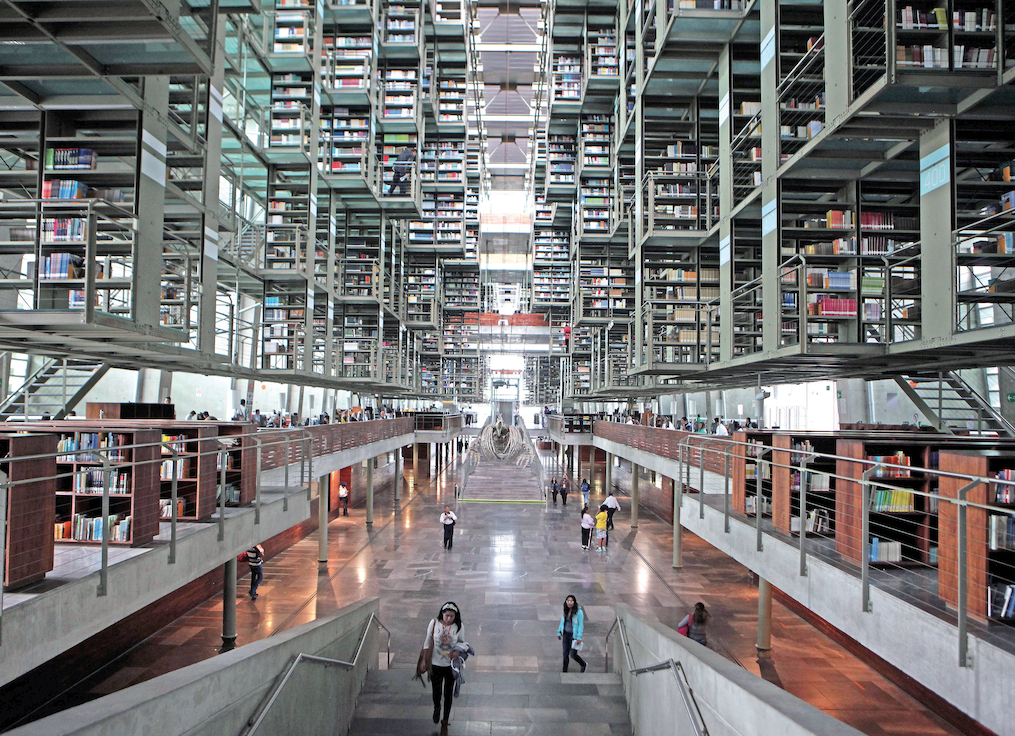
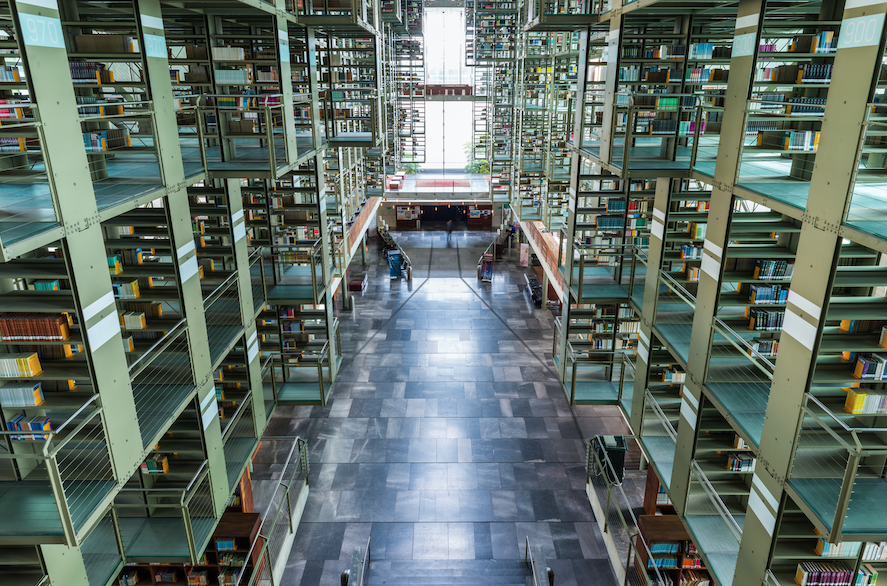
Located next to the old Buenavista train station in the Cuauhtémoc borough, the Vasconcelos Library is structured around a huge central hall approximately 250 meters long. Inside, the metal structures, walkways, and suspended bookshelves create an almost futuristic image, in which the books seem to float above the void.
Kalach combines steel, concrete, marble, granite, wood, and glass in this project to create a large yet surprisingly luminous building. The influx of natural light and ventilation transforms the space into a dynamic environment, where the architecture is perceived differently as visitors move through its various levels.
The Guardian went so far as to describe its interior as one of the most exciting of the century, an assessment that helps to explain the international impact of a building that, two decades after its opening, continues to maintain a powerful capacity to fascinate.
A library suspended in the void
One of the building's most recognizable features is its suspended bookshelves. Large modules of books are arranged around a metal structure that seems to defy gravity and creates extraordinary visual depth.
From the lower level, the succession of platforms, staircases, walkways, and bookshelves creates an almost infinite perspective. The visitor doesn't simply contemplate a library: they enter an architectural space that makes moving through the building part of the experience.
The scale of the project also reflects a functional purpose. The library was designed to grow to approximately two million volumes. Its size and public nature have also made it one of the most frequented libraries in Latin America.
A botanical garden integrated into the architecture
The Vasconcelos experience doesn't end with the building. Surrounding it is a botanical garden of more than 26,000 square meters, conceived as a natural extension of the architectural project.
The garden brings together tens of thousands of specimens belonging to species characteristic of the Valley of Mexico and establishes a deliberate contrast with the monumentality of the steel and glass structure.
This relationship between architecture and nature is one of the essential features of Kalach's project. Visitors can move from the library's vast interior space to a verdant environment that introduces a more intimate and relaxed dimension.
A whale in the heart of the library
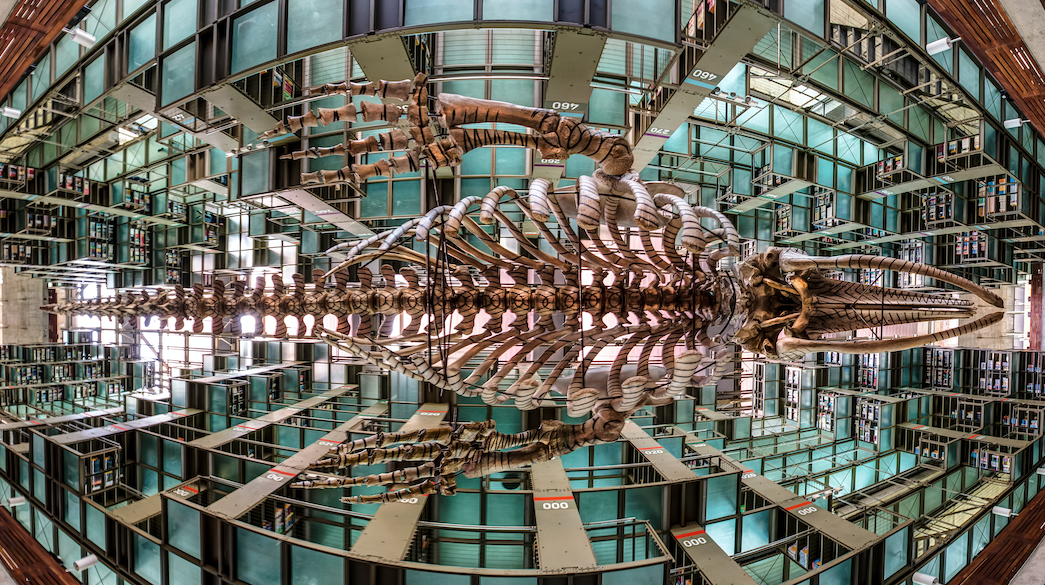
In the center of the building is also one of the most emblematic artistic pieces: Mobile Matrix , by Gabriel Orozco.
The artwork utilizes the skeleton of a gray whale, nearly 12 meters long and weighing over a ton and a half. Suspended in the central space, the enormous cetacean becomes an organic counterpoint to the geometry of the architecture.
Orozco intervened on the bones with circles and ellipses made of graphite, creating a drawing that evokes waves, movement, and sound. The piece thus transforms the large central void into a space where literature, architecture, nature, and contemporary creation coexist.
Twenty years as an architectural icon
Two decades after its inauguration, the Vasconcelos Library retains much of the wonder that accompanied its creation. Its architecture not only responds to the need to store and consult books, but also proposes a new way of understanding a library as a public space, an interior landscape, and a meeting place.
The combination of monumentality and lightness, the prominence of the structure, the presence of nature and the integration of a large-scale work of art explain why the building has acquired a dimension that goes far beyond the library function.


You may be
interested
...