Exhibitions
Material languages
Loana Flores explores at La Capella in Barcelona the latent possibilities of biomaterials created from organic waste.
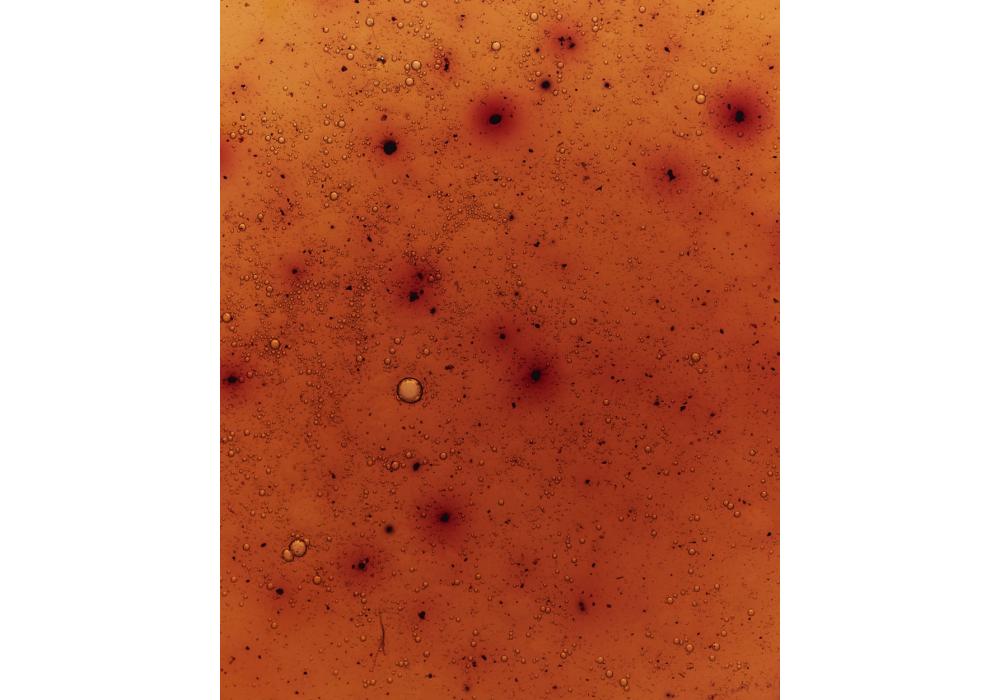
The Capella de Barcelona hosts Llenguatges materiales , a project by EART. A center for mediation, education and contemporary art that presents the research of the multidisciplinary designer and artist Loana Flores. Curated by Gisela Chillida, the exhibition brings together a constellation of biomaterials developed from organic waste and discarded materials, the result of a research process that began in 2018 and conceived as a material archive in permanent expansion.
The proposal starts from a seemingly simple but far-reaching question: what can a material become when its full potential is realized? Flores questions the logics that determine what is valuable and what is disposable and proposes an approach to materials based on observation, listening and experimentation. What usually remains outside the production circuits can thus become a source of new forms, textures, structures and uses.
Material Languages can be visited at La Capella in Barcelona until September 6, 2026. The exhibition focuses on research that understands materials as living and changing elements, capable of opening up possibilities beyond the uses for which they have been conceived.
His practice focuses on the investigation of biomaterials and, especially, on the possibilities offered by materials of organic origin. Instead of starting from a predetermined result, the artist works through open processes, trials and tests that can develop over different periods of time. Each experiment allows the discovery of new properties and behaviors of the matter, shifting the boundary between waste and resource.
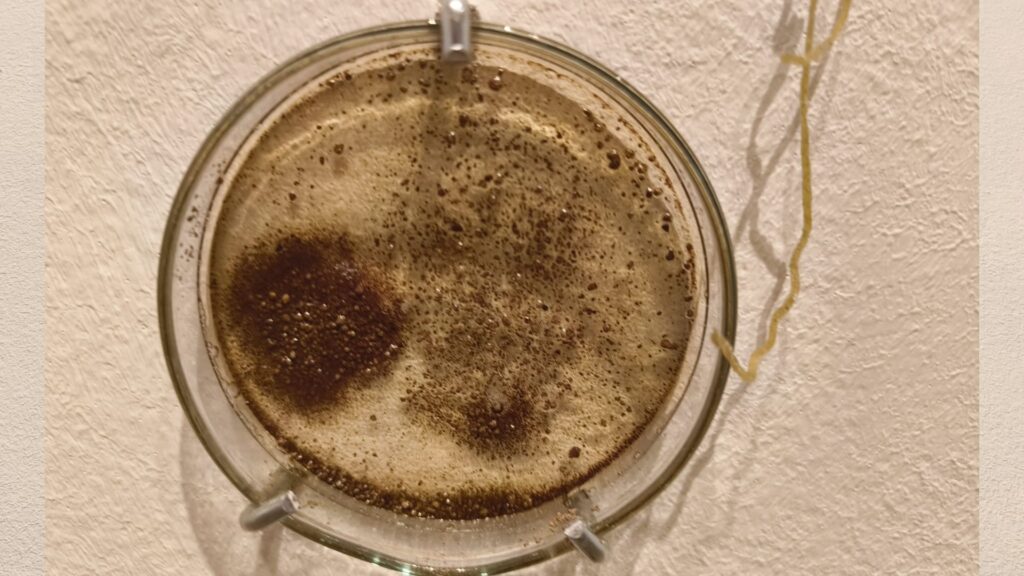
Organic waste, biodesign techniques, digital fabrication and artisanal knowledge coexist in a methodology that alters the states of materials to reveal their capabilities that often remain hidden. A pigment can emerge from a leaf, a surface can appear from a fiber, and an unexpected structure can be the result of an unforeseen combination or even an error. In this sense, the process is not just a tool to arrive at a final piece, but a form of knowledge.
Flores' textile training also plays a central role in this research. The artist incorporates unconventional materials into procedures such as spinning, printing and weaving, establishing a dialogue between traditional practices and contemporary forms of experimentation. The resulting pieces question the idea of materials as passive elements and understand them as agents capable of intervening in processes of transformation.
This perspective connects with new materialisms and ecofeminist thought, which propose shifting the relationship with matter from domination to interdependence. In Flores' work, materials are not simply objects that can be manipulated, but participants in a network of relationships between substances, territories, bodies and time.
Each biomaterial thus preserves a kind of biography of its own: the memory of the elements that have shaped it, of the processes to which it has been subjected and of the encounters that have modified its state. Material Languages thus proposes a view of matter that is not limited to its appearance or function, but also attends to the possibilities that emerge when it is given time to transform.
You may be
interested
...