News
When the Sun inspires art: the total eclipse that will mark the summer of 2026
On August 12, 2026, Spain will experience one of the most extraordinary scientific and visual events of recent decades. A total solar eclipse will cross the peninsula from west to east during sunset, an exceptional event that has not occurred in Spanish territory since the beginning of the 20th century and that will transform the sky into a unique spectacle where light will give way, for a few minutes, to unexpected darkness.
The path of totality will be approximately 290 kilometers wide and will stretch across the country from the northwest to the Mediterranean. However, the experience will not be identical everywhere. Since it coincides with sunset, the choice of observation point will be crucial: elevated locations with a completely unobstructed western horizon will offer the best conditions for watching the shadow move across the landscape.
Beyond its scientific dimension, the eclipse is a profoundly cultural phenomenon. Since antiquity, the momentary disappearance of the Sun has inspired fear, fascination, and an intense desire to understand what seemed to disrupt the natural order. This blend of mystery and beauty has been reflected in countless artistic expressions that transform the eclipse into a symbol of change, power, spirituality, or renewal.
The earliest known representations appear in the great ancient civilizations. The Dresden Codex, one of the most important surviving Mayan manuscripts, incorporates glyphs dedicated to eclipses through celestial bands and signs associated with darkness and death, interpreting these events as moments of crisis or cosmic change. In other cultures, the phenomenon acquired a mythological dimension: in Chinese tradition, it was a dragon that devoured the sun, while Norse mythology attributed the eclipse to the wolf Sköll chasing the celestial body. These narratives inspired images and representations for centuries that reflected the vulnerability of the universe to supernatural forces.
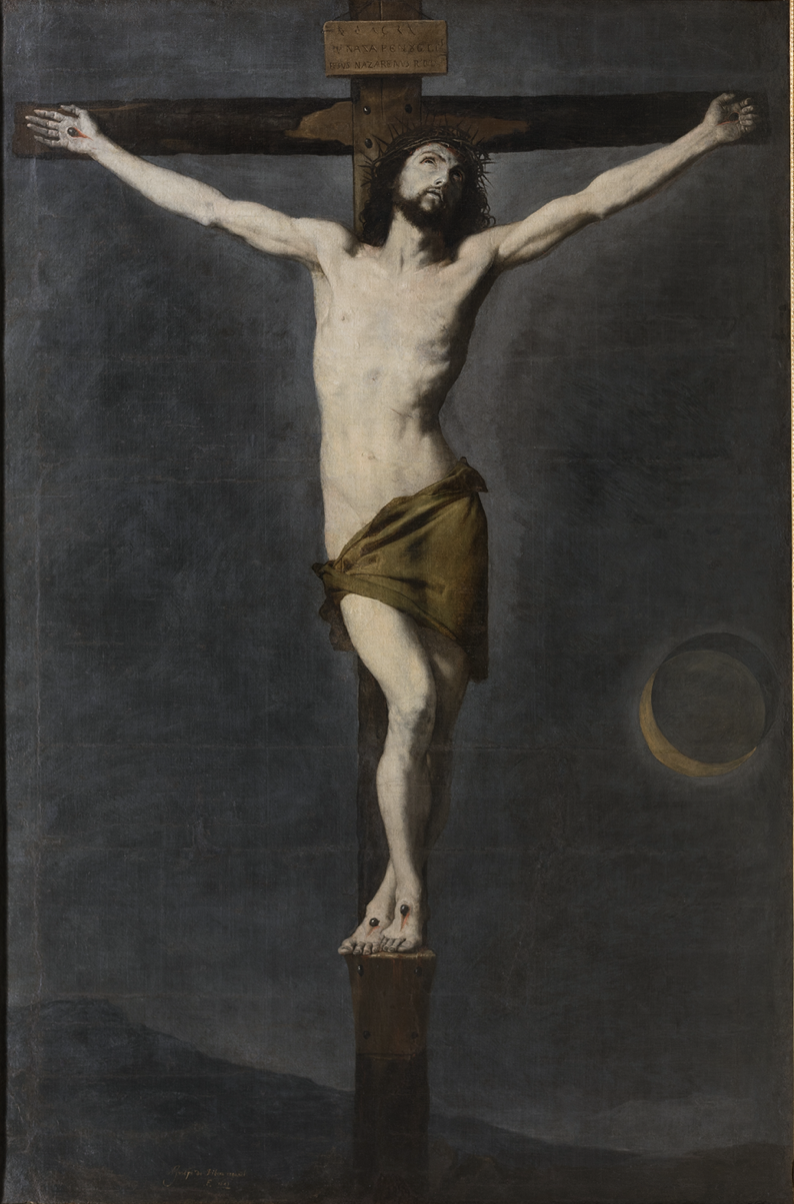
Christian iconography also found a powerful symbolic resource in the eclipse. During the Middle Ages and the Renaissance, it was common to depict the Sun and Moon on either side of the cross in scenes of the Crucifixion to evoke the darkness described in the Gospels during Christ's death. Over time, some artists transformed this motif into authentic representations of an eclipse. Among these, José de Ribera's crucified Christ , housed in the Museum of Fine Arts of Vitoria, stands out. In it, the lunar disk appears partially translucent, revealing the silhouette of the Sun and creating a less realistic image, but one of great visual and symbolic intensity.
The 19th century shifted the focus of eclipses from the religious sphere to the landscape. In the midst of Romanticism, nature became the protagonist, and painters began to depict the atmospheric impact of these phenomena. One of the most celebrated examples is Ippolito Caffi 's Eclipse of the Sun in Venice (1842), in which he recreated the eclipse of July 8th of that year from a striking aerial perspective over the Venetian lagoon, capturing the transformation of light with an almost cinematic sensitivity.
A few years later, the Russian master of seascapes, Ivan Aivazovsky, painted Solar Eclipse at Feodosia (1851), a work in which the darkness of the eclipse envelops the horizon while the solar corona emerges like a spectral apparition. The result is a scene of enormous poetic power in which the astronomical phenomenon takes on an almost supernatural dimension.
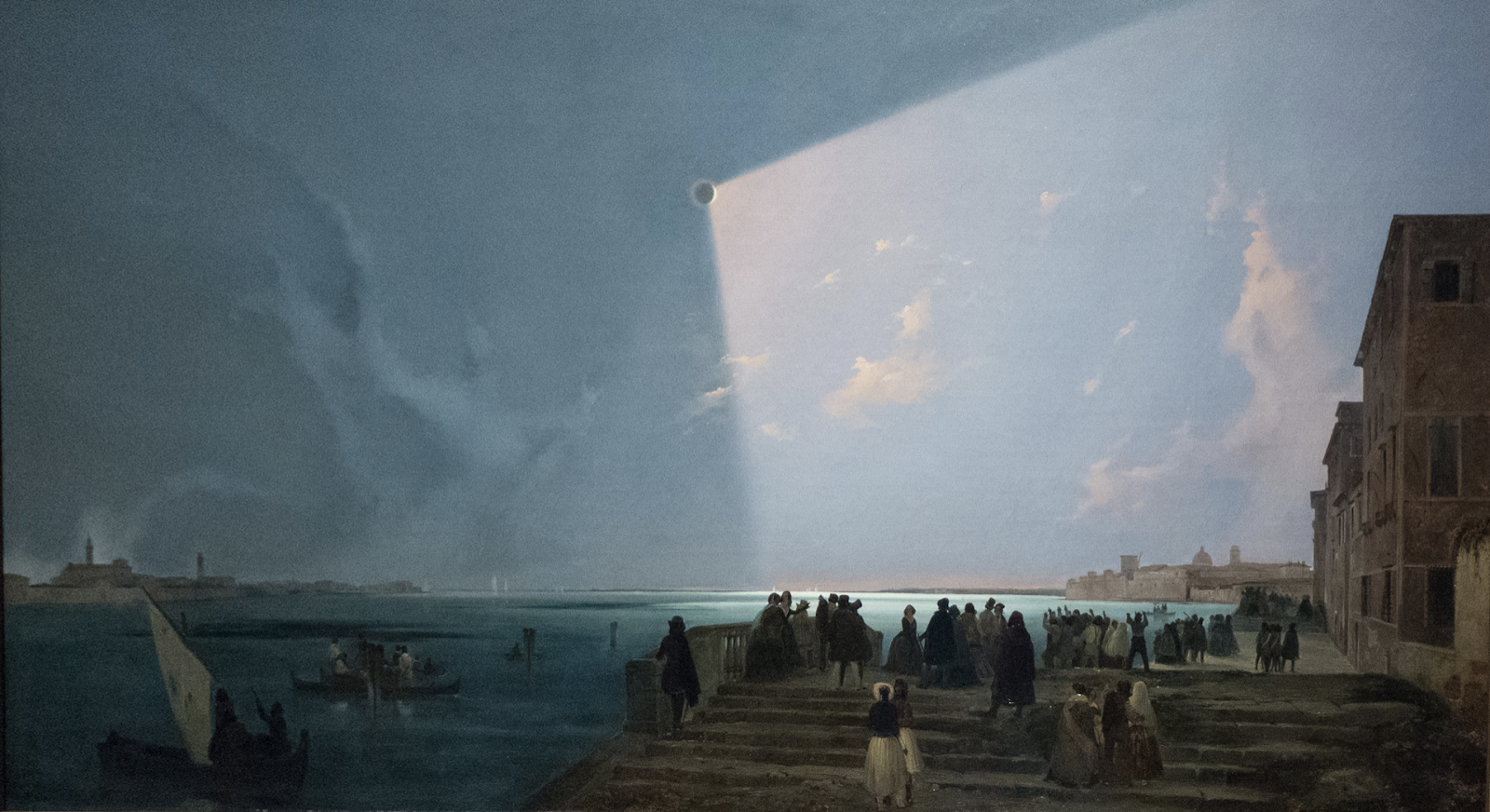
Ippolito Caffi, Solar Eclipse in Venice (1842).
With the arrival of the 20th century, the eclipse ceased to be interpreted solely from a realist perspective and became a subject for formal experimentation. The avant-garde movements found in the geometry of the hidden sun, the contrasts of light, and the idea of transformation a fertile ground for abstraction. Paul Klee dedicated a delicate watercolor to the phenomenon, using forms and colors to suggest rather than describe the celestial event.
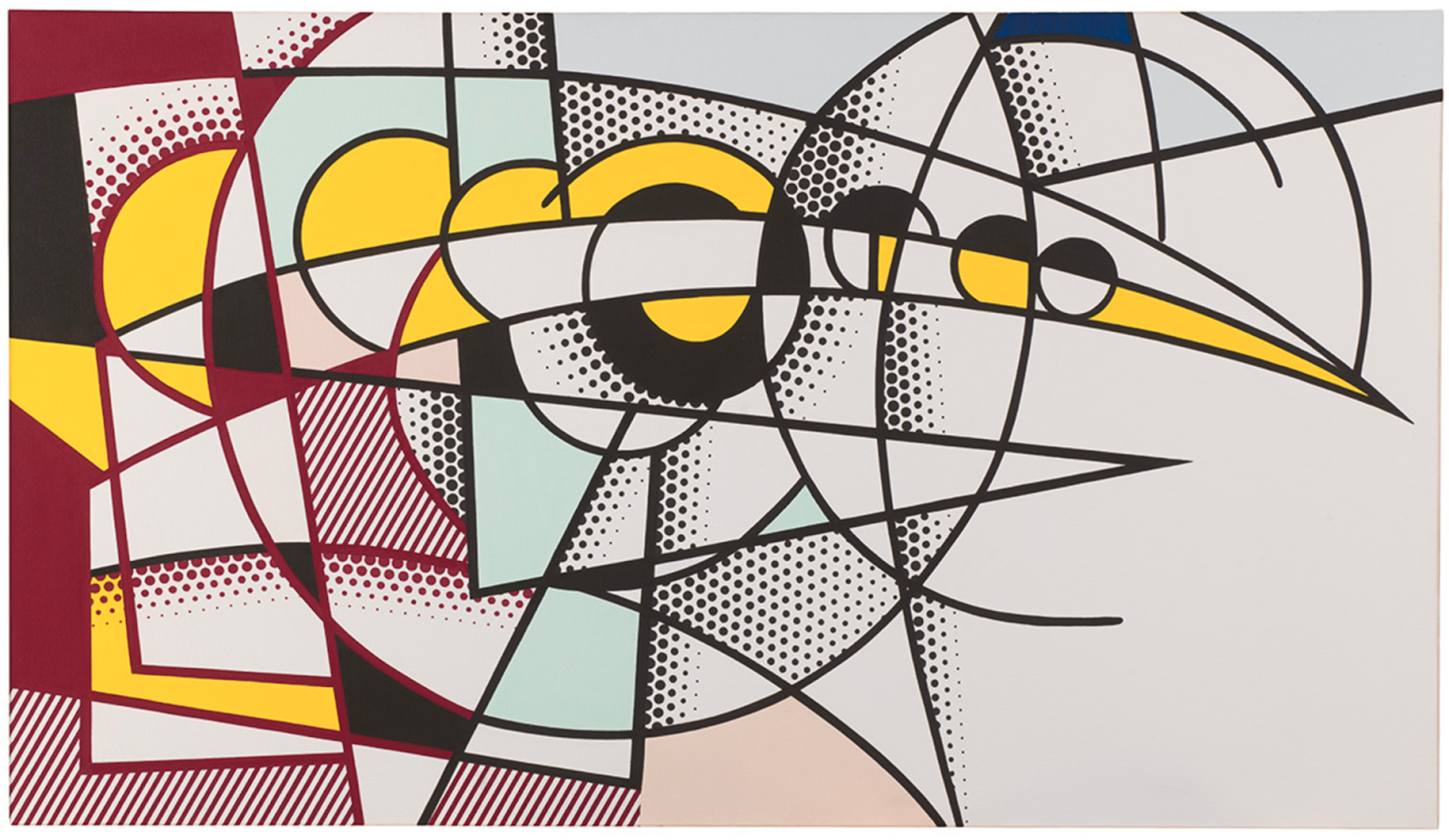
Pop art also found inspiration in this exceptional moment. In one of his later works, Roy Lichtenstein captured the dynamism of the total eclipse through the superimposition of circles, curved lines, and planes of color that evoke the rapid advance of totality and the return of light, using the graphic language characteristic of the American artist.
Interest in this phenomenon remains strong in contemporary art. Immersive installations, kinetic sculptures, and optical devices recreate the physical experience of an eclipse, exploring perception, movement, and the relationship between the viewer and light. More than simply representing the event, many artists seek to reproduce the sense of wonder that arises from witnessing day transform into night for a few moments.
The countdown to the August 12th eclipse has already begun. Thousands of people will turn their gaze to the sky to witness one of the great natural spectacles of 2026. However, this phenomenon also invites us to look back at the history of art, where for centuries it has left a mark as profound as it is ephemeral. Because each eclipse not only alters the landscape for a few minutes: it also illuminates humankind's capacity to transform the mystery of the universe into images capable of transcending time.



You may be
interested
...