Exhibitions
The body as an open landscape in the new exhibition by Erik Tlaseca and Wynnie Mynerva
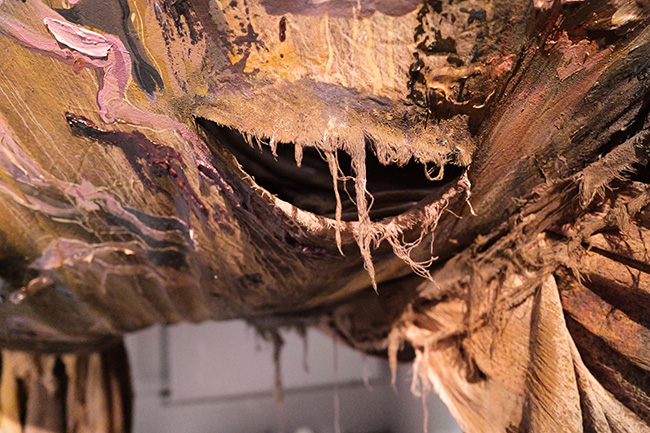
Starting August 15, 2026, the Museo Universitario del Chopo, in Mexico City, will host Entrañas , a joint exhibition by artists Erik Tlaseca and Wynnie Mynerva that stems from the artistic complicity that arose during their residency at the Rijksakademie in Amsterdam in 2024.
The exhibition stems from a shared investigation into the body, understood not as an isolated entity, but as a space shaped by the social, the political, and the historical. Both artists position the skin as a surface for sensory and symbolic exploration, moving away from the idea of the individual body as a closed territory and instead presenting it as a collective organism, in constant transformation and relationship with its environment.
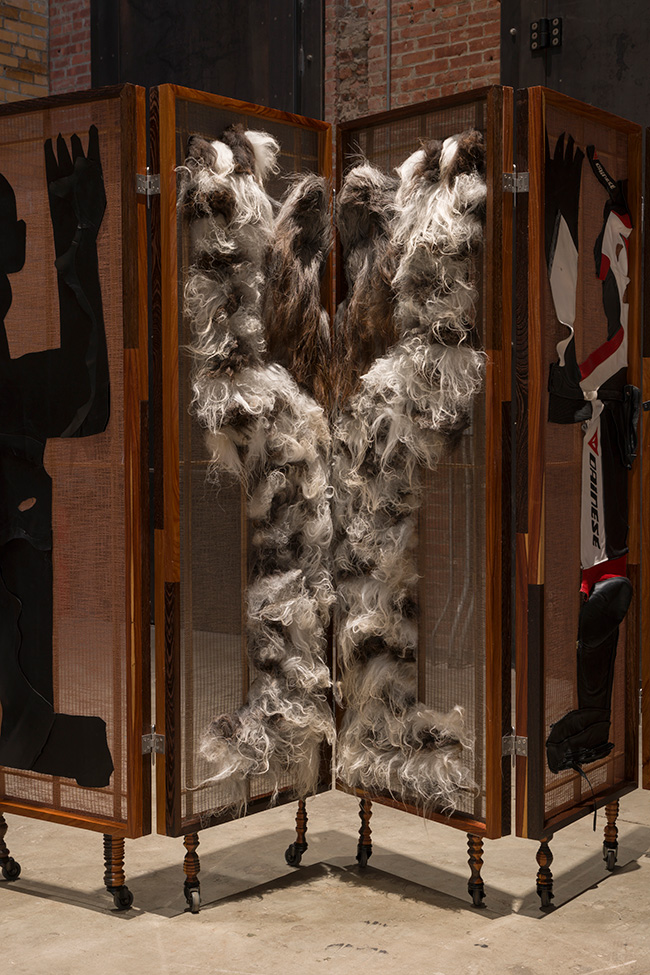
Erik Tlaseca, Mirrors, 2025. Courtesy of the artist and LLANO. Photo: Charles Benton.
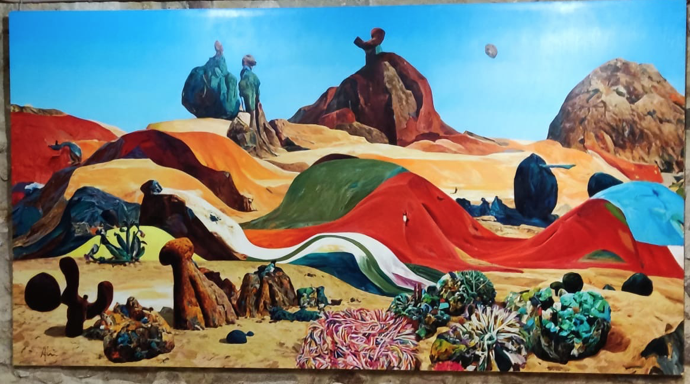
Entrañas proposes a physical and emotional journey marked by matter, desire, and vulnerability. The exhibition brings together a central installation made with fabric, pigments, metal, and other materials, alongside a series of large-format paintings that construct the image of an expanded, multifaceted, and ever-changing body. The works suggest organs, cavities, and fluids, but also natural landscapes such as mountains, soil, and bark, establishing a dialogue between the corporeal and the earthly.
The pieces, produced entirely in Mexico City over the past few months, explore what lies hidden beneath the skin's surface. Tlaseca and Mynerva act as interpreters of an inner territory where intimacy, wounds, pleasure, and collective memory coexist, generating an experience that oscillates between the organic and the architectural, between the sensory and the political.
Erik Tlaseca (Mexico City, 1989) develops a multidisciplinary practice focused on identity, territorial, and historical transformations. His work addresses the ways in which bodies and spaces accumulate narratives and tensions.
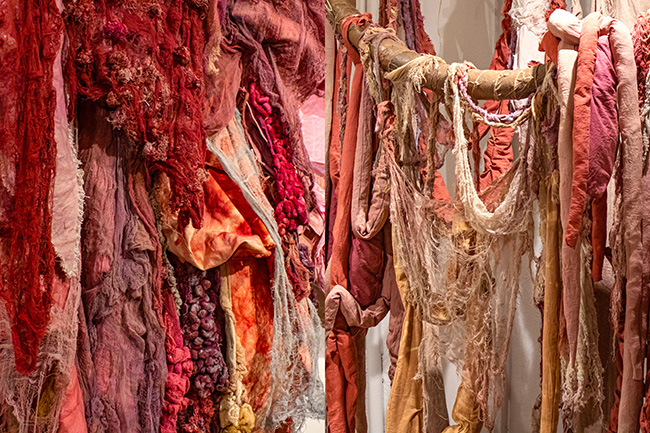
Erik Tlaseca and Wynnie Mynerva, Entrañas, 2026. Courtesy of the artists.
Wynnie Mynerva (Lima, 1992) works primarily in painting, though she also incorporates installation, sculpture, and performance. Her work analyzes the power structures that generate exclusion and addresses issues related to sexuality, desire, bodily transformation, the economies of care, and the various ways in which violence permeates intimate experience.
The exhibition is curated by Miguel A. López and Abril Castro Prieto, who present Entrañas as a meeting place between matter and thought, where the body appears as an open landscape, collective archive and surface of resistance.

You may be
interested
...