Exhibitions
Gaudí returns to the Cathedral of Mallorca with an exhibition that rediscovers his great liturgical reform
'Gaudí in the Cathedral of Mallorca. Liturgy, Art and Modernity' reviews the intervention that Antoni Gaudí carried out between 1904 and 1915 in the Cathedral of Palma, bringing together original pieces, models and documentation on a tour between the Cathedral, the cloister and the Museum of Sacred Art.
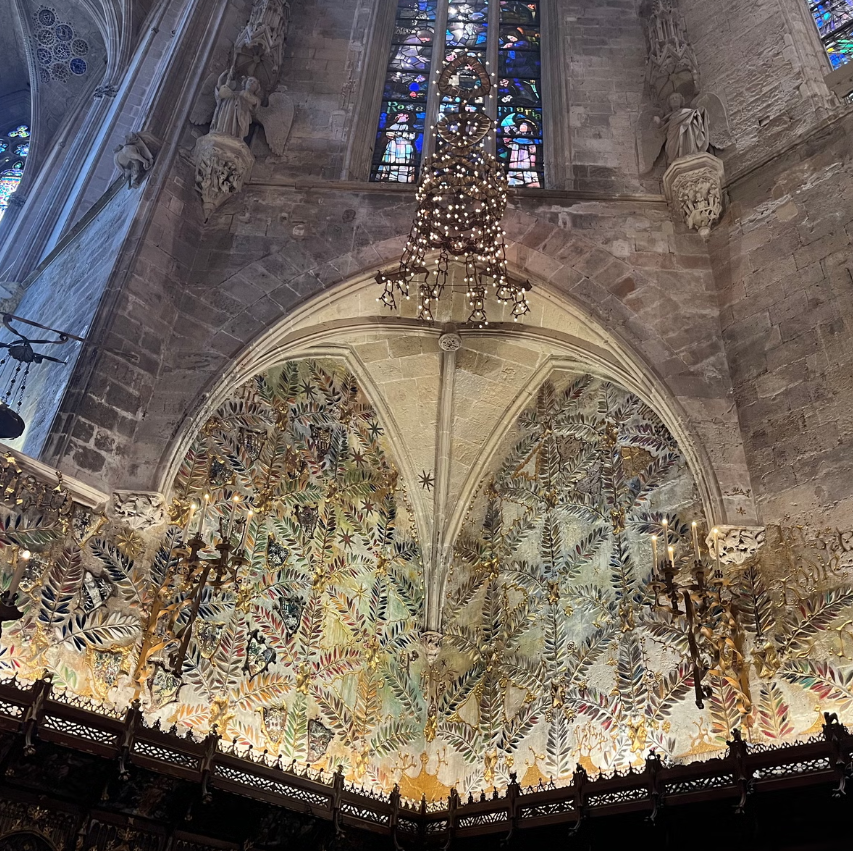
Among the numerous interventions that Antoni Gaudí developed throughout his career, the reform of the Cathedral of Mallorca occupies a unique place due to its liturgical, architectural and artistic ambition. Now, more than a century after its execution, this action becomes the guiding thread of the exhibition Gaudí in the Cathedral of Mallorca. Liturgy, Art and Modernity , a proposal that allows us to rediscover the profound impact that the Catalan architect left on the cathedral of Palma between 1904 and 1915.
The exhibition, organized by the Cultural Management Department of the Cathedral, is part of the events of the Year of Gaudí, which commemorates the centenary of the architect's death. With an expected duration of one year, the exhibition combines documentary research, restoration work and heritage dissemination to offer a renewed reading of one of the lesser-known episodes of Gaudí's career.
Gaudí's intervention was born from the desire of Bishop Pere Campins to modernize the temple. The cathedral had damage to the facade caused by an earthquake, several stained glass windows were blinded and the arrangement of the choir, located in the center of the nave, made it difficult for the space to be used for liturgical purposes. Given this situation, Campins entrusted Gaudí with a reform that went far beyond a simple architectural restoration: he intended to adapt the Cathedral to new liturgical approaches without renouncing respect for its Gothic legacy.
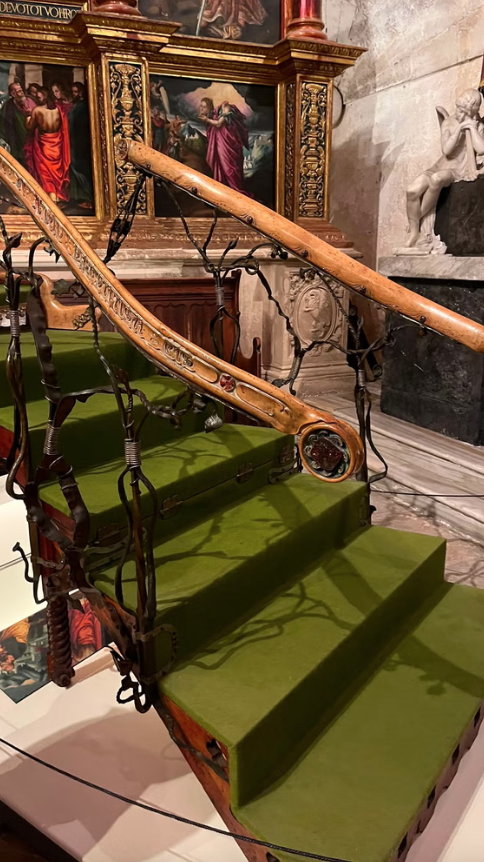
The exhibition offers a tour that travels through the interior of the cathedral, the cloister and the Museum of Sacred Art of Mallorca, spaces where the different phases of the project are explained and numerous original pieces designed by the architect are exhibited. Among the most outstanding objects are a folding altar ladder built in wood and wrought iron, covered with green felt, as well as the two original models of the Main Chapel and the Chapel of the Holy Trinity, made in wood and directly intervened by Gaudí with drawings and annotations.
The visitor can also contemplate the monumental canopy of the main altar, various lamps, liturgical furniture and different symbolic elements linked to Bishop Campins, such as the episcopal crosier, the canopied cross and the tintinacle, pieces that allow us to understand the spiritual and ceremonial dimension of the reform conceived by the architect.
The exhibition structures the story following the three major phases of the intervention. The first, carried out between June and December 1904, radically transformed the interior organization of the temple. The choir was removed from the central nave, several altarpieces were dismantled, the presbytery was redefined to give prominence to the altar and the episcopal chair, and electric lighting was incorporated, an innovative element for the time.
The second stage, between 1905 and 1908, deepened the renovation of the complex with the revaluation of the Main Chapel. During these years Gaudí intervened in the stained glass windows to improve the entry of natural light and designed new furniture for worship, always seeking a close relationship between architecture, symbolism and liturgical functionality.
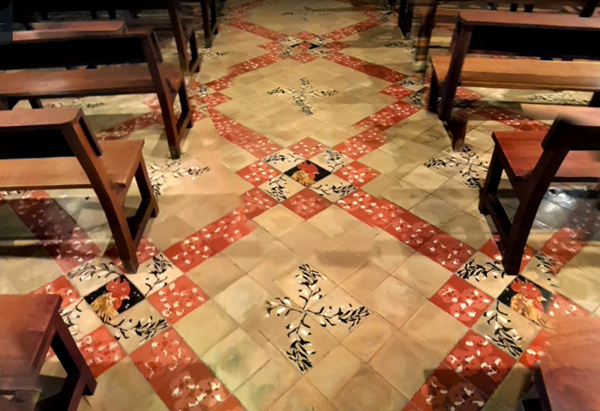
The last phase, which extends from 1908 to 1915, corresponds to the moment of greatest ornamental development of the project. Josep Maria Jujol, a regular collaborator of Gaudí, also participated in this stage, who contributed to enriching the decorative and lighting program of the presbytery. The project, however, would not reach its climax.
After twelve years of work, disagreements between Gaudí, the builders and some members of the cathedral chapter led to his withdrawal from the work in 1914. The death of Bishop Campins the following year definitively ended his participation. The direction of the work passed provisionally to Joan Rubió i Bellver until a new architect was appointed.
Gaudí's departure left an important part of the original project unexecuted. Six of the nine planned stained glass windows, several pieces of liturgical furniture, the roofs and the royal tombs remained pending, witnesses to an intervention that, despite remaining unfinished, profoundly transformed the spatial and symbolic perception of the Cathedral.
You may be
interested
...