Exhibitions
The Silent Revolution of Fluorescent Tubes with Dan Flavin
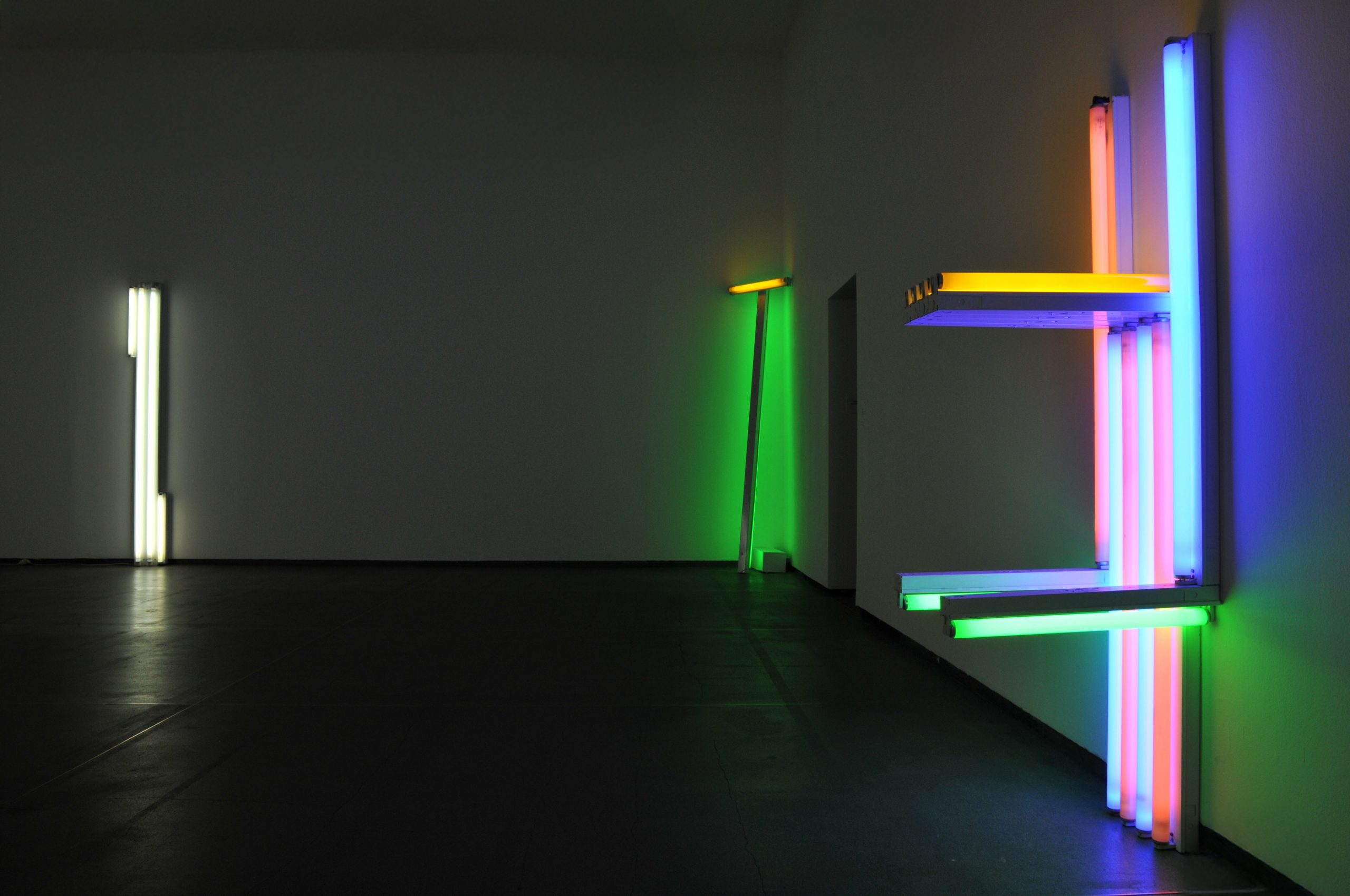
The Venet Foundation presents until October 3rd the exhibition Dan Flavin: Simple Fluorescent Tubes , a show curated by Erik Verhagen that brings together works made between 1963 and 1990 and allows you to trace the evolution of one of the essential names of American minimalism.
Dan Flavin (1933-1996) created his first work with fluorescent tubes in 1963: The Diagonal of May 25, 1963 (to Constantin Brancusi) . That piece, consisting of a single tube placed diagonally, foreshadowed the principles that would define his entire career. From then on, the artist abandoned any manual intervention on his work and focused his practice exclusively on commercially available materials, especially fluorescent tubes, which he transformed into the protagonists of a new sculptural conception.
The apparent simplicity of his pieces concealed a profound investigation into form, space, and perception. Flavin worked with refined geometric structures that could be multiplied in infinite variations: he modified the dimensions of the tubes, their arrangement, quantity, orientation, or configuration to generate symmetrical or asymmetrical compositions, installed directly on the floor, suspended at height, or integrated into walls and corners.
The corners of architectural spaces played a fundamental role in his work. Flavin did not consider them mere neutral supports, but rather active elements that shaped the viewer's experience. By enveloping or traversing them with light, his installations revealed the architecture and transformed the relationship between the work, the place, and the viewer.
In addition to formal research, there was an essential chromatic dimension. Fluorescent light allowed the artist to deploy a wide range of tones that connected his practice to a long pictorial tradition. Although usually associated with minimalism, Flavin maintained a link with art history that was visible in works such as his celebrated Monuments to Tatlin , a tribute to the Russian constructivist artist Vladimir Tatlin, or his reference to Constantin Brancusi.
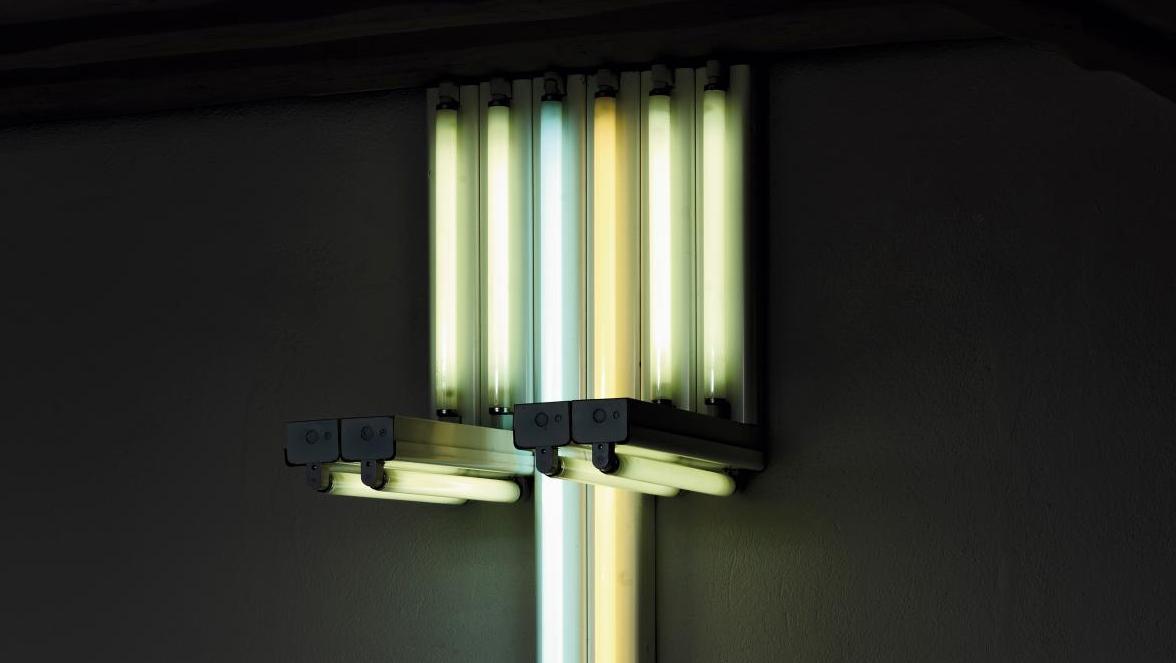
The selection presented at the Venet Foundation reflects the diversity of a career marked by the exploration of a seemingly immaterial medium. Fluorescent tubes, far from simply illuminating a space, become a material capable of constructing atmospheres, altering the physical boundaries of architecture, and generating a dynamic experience for the visitor.
Flavin's work thus presents a paradox: he uses an industrial object, mass-produced and devoid of any artisanal touch, to create unique and unrepeatable pieces. His installations do not simply occupy a space; they transform it and give light its own sculptural presence.
In the words of Erik Verhagen, the works gathered in this exhibition show the difficulty of defining a practice based on immateriality: a luminous matter that constructs a suspended space, with undefined contours, where spectator and work end up forming part of the same experience.



You may be
interested
...