News
The Palau de la Música Catalana will open a new door to the city
A welcome space will connect Via Laietana with the modernist building through an exhibition route, a new store and an immersive experience.
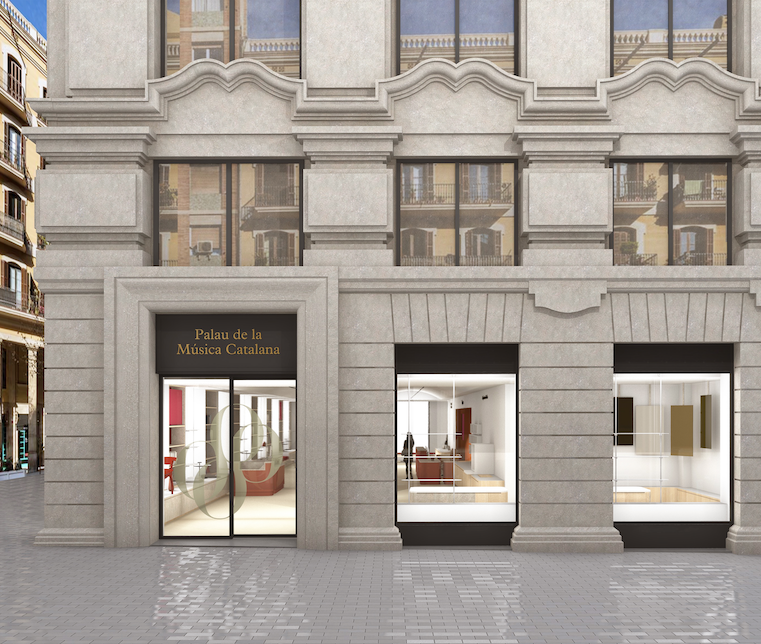
The Palau de la Música Catalana will take a new step in its transformation this autumn with the opening of the Nova Porta del Palau, a space of more than 350 square meters designed to become the new main access from Via Laietana and a gateway to the institution's heritage, musical and cultural universe.
The project responds to the growth experienced by the Palau in recent years, both in terms of artistic activity and the number of visitors, and seeks to offer a more complete and accessible experience. Beyond being an access point, the Nova Porta will act as a discovery space that reinforces the connection between the modernist building and the city, coinciding with the renovation of Via Laietana as a major urban axis.
Located on the ground floor of number 54 of Via Laietana, the new facility occupies two unified premises with a total area of 354.53 square meters. It has one entrance from the avenue itself and another from the street of Palau de la Música, creating an interior route that facilitates the circulation of visitors and concentrates in a single space services that were previously dispersed.
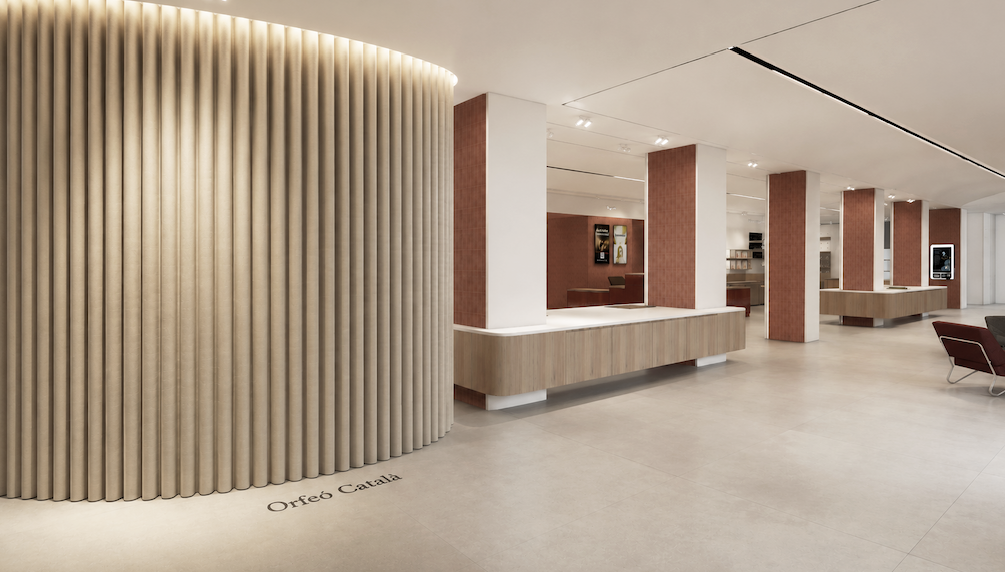
The space has been conceived as a progressive introduction to the history and essence of the Palau. Audiovisual resources, interactive elements and architectural reproductions will allow visitors to discover the history of the Orfeó Català, the legacy of Lluís Domènech i Montaner and the heritage value of one of the most emblematic buildings of Catalan modernism. At the centre of the route will be a new public service point, replacing the traditional ticket office model with a more personalised and close service.
The Nova Porta will also host the new Botiga del Palau, developed in collaboration with Laie. Integrated within the same exhibition itinerary, it will offer a selection of exclusive products inspired by the architecture of the building, with a clear commitment to local production, craftsmanship and sustainability. The offer will be completed with a specialized editorial collection on music, architecture, modernism, art and Barcelona, reinforcing the desire for the visit to continue beyond the physical tour.
The proposal will culminate in a new immersive room, created by Tiler Gab, which will be incorporated into guided tours from November. The space, equipped with Dolby Atmos sound technology and a lighting system synchronized with the music, will offer an experience focused on the voices of the Orfeó Català. The first work conceived specifically for this installation will be El Cor Infinit , by composer Marc Timon, inaugurating a project designed to host new sound creations in the future.

You may be
interested
...