Exhibitions
Misha Bies Golas and the workshop as a field of friction
The CGAC dedicates to the artist an exhibition conceived as a living archive and expanded installation, a project that revisits the historical avant-gardes from the perspective of matter, error and the instability of form.
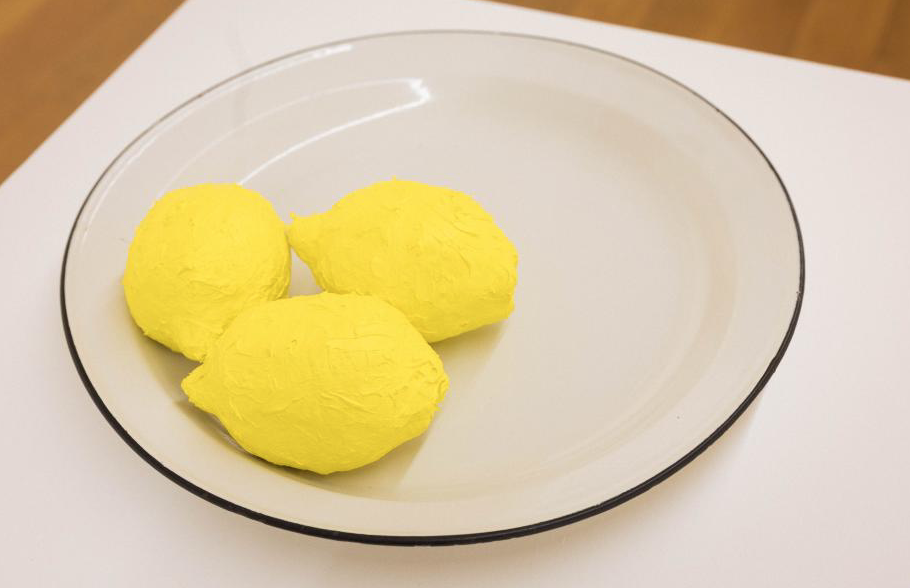
Between archive, installation, and form-based experimentation, the new exhibition that the CGAC is dedicating to Misha Bies Golas presents itself as one of those proposals that eschews the comfort of a retrospective to attempt something else: an open, unstable, and profoundly material reading of an artistic trajectory built over more than two decades. The exhibition, open from May 22 to September 6, 2026, condenses much of the research that the artist has developed around the historical avant-gardes of the first half of the 20th century, though it does so from a deliberately critical position, far removed from any monumental or linear vision of modernity.
Rather than understanding the avant-garde as a closed repertoire of styles, languages, or foundational gestures, Bies Golas approaches it as a contested territory: a field of tensions, shifts, and unfinished processes where formal achievements, peripheral drifts, material accidents, and the frictions that the canonical narrative tended to relegate coexist. In this sense, the exhibition does not seek to illustrate a genealogy, but rather to activate a conversation with these legacies from the present, underscoring their unstable, translated, and situated nature. Modernity, here, does not appear as an ascending line, but as a constellation of experiments, interruptions, and survivals.
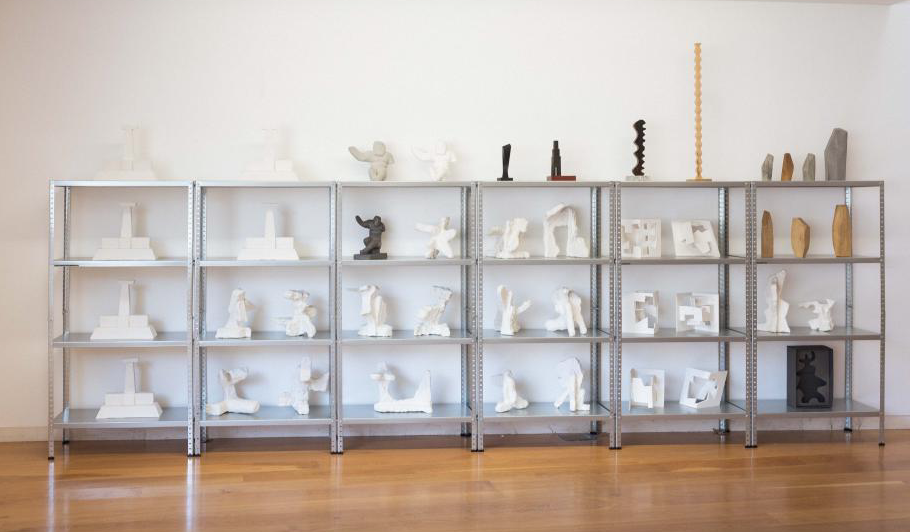
The exhibition is structured as a site-specific, expansive installation that functions simultaneously as an active archive, a spatial device, and a formal laboratory. The layout eschews any chronological sequence, instead proposing a rhizomatic reading of the artist's production to date. Works of varying scales, techniques, and natures are linked by formal, material, or conceptual affinities, generating a network in which the pieces seem to reflect upon one another. Within this web of relationships, resonances emerge with diverse artists, with less explored episodes of the avant-garde, and with heterogeneous cultural contexts, always understanding these processes of affiliation not as fixed inheritances, but as historically situated operations of translation, adaptation, and deviation.
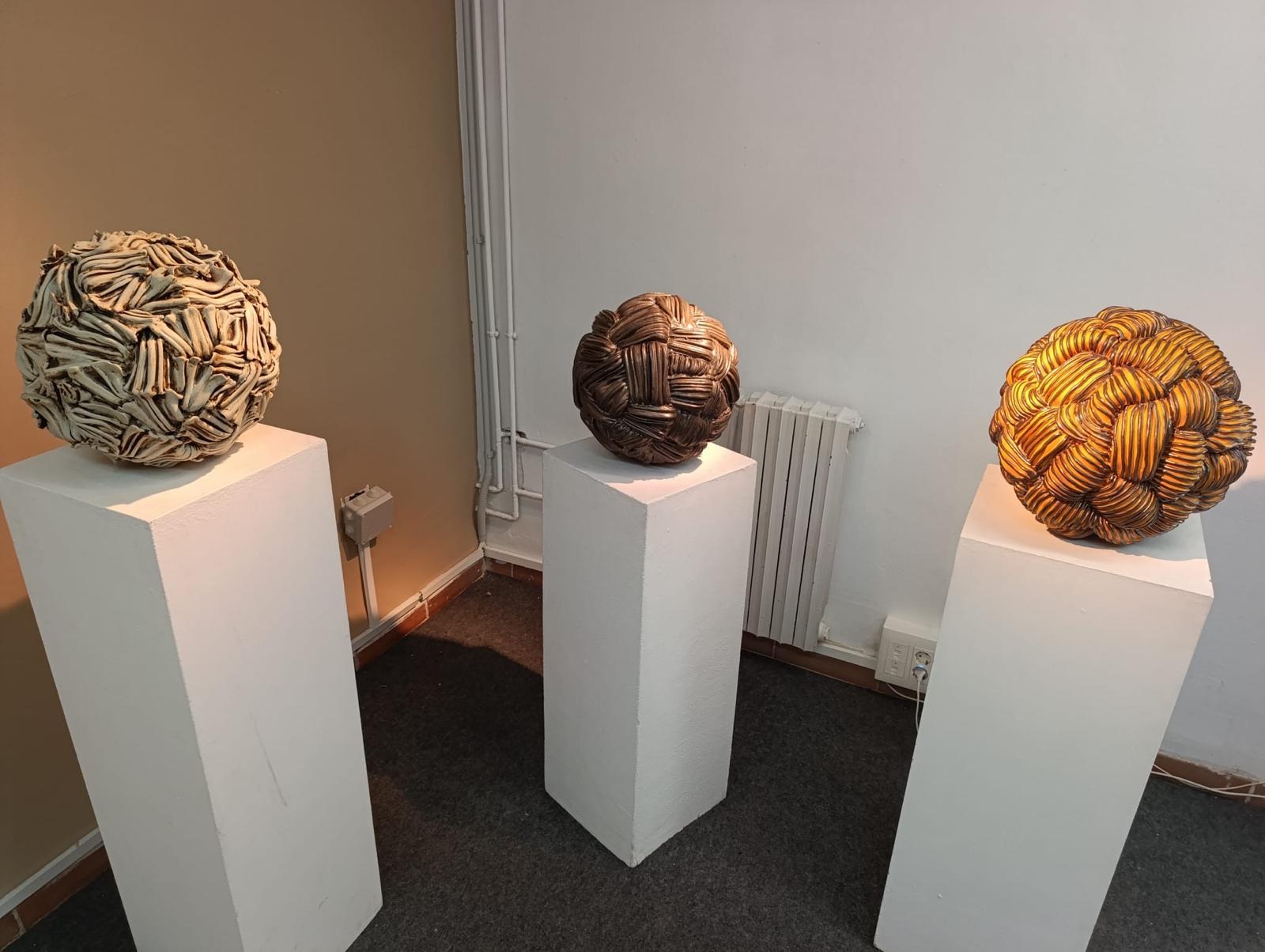
The ground floor of the CGAC occupies one of the project's most intense centers. There, a veritable field of forces unfolds, comprised of over a hundred sculptures and small paintings of a biomorphic or amoeba-like nature. Far from any monumentality, these pieces emphasize craftsmanship, the fertile precariousness of the processes, and an economy of means that restores prominence to the material itself. They demonstrate a sustained attention to the capacity of materials to resist, deform, fail, or mutate, as if form were not the result of a dominating will, but rather of a constant negotiation between gesture, accident, and physical behavior. Error, contingency, and instability, therefore, do not appear as anomalies to be corrected, but as productive strategies capable of challenging the hierarchies of modern high culture and its ideal of formal purity.
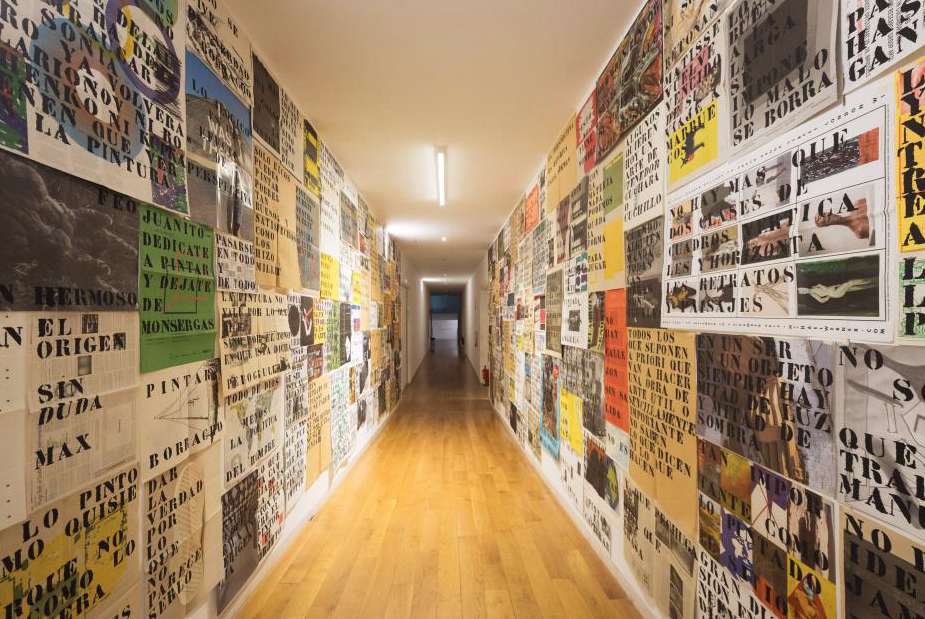
This emphasis on process transforms the exhibition into something more than a mere accumulation of works. What is staged is a way of thinking through matter, of understanding artistic practice as a space where form and thought are produced simultaneously. Hence, the studio emerges as the true epistemological model of the project: not only as a physical place of production, but as a mental structure, as an open system of experimentation, associations, interruptions, and discoveries. The arrangement of the pieces on walls, floors, and ceilings refers precisely to this logic of work in progress, to an exhibition syntax that does not seek to close off meanings, but rather to leave visible its seams, its overflows, and its possibilities for reorganization.
This interpretation is further enhanced by the Double Space, which will open later, on June 12. There, the exhibition incorporates an aerial installation from which organic, skin-like forms hang, creating a kind of shadow theater that introduces a temporal and performative dimension to the experience. In contrast to the tactile and earthy density of the pieces on the ground floor, this space seems to suspend the experience in another register: more atmospheric, more unstable, almost spectral. The projected shadows, the oscillation of the volumes, and the fragility of the hanging forms expand the exhibition's vocabulary and reinforce a central idea in Bies Golas's work: form is never entirely closed; it can always become something else, shift, erode, or transform into an image.
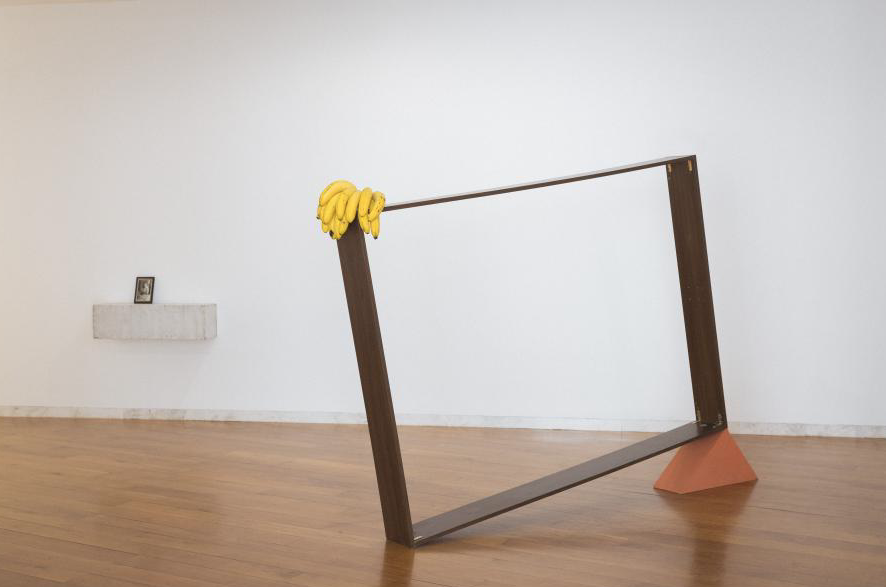
Overall, the CGAC exhibition presents itself as an open and vectorial structure, at times bordering on metanarrative, but without succumbing to the temptation of totalizing synthesis. What it proposes is rather an expanding system of relationships, a constellation of pieces that interrogates the promises and fissures of modernity from a contemporary sensibility deeply attentive to the residual, the handmade, and the vulnerable. At a time when many revisions of the avant-garde oscillate between nostalgia and quotation, Misha Bies Golas's project opts for a more incisive gesture: returning them to the realm of instability, experimentation, and living matter.
In this exhibition, there is a clear intention to dismantle the idea of the artwork as an autonomous and finished object, instead considering it as a remnant, an experiment, a mutation, or a fragment of a larger process. This approach is also its main critical strength. Because by shifting the focus from resolved form to form in tension, Bies Golas not only revisits the legacies of the historical avant-gardes, but also reactivates a crucial question about the present: how to continue working with these legacies without turning them into a style, how to sustain their experimental impulse without neutralizing their capacity for friction. The exhibition does not offer a definitive answer, but rather a fertile space from which to reformulate the question.
You may be
interested
...