Exhibitions
Dan Flavin, the architecture of light
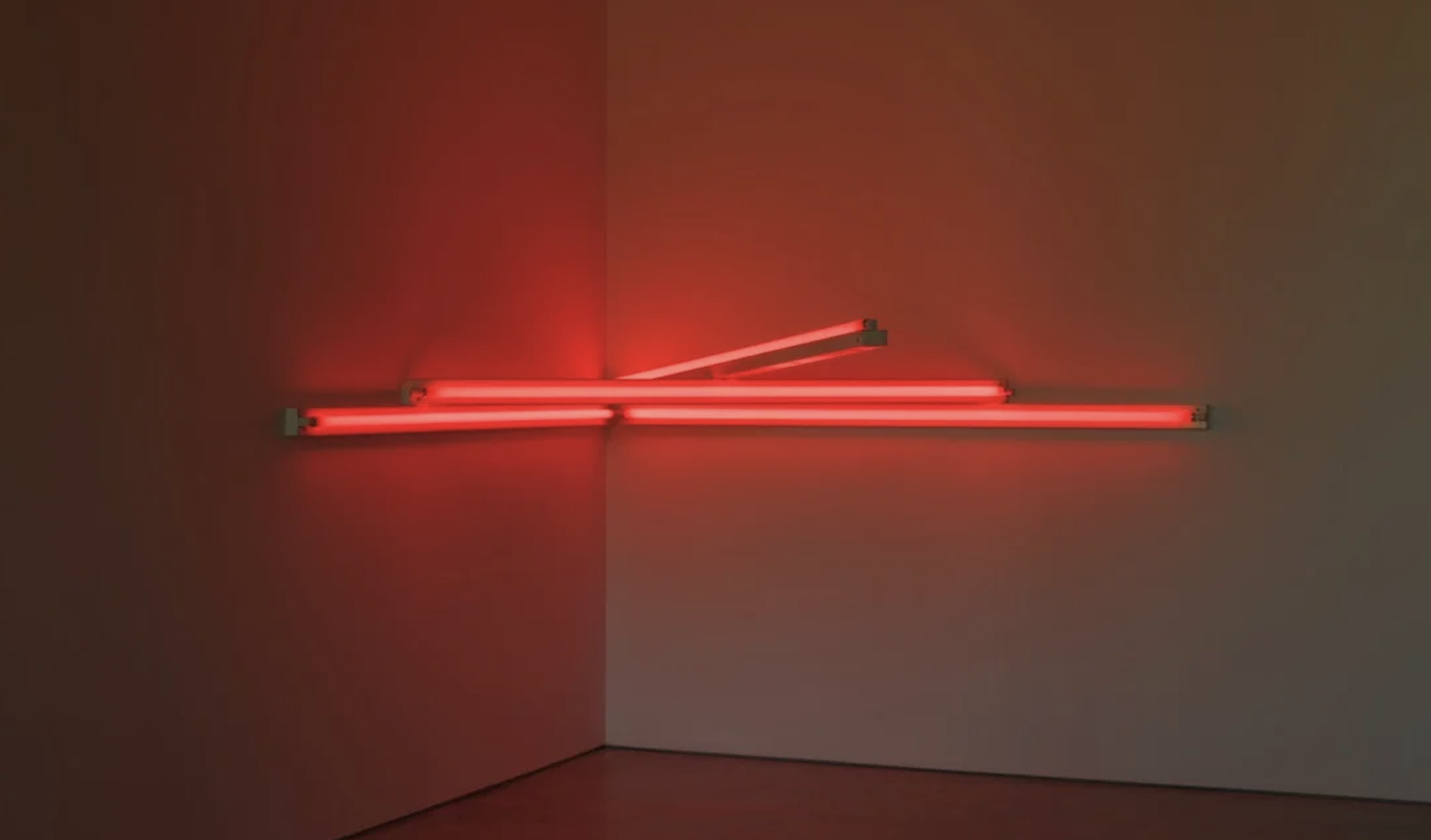
From June 12 to August 17, the MALBA in Buenos Aires presents a major exhibition dedicated to Dan Flavin (New York, 1933–1996), a key figure in the art of the second half of the 20th century and one of the decisive names in the reformulation of contemporary sculpture. Known for his installations made with industrial fluorescent tubes of standardized colors and shapes, Flavin transformed an everyday material into a tool capable of altering the perception of space, activating architecture, and turning light into artistic matter.
Organized by the Dia Art Foundation and curated by Jessica Morgan and Min Sun Jeon, the exhibition brings together several of the artist's key works from the 1960s and 1970s, offering a comprehensive overview of his evolution and his impact on the history of Minimalism. More than a simple anthology, the exhibition presents itself as an immersion in a language that shifted sculpture from the object to the environment, and that made color, light, and the relationship with the viewer its principal expressive tools.
Although his name is often immediately associated with minimalist art, alongside creators like Sol LeWitt, Donald Judd, and Carl Andre, Flavin's work defies any rigid classification. His production shares with minimalism the use of industrial materials, formal reduction, and rejection of expressionist gesture, but it also incorporates a unique poetic and perceptive dimension. In his pieces, light not only occupies space: it modifies it, dematerializes it, and renders it unstable. The wall, the corner, the hallway, or the void cease to be mere supports and become an active part of the artwork.
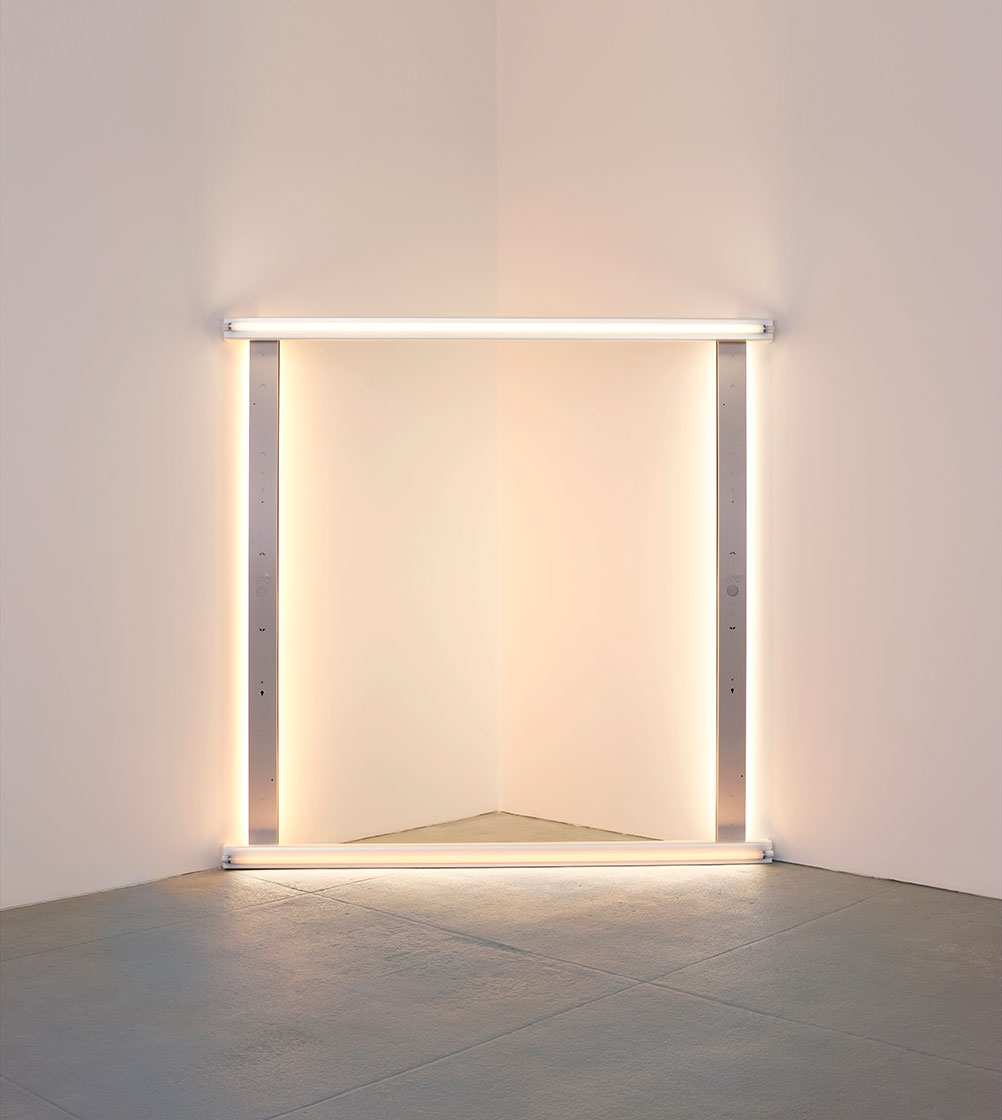
Image: Dan Flavin, Untitled (to Thordis and Heiner), 1966–71. ©️ Stephen Flavin/Artists Rights Society (ARS), New York. Photo: Billy Jim, New York.
Flavin began working with light in the early 1960s, following an initial period marked by drawings, assemblages, and his so-called " icons" —pieces that combined paint, structures, and light bulbs. The turning point came in 1963 with *The Diagonal of May 25, 1963 (to Constantin Brancusi)* , considered his first work composed exclusively of a fluorescent light. From that moment on, the artist decided to work almost exclusively with commercially available lamps, which come in various colors, lengths, and configurations, exploring with radical coherence all the spatial, chromatic, and conceptual possibilities of this minimal vocabulary.
The exhibition, on view until August 17 at MALBA, highlights this trajectory through some of Flavin's most emblematic series and projects. Among them are works dedicated to the Russian constructivist Vladimir Tatlin, one of the most important influences in Flavin's oeuvre. In these "monuments," the artist reinterpreted the idea of monumentality through austerity, replacing traditional mass and volume with a presence made of light, structure, and historical resonance. Also included is a piece dedicated to the deaths of war victims, originally presented in the landmark exhibition Primary Structures at the Jewish Museum in New York, a pivotal show for the consolidation of minimalism in the United States. In both cases, Flavin challenges the apparent neutrality of his materials to prompt reflection on memory, homage, and the symbolic weight of form.
Another highlight of the exhibition is the installation Untitled (to you, Heiner, with admiration and affection) (1973), dedicated to Heiner Friedrich, one of the founders of Dia. The work not only reflects Flavin's common practice of dedicating his pieces to artists, friends, thinkers, or other close figures, but also underscores the close relationship between the artist and the institution. This network of dedications—sometimes intimate, sometimes intellectual, sometimes almost elegiac—constitutes one of the most distinctive features of his work: in contrast to the supposed coldness of minimalism, Flavin introduced a system of personal references that imbues his works with an unexpected emotional charge.
The story of Dan Flavin is, in fact, deeply intertwined with that of the Dia Art Foundation, which holds the most important collection of his work and dedicates a permanent space to him in Bridgehampton, New York. Founded in 1974 by Philippa de Menil, Heiner Friedrich, and Helen Winkler, Dia was born with the aim of supporting large-scale, conceptually ambitious art projects that would have been difficult to realize within conventional institutional circuits. The foundation's name itself, taken from Greek and translatable as "through," alludes to this idea of crossing boundaries and making possible what seemed impossible. Today, Dia has several permanent and temporary spaces in the United States and Germany and has played a decisive role in the preservation, study, and dissemination of key artists of Minimalism, Land Art, and Conceptual Art.
In Flavin's case, this institutional relationship is especially significant because his work depends on a delicate balance between idea, installation, technology, and architectural space. His installations are not limited to the physical presence of the fluorescent tube: the essence lies in the expansion of light across surfaces, the vibration of color on the walls, and the alteration of the visitor's bodily perception. The viewer does not contemplate the work from the outside, but rather passes through it, inhabits it, and is enveloped by it. In this sense, Flavin paved a crucial path for many subsequent installation and immersive art practices by shifting the focus from the object to the experience.
The exhibition allows us to revisit this dimension with particular clarity. Bringing together historical works from the 1960s and 70s not only means revisiting the foundational moments of an exceptional career, but also reconsidering the enduring relevance of an artistic investigation that continues to engage with the present. In a time saturated with images and screens, Flavin's work retains its undiminished capacity to create a sense of estrangement with minimal means: an industrial light, a corner, a line of color. That is enough to completely transform a space.
More than half a century after his first fluorescent pieces, Dan Flavin remains a seminal artist, not only for having expanded the boundaries of sculpture, but also for having demonstrated that light—that immaterial, everyday, and seemingly functional element—could become a form of thought. In Dia Beacon, that intuition unfolds once again with all its power: as color, as architecture, as presence, and as experience.
You may be
interested
...