Exhibitions
The ocean as a territory of memory, transformation, and resistance
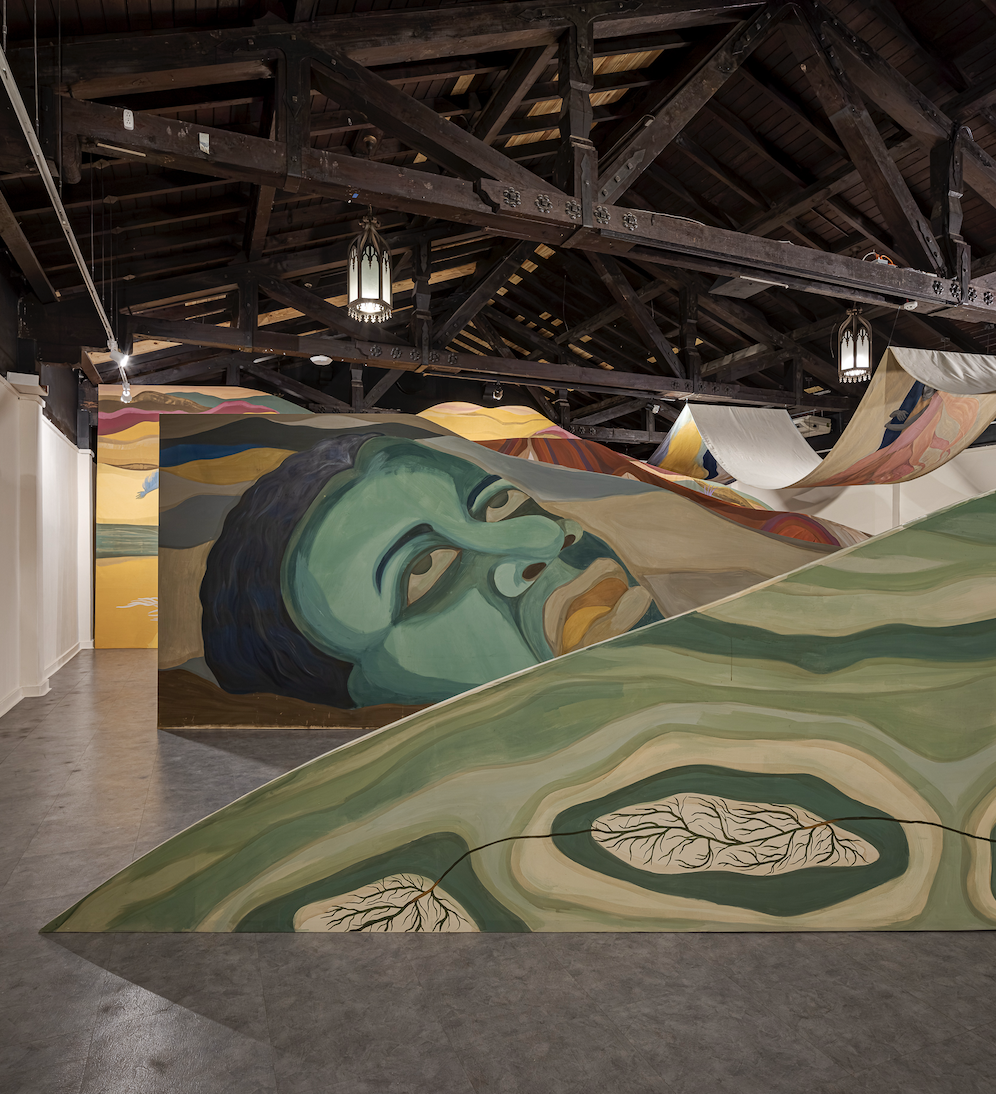
On the first floor of the Museum of Contemporary Art of Panama (MAC), the exhibition "Other Mountains, Those That Roam Free Underwater" invites visitors to immerse themselves in a vision of the ocean that transcends its biological dimension. Curated by Yina Jiménez Suriel and Juan Canela, the exhibition proposes understanding the sea as a shared space of life, memory, and constant transformation, where human and non-human stories converge.
Caribbean artists Tessa Mars, from Haiti, and Nadia Huggins, from Trinidad and Tobago, employ improvisation as a tool for creation and critical thinking. Through their installations, they both question traditional power structures and the systems that determine which bodies, territories, and forms of existence are visible or recognized.
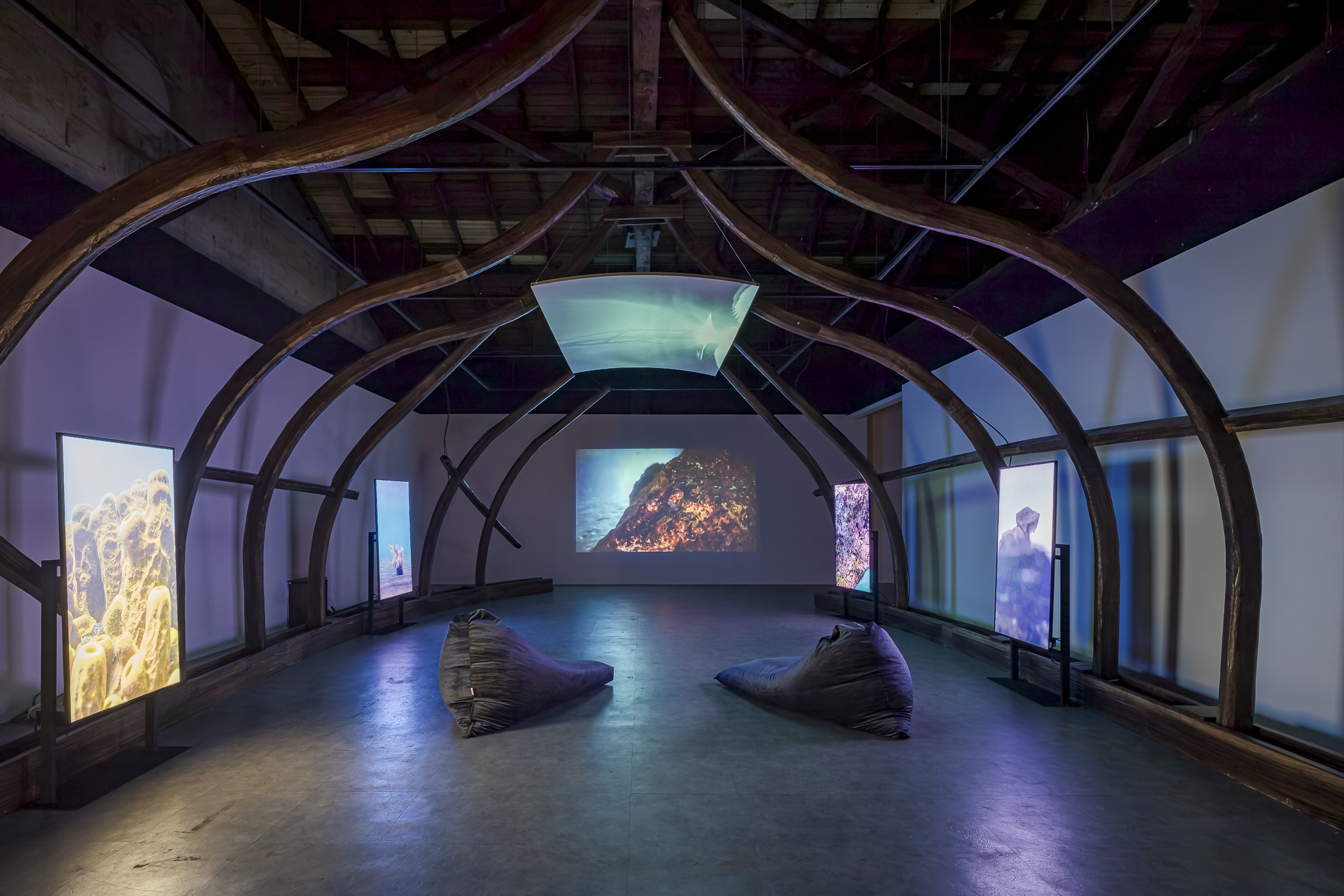
Nadia Huggins' video installation, A Shipwreck Is Not a Wreck (2025), explores improvisation as a way to escape the rigid perceptual frameworks that have sustained various forms of social, collective, and sensory domination. The work leads the viewer through the wreckage of a shipwreck that, far from representing an end or a static ruin, becomes a living organism in constant metamorphosis. Corals, rocks, mangroves, jellyfish, and human bodies coexist in a landscape where the ocean appears as a force that transforms and sustains existence.
Huggins' proposal rejects the simple categories of good and bad to give way to characters and entities marked by ambiguity, vulnerability, and emotional complexity, thus reflecting the diversity of relationships that emerge in marine ecosystems.
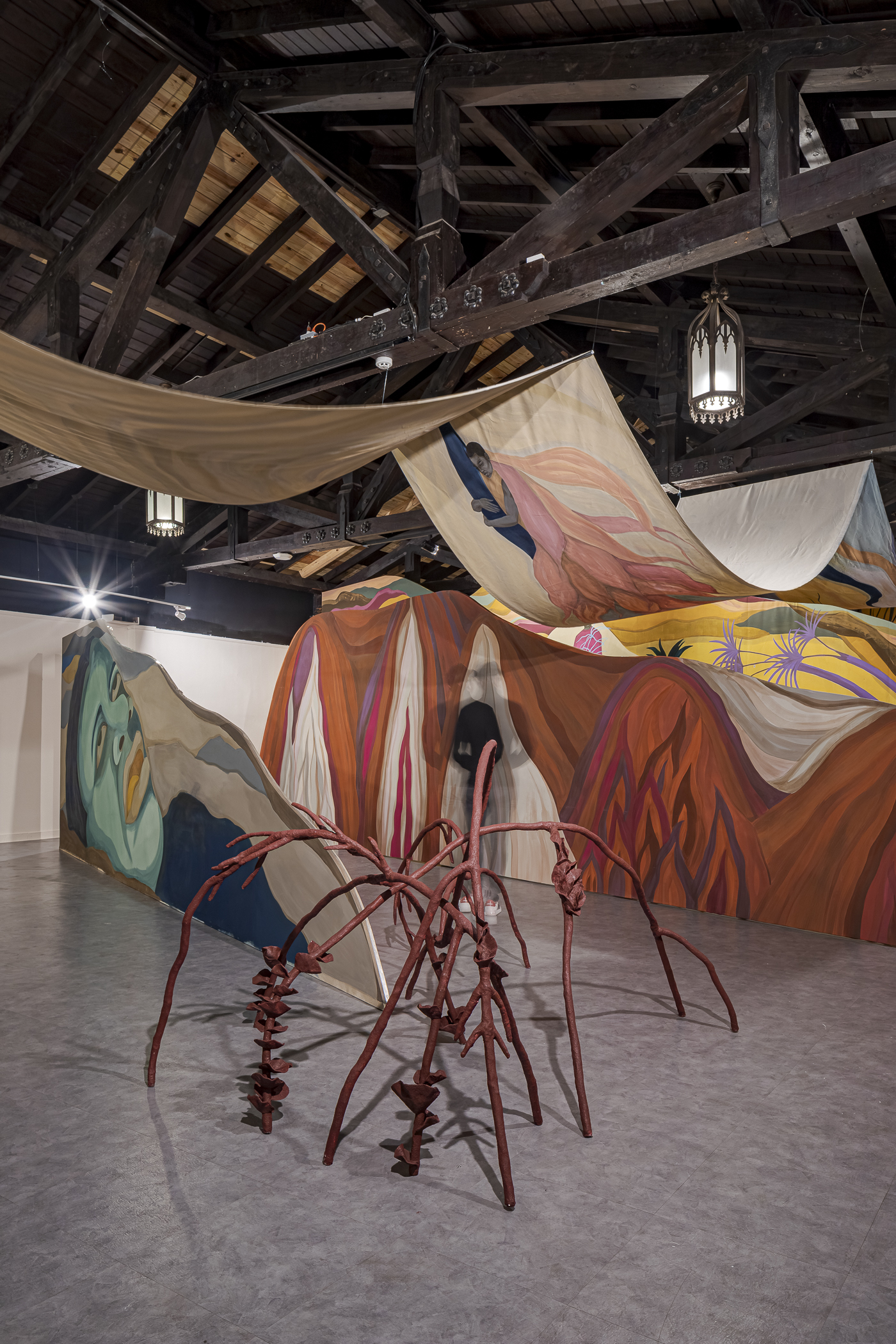
In her audio-pictorial installation A Call to the Ocean (2025), Tessa Mars connects improvisation with the idea of “fugue,” a concept developed by the artist and philosopher Dénètem Touam Bona. In this context, fugue does not mean escaping, but rather continuously transforming oneself to avoid mechanisms of control and open paths toward new possibilities of existence.
In Mars's work, mountains cease to be mere natural landscapes and become active entities that participate in the history of life on Earth. In contrast to the terrestrial perspective that understands these landscapes as resources destined for exploitation, the artist proposes an oceanic vision in which mountains are beings of otherness, connected to geological, spiritual, and collective processes.
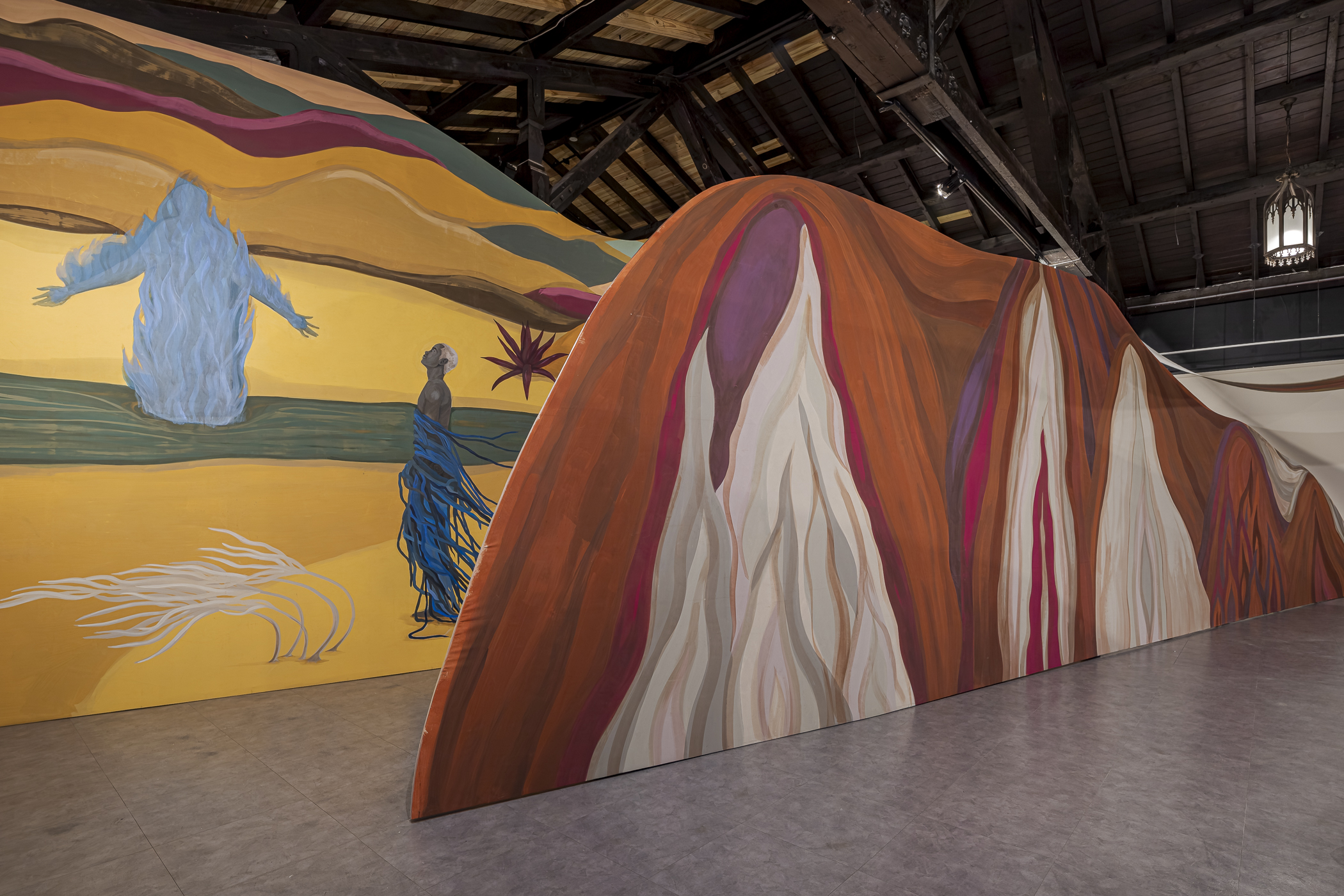
The experience of both installations engages not only the eye, but also the body of the visitor. The works can be inhabited and traversed, generating immersive experiences in which perception expands and shifts to other points of view.
Adapting the pieces to the MAC space presented a curatorial challenge, as they were originally conceived for a larger-scale environment during their presentation in Venice, inside a former church. According to Juan Canela, the transfer to the Panamanian museum—located in a building that previously served as a Masonic temple—generated a symbolic coincidence: “We laughed during the installation because the exhibition went from one temple in Venice to another here.”
Canela emphasizes that the essence of the exhibition lies in its ability to open up new ways of imagining the world: “Both works champion imagination and the possibility of thinking about other ways of being on the planet. We want the public to be able to see, feel, and experience from different perspectives.”
You may be
interested
...