Exhibitions
Hilma af Klint: art, science and spirituality
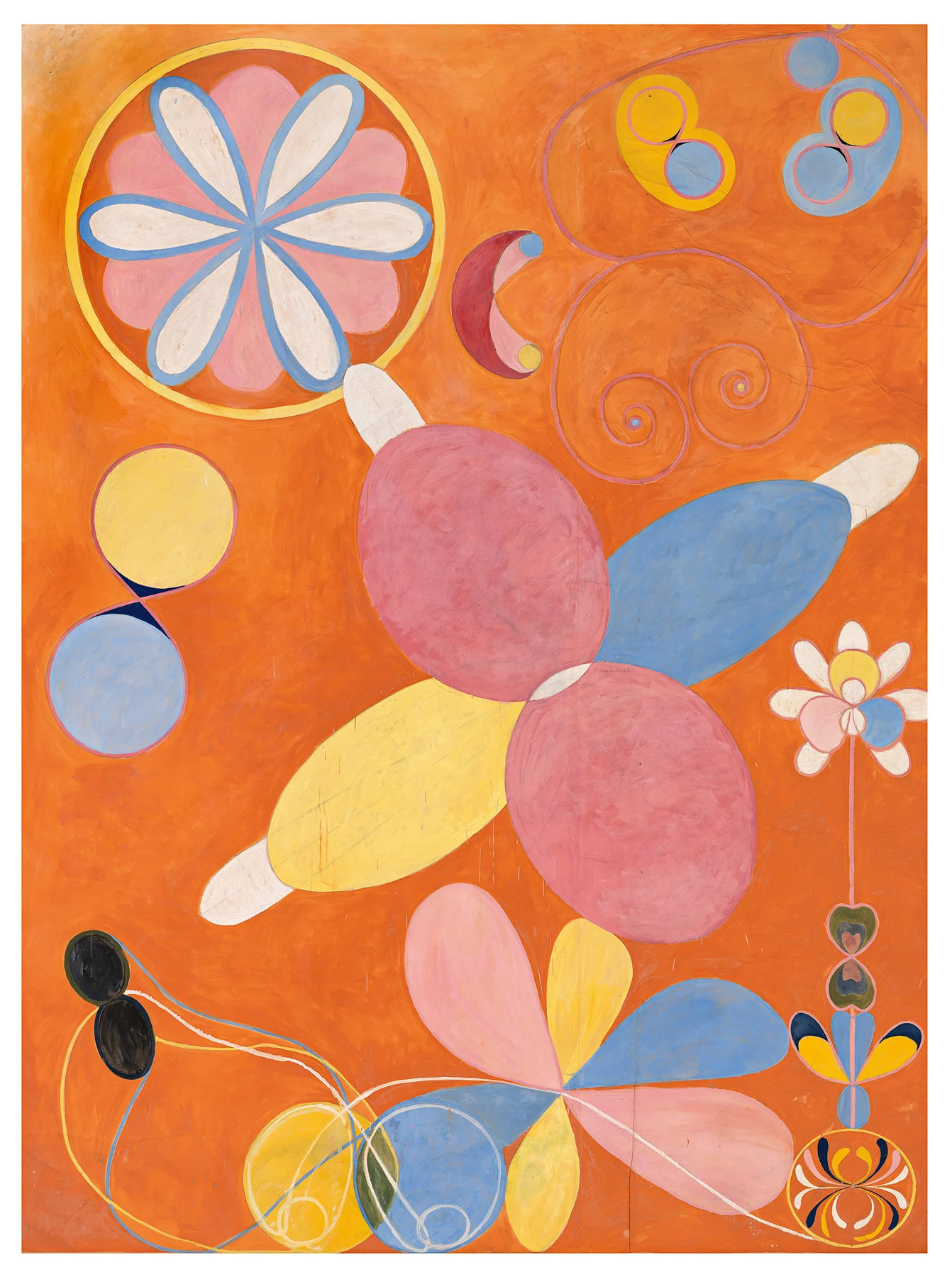
Though long shrouded in obscurity, Hilma af Klint has become a key figure in the history of modern art. From her large-scale abstract compositions, pioneering of the movement, to her more secretly avant-garde pieces, her work harmonizes color and form with a strong symbolic charge.
Trained at the Royal Academy of Fine Arts in Stockholm, Hilma af Klimt painted academic portraits and landscapes on the one hand; on the other, she secretly developed a profoundly experimental body of work, influenced by spiritualism, theosophy and the search for an invisible harmony of the universe.
Organized in collaboration with the Centre Pompidou, the exhibition brings together for the first time in France the series Paintings for the Temple , created between 1906 and 1915; a monumental series that anticipated abstraction several years before Kandinsky or Malevich. The highlight of the series is The Ten Elders (1907), a journey through the four stages of life—childhood, youth, adulthood, and old age—all on a grand scale. The exhibition also invites visitors to explore the artist's diverse sources of inspiration—esotericism, folk art, and scientific culture—and examines the role of women in the artistic movements of the period.
For a long time, Hilma af Klint chose to keep her abstract works hidden; they remained locked away even twenty years after her death. It wasn't until 1986, with the exhibition "The Spiritual in Art" in Los Angeles, that her work was presented to the public.
You may be
interested
...