Exhibitions
Sim, the stroke of devastation
The MNAC rescues the most uncomfortable look at the Civil War in an exhibition that turns drawing into political memory.
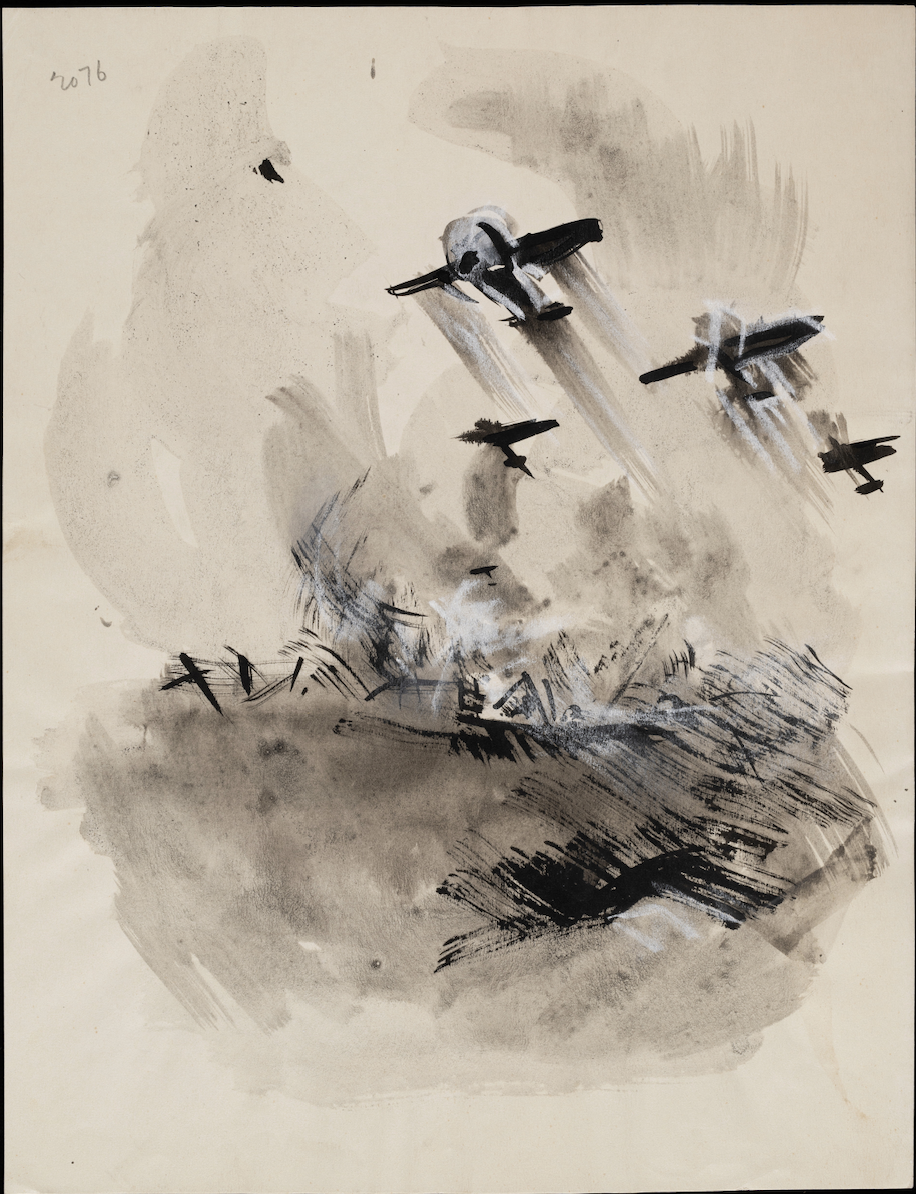
In the midst of the commemoration of the ninetieth anniversary of the outbreak of the Spanish Civil War, the National Art Museum of Catalonia proposes an exhibition of exceptional force: Sim, drawing and war . Far from any nostalgic or monumental temptation, the exhibition recovers the graphic voice of José Luis Rey Vila, known as Sim, an artist who turned drawing into a form of documentary resistance to barbarism.
The exhibition brings together forty-one drawings —selected from a set of almost one hundred pieces recently acquired by the museum— that portray a war-torn Barcelona, its anonymous victims and the human tension of the conflicted streets. The result is not just a historical review: it is a visual experience of great moral intensity.
Sim, often overshadowed by the great names of the Republican avant-garde, emerges here as one of the most lucid visual chroniclers of the conflict. His nervous, expressionist and urgent strokes avoid any heroism. His characters are not symbols; they are tired bodies, hungry faces, wounded militiamen and civilians trapped within a reality that seems to be collapsing. Each drawing functions as a scene captured in the heat of the moment, with an immediacy that is still uncomfortable today.
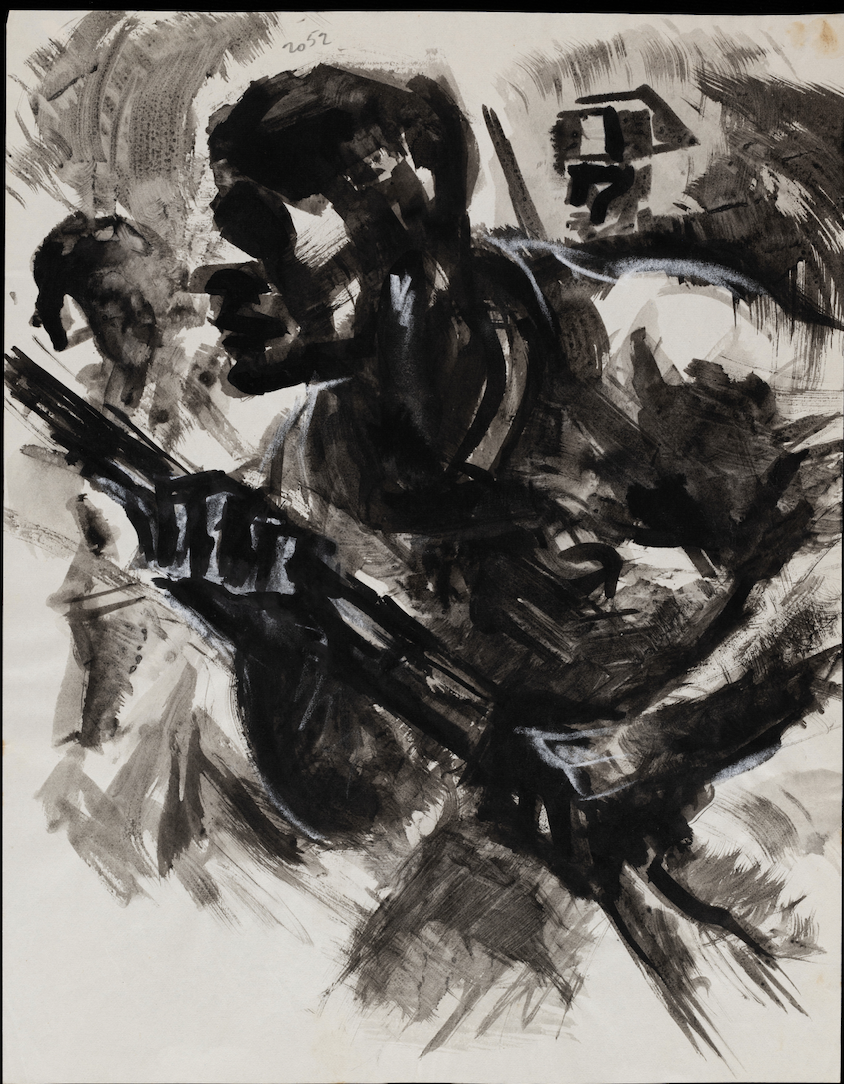
The great virtue of the exhibition is precisely this: understanding drawing not as a preparatory sketch, but as an autonomous language of denunciation. In an era saturated with digital images and fragmented memory, Sim's papers recover the physical value of testimony. The trembling line, the dry shadows and the abrupt composition convey an emotional proximity that often surpasses photography.
The tour also dialogues with an extraordinary piece: The Wounded Militiaman by Francisco Mateos, a work that was part of the legendary Pavilion of the Republic at the 1937 Paris International Exhibition, sharing space with Pablo Picasso's Guernica and Joan Miró's The Reaper . The painting reaches the public in an almost dilapidated state, and it is precisely this fragility that turns it into a spectral and deeply striking presence. The museum avoids artificially restoring its wound; the work is shown as a relic damaged by history itself.
This curatorial gesture is intelligent and coherent: material degradation is not hidden, but incorporated into the narrative. War does not appear here as an iconographic theme, but as a tangible destruction of images, bodies and cultural memory.
The MNAC proposal also stands out for a less visible but fundamental dimension: the vindication of the internal work of museums in acquisition, conservation and research. The exhibition does not only present works; it explains how these works survive, reappear and become part of the collective heritage. In this sense, the incorporation of Sim's drawings represents a historical reparation towards an artist who has been absent from Catalan public collections until now.
You may be
interested
...