Opinion
Dedicated to Daniel, the Little Owl
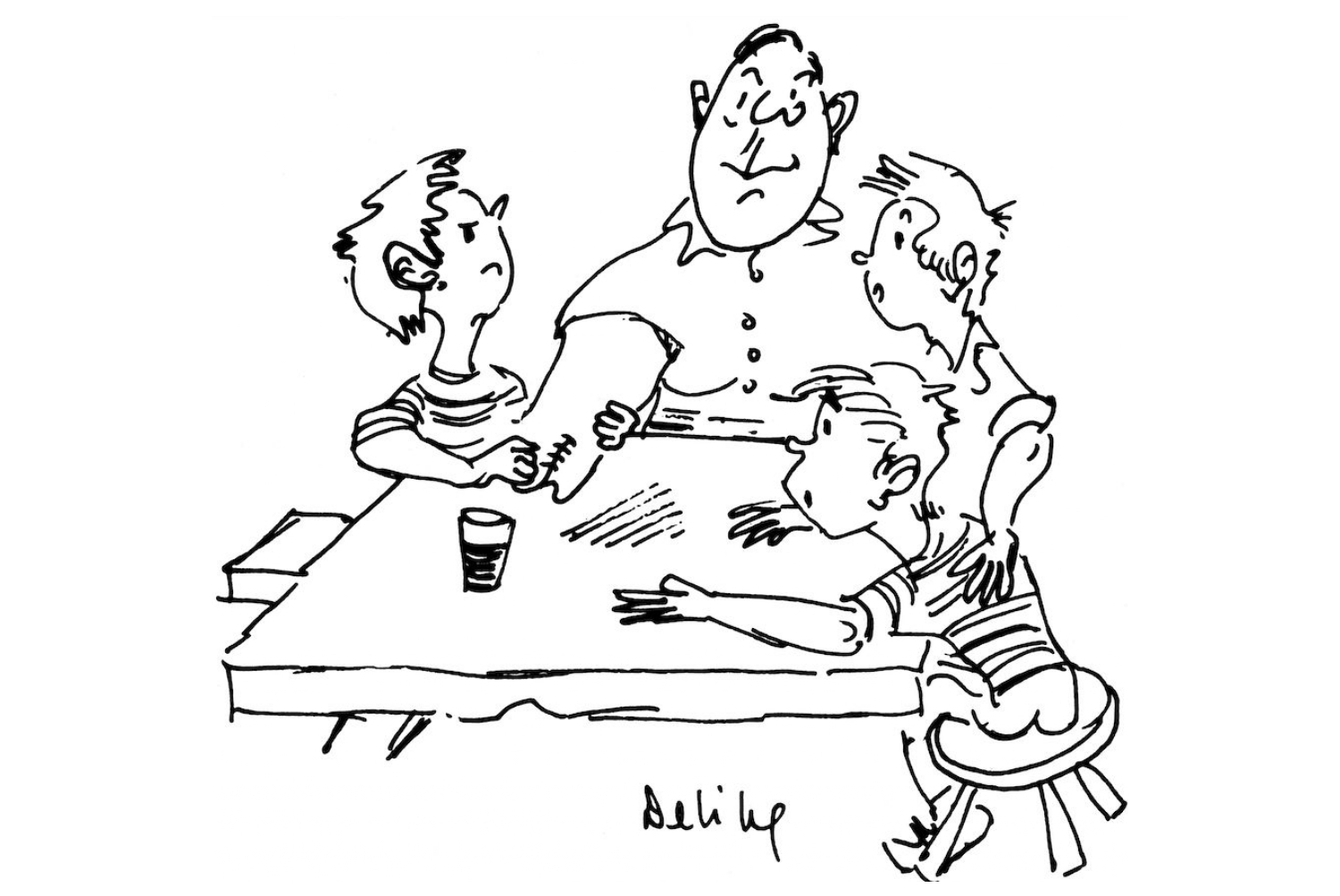
Well, I've reread The Road . It had been a while since I'd visited that valley of names, so deep, hidden among mountains and regulated by the eloquent tolling of the bells, and upon returning, I was pleased to discover how little had changed. Daniel, the Sparrow, still lamented his departure; Germán, the Scabby One, was still right; and Roque, the Dung Beetle, was still the most manly of all men. Of course, the book is now seventy-five years old, Miguel Delibes would be one hundred and five, and I'm twenty-three. Everything has changed in the world. But the valley… The valley remains the same.
There are books that touch the soul; but this one pierces it and leaves a lasting scar, a good one, a salty one. Surely, Daniel, the Sparrow, who always longed for one of his own, would despair completely upon learning that, to top it all off, he is the cause.
But some things, by design or misfortune, slip through one's fingers. Daniel, the Sparrow, knew this too. To begin with, he didn't want to move to the city, as his father, the cheesemaker, said, to get ahead. Progress—as the Sparrow understood it—consisted of fourteen years of study, far from the valley, to unlearn what he had learned and, having made the necessary effort, learn other, rather useless things. In short, a waste of time.
As he said goodbye to Father José, the priest, recalling the words the priest had spoken during his sermon on the Feast of the Assumption, Daniel, the Little Owl, felt that his departure meant straying from the path God had marked out for him. After all, he, the Little Owl, was as much a part of the valley as the dampness, the English Pool, the thrushes, Paco the blacksmith's forge, or the freckles on the Uca-uca tree. “However, he had to leave it all behind for the sake of progress. He didn't yet have autonomy or the capacity to make decisions. The power to decide comes to a man when he no longer needs it for anything; when he can't go a single day without driving a cart or breaking rocks if he doesn't want to go hungry. [...] When life takes hold of you, all power to decide becomes superfluous. Instead, he was still capable of deciding, but since he was only eleven years old, it was his father who decided for him.”
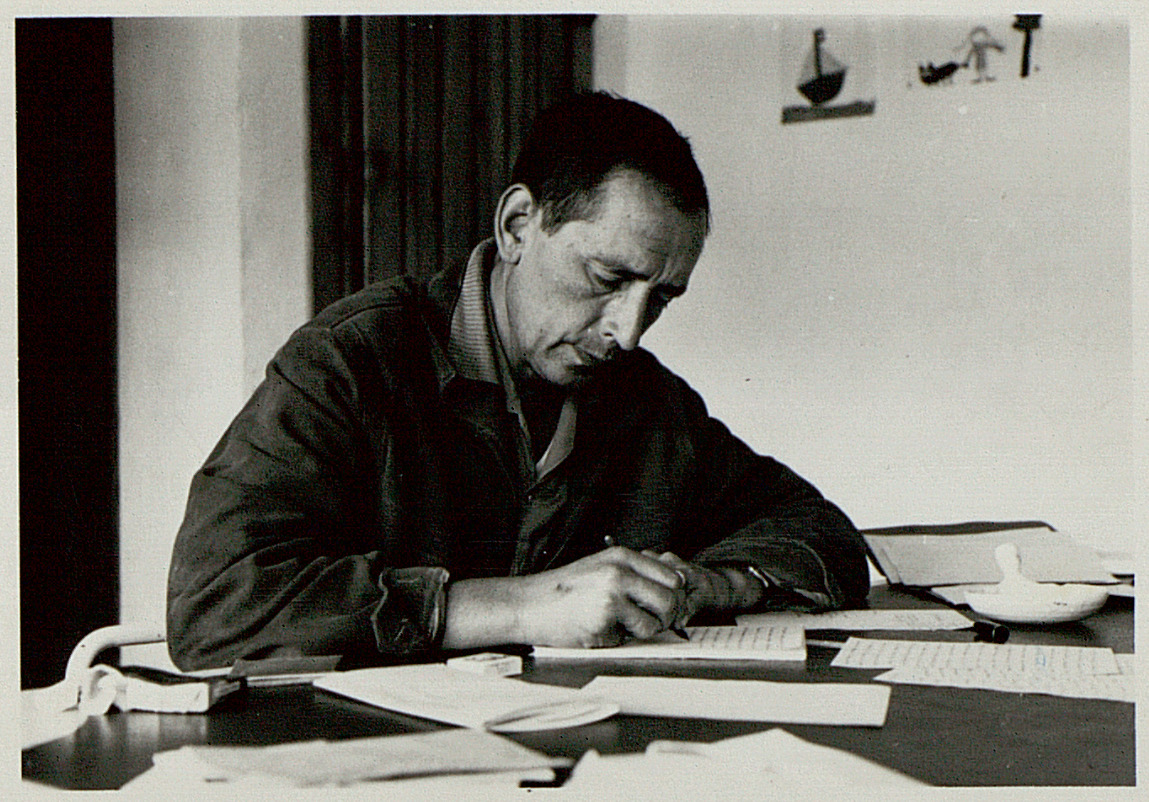
Miguel Delibes in his office in Sedano (Burgos). Sixties.
But we shouldn't condemn the cheesemaker. Nor should we condemn Mochuelo, for being too young to understand the strange workings of the world, nor Father José, the priest, for his words. Daniel, Mochuelo, believed his path lay in the valley; that by turning his back on it, driven by his father's ambition, his life would take a wrong turn. Now I know there's no such thing. There's no right path. If anything, there's the path one follows, with its ups and downs, and there's one's own love and will. Mochuelo's love for the valley was greater, more real, than any God or any decision. And sometimes, that should be enough.
In The Path , Miguel Delibes condemns progress—its modern and irrational sense—as the only path to follow. It is progress that clouds the cheesemaker's heart and nullifies the Mochuelo's capacity for decision-making. It is progress, then, not God, that sadly marks the path of men and tears the little boy from his beloved valley, only to leave him with a stump in his soul not unlike that of Quino, the one-armed man. “Life was that strange, absurd, and capricious.”
The world that Delibes revealed through his books—his world; the world of so many others—the presentation of these landscapes and his vast array of characters, each with their own ideas, yet always so vibrant, has demonstrated that, indeed, history cannot be written solely from the big city. Even less so, at such a breakneck pace. “To live was to die day by day, little by little, inexorably. In the long run, everyone would end up dying. [...] Everyone, absolutely everyone who now populated his world, would disappear from it, and the world wouldn't even notice the change.” Because it's true; oblivion can be inevitable.
Even so, seventy-five years later, the valley remains the same. Its rhythm, its customs, its precise and unique vocabulary: nothing has changed. Nor has Daniel, the Little Owl, who, “from the depths of his eleven years,” continues, to this day, to lament “the course of events.” And from here, we join him. This, in part, is what makes a great book.

You may be
interested
...