
Exhibitions
The weight of fragility
Mikel Adán Tolosa's exhibition at La Capella, which explores the tension between fragility and permanence through the sculptural use of butter and stone, can be visited until July 5.
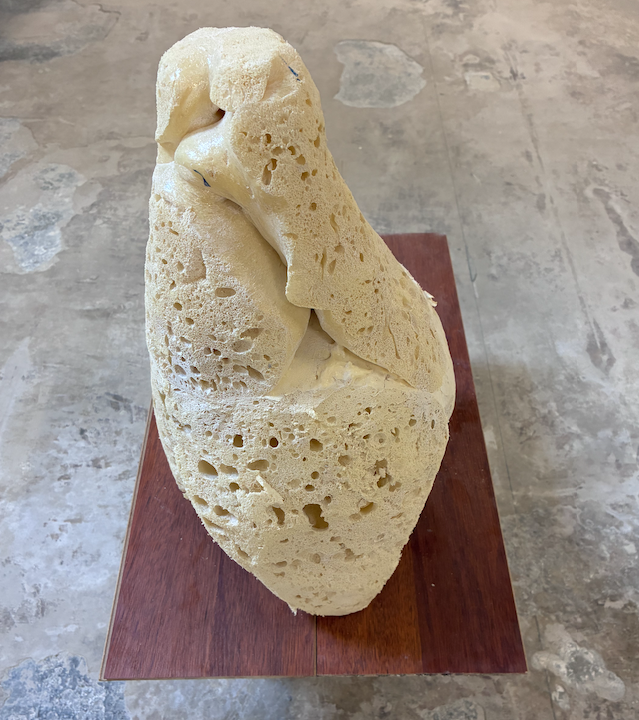
One of the fascinations of contemporary art today lies in the ability of artists to break through inherited conceptual bases. Good proof of this is the tireless will to challenge languages, inhabit new spaces and subvert imaginaries, as demonstrated by Mikel Adán Tolosa's exhibition at La Capella.
The exhibition, which aims to challenge hardness, establishes a dialogue between materials in the Espai Rampa of La Capella. In this context, the artist tries to redignify soft, frigid yet comfortable bodies, which have traditionally remained outside of what is associated with sculpture.
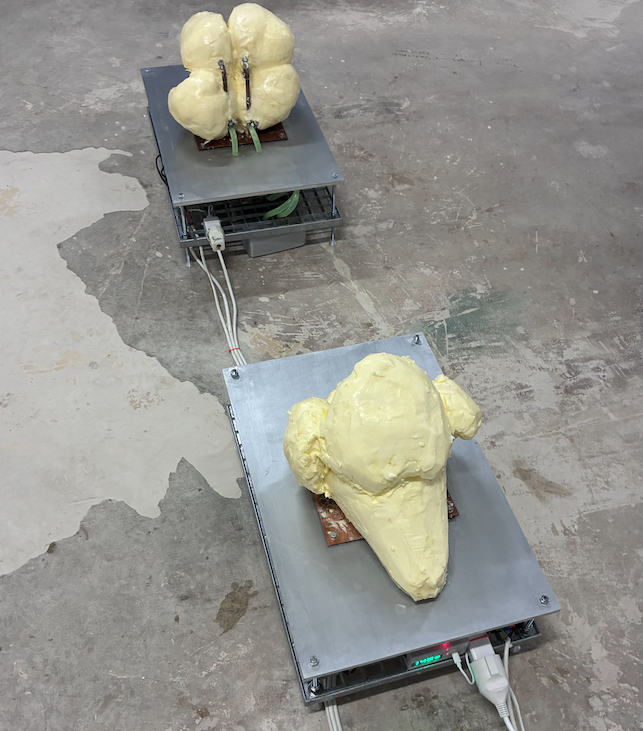
With butter as the main protagonist and in dialogue with local stone, Mikel Adán proposes an approach to the Catalan territory through a herbarium that reproduces, in a buttery key, a variety of species of the native flora. The young sculptor pays special attention to those endemic flowers in danger of extinction that, like butter, from their ephemeral condition confront the durability of stone, historically linked to the sculptural tradition.
This buttery nursery takes up the thread that Manolo Hugué began to weave at the beginning of his career, as Josep Pla recounts in La vida de Manolo . Hugué had made butter sculptures in the displays of grocery stores and dairies with the aim of making his way into the Catalan sculptural showcase. Eighty years later, Mikel Adán takes up this gesture to vindicate these stores that, increasingly, seem to share the same vital journey as the buttery and endemic flowers selected by the young artist from Calderón.
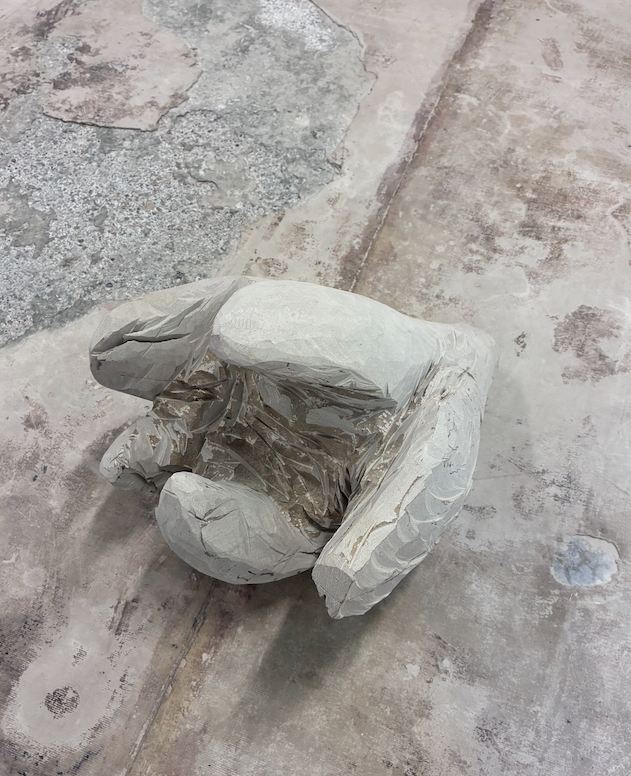
Just as Hugué did, Adán exhibits some of his butter flowers in the windows of these establishments. A gesture that not only points out the structural fragility of local commerce, but also highlights the lack of exhibition spaces that most young artists in Catalonia face. Although the young sculptor has developed, with the help of Huaqian Zhang, a simple refrigeration process that partially stabilizes the butter, the transformation of this compostable material over time is inevitable. This inherent alteration assumes the precarious condition that very often accompanies contemporary artistic production, marked by the difficulty of exhibition and, above all, storage, which push artists to work with ephemeral materials.
One of the most challenging aspects of the sculptural proposal is the lucid use of figuration. For Mikel Adán, the recognizable reproduction of real forms becomes an essential tool to bring his discourse closer to the public. In this sense, the figurative representation of native flowers functions as a bridge between the material language and the perceptual experience of the viewer.
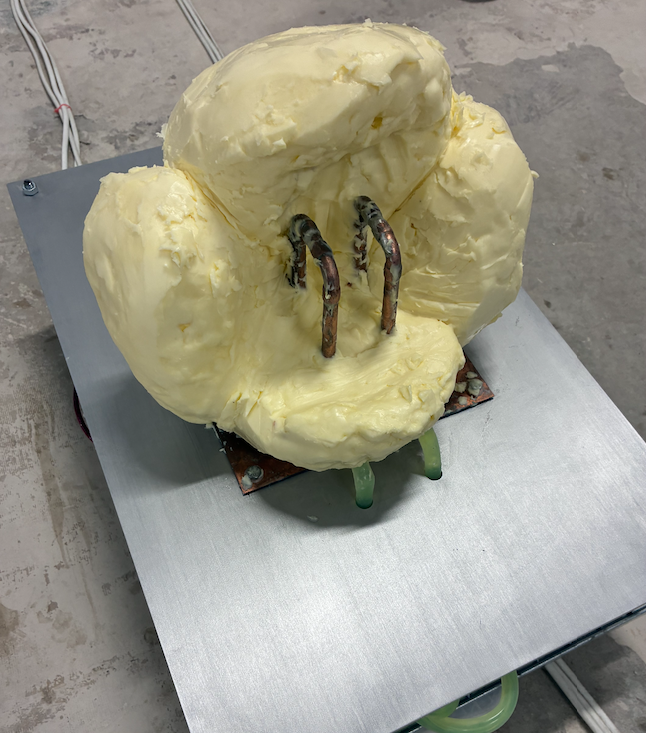
Butter is thus established as an ideal material for the discursive articulation of the exhibition. However, it is a problematic material in itself: it is a food that requires high livestock and industrial production. Aware of this contradiction, the artist has chosen to make use of industrial butter churns, thus incorporating a reflection on the use of resources in contemporary art.

You may be
interested
...