News
Ctrl+C / Ctrl+V (Sant Jordi Special)
Walter Benjamin: Work, Aura and Technical Reproducibility.
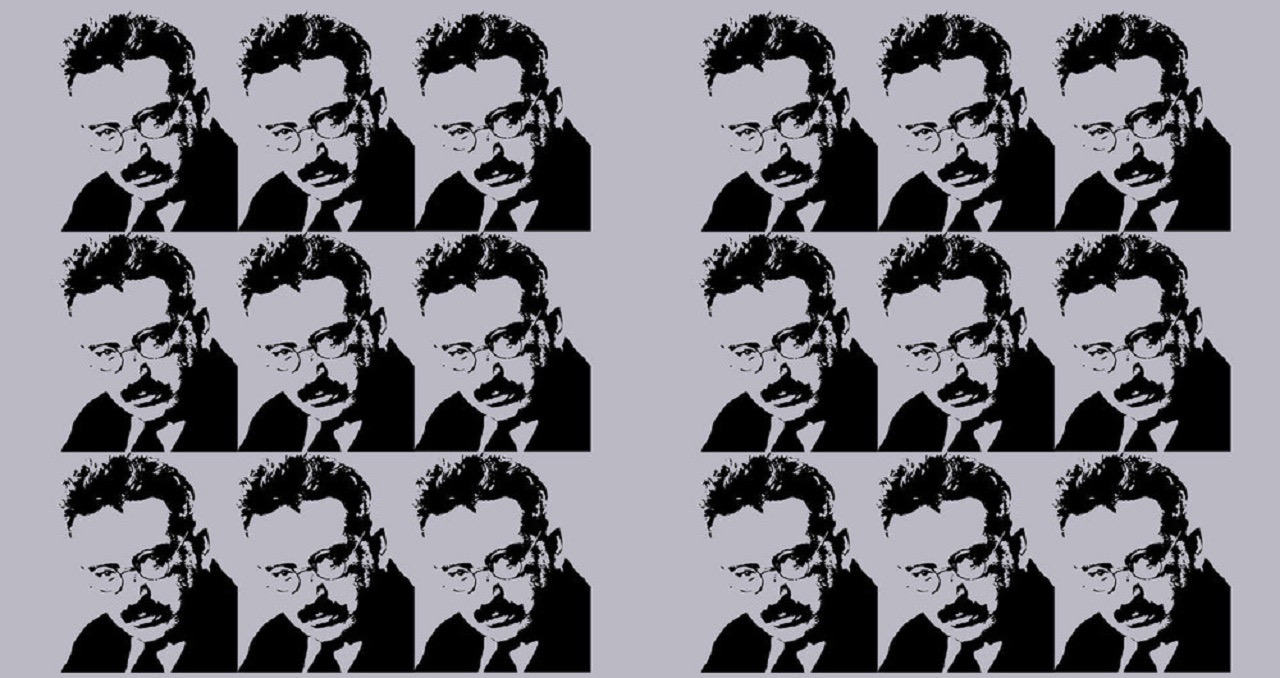
The Work of Art in the Age of Technical Reproducibility is one of Walter Benjamin's most famous texts, in which he reflects on how mechanical reproducibility destroys the aura of works of art and how new cultural and political functions and interpretations are consolidated. Written in 1936, it represented a true revolution in the way art was understood at the time—with the advent of photography and cinema—and remains relevant today, in a context marked by digital globalization and the rise of artificial intelligence.
The essay addresses the transformation of the work of art throughout history and how its aura—what makes it unique, linked to its unrepeatable existence and its context—deteriorates as technologies allow it to be reproduced with ease. The text invites us to reflect on how we live with images in an era dominated by mass reproduction and how this conditions our way of perceiving both art and the world.
Currently, the cultural and political function of art, as well as its aura, are in tension. This book is key to understanding our current position and to anticipating possible future scenarios. In this sense, artificial intelligence has radically expanded the limits of technical reproducibility, to the point of generating non-existent but plausible images, such as “deepfakes” or “AI-generated” aesthetics, capable of confusing perception and judgment.
Furthermore, the widespread accessibility of these tools opens up a field of ambivalent possibilities: on the one hand, it democratizes visual creation; on the other, it facilitates the manipulation and dissemination of distorted images. This aesthetic has already been instrumentalized by certain ideologies, including reactionary discourses, to reinforce distorted visual narratives through AI.
I recommend this book not only to gain a new perspective on how we interpret the world through images, but also to develop a critical view of what we consume visually and better understand the role of art in everyday life.

You may be
interested
...