Exhibitions
Dalí takes possession of the Rigaud Museum: a key work of surrealism is installed in Perpignan
A key work of Dalí's surrealism arrives for the first time in the Rigaud Museum collection thanks to an exceptional loan from the Pompidou Center, in an exhibition that links Perpignan with the artist's visionary legacy and anticipates the great tribute planned for 2027.
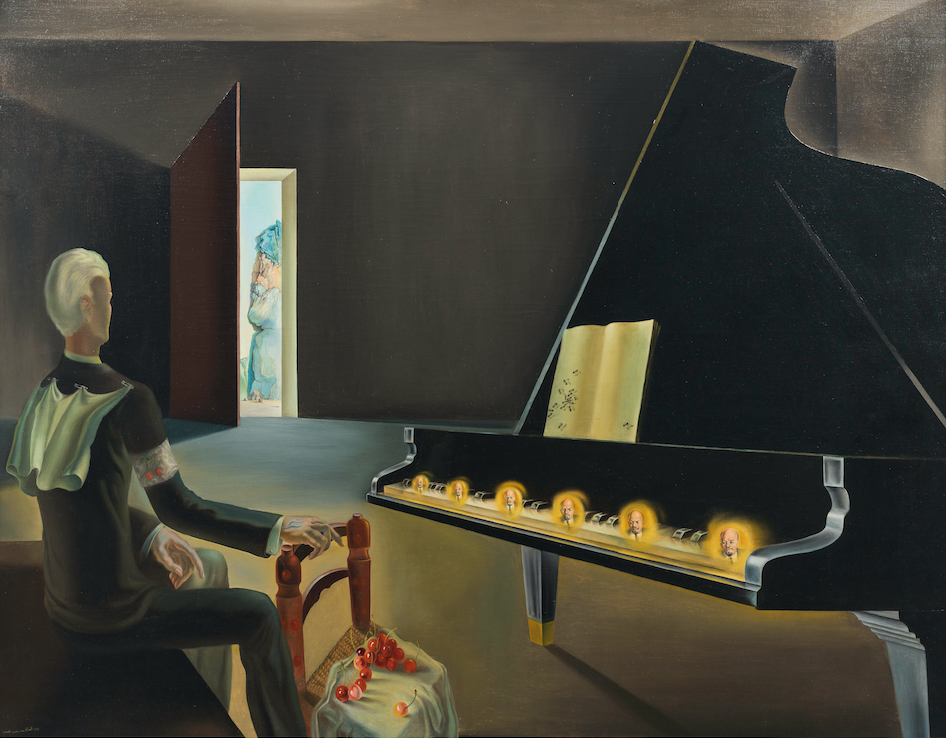
For the first time, the Hyacinthe Rigaud Art Museum is incorporating a major work by Salvador Dalí (1904–1989) into its permanent collection. Thanks to an exceptional loan from the Centre Pompidou – Musée National d'Art Moderne, the painting Partial Hallucination. Six Images of Lenin at the Piano (1931) will be exhibited for more than a year in a space steeped in history: the former state room of the Hôtel de Lazerme, at the heart of the museum. The work will be on view from March 1, 2026 to April 30, 2027.
This incorporation marks a significant milestone in the museum's programming and is a prelude to the major exhibition dedicated to Dalí planned for 2027 in Perpignan. Beyond its museum value, the project seeks to reinforce the artist's presence in the cultural memory of the territory and establish a lively dialogue between his work, the exhibition space and the public.
An obsessive vision turned into a political and surrealist icon
Partial hallucination. Six Images of Lenin at the Piano is a fundamental piece in Dalí's career. Made in 1931, it was born from a hypnagogic experience—a hallucination that occurs in the intermediate state between wakefulness and sleep—in which the artist perceives Lenin's face multiplied on the keys of a piano.
This initial image is transformed into a composition full of symbolism, where Dalí incorporates recurring elements from his universe: a napkin, cherries, a bracelet and ants, among others. The work stands out for being one of the first in which the artist explicitly addresses the figure of political power, while also reflecting his growing distance from the communist orientation of surrealism promoted by André Breton.
A dialogue with the territory: Dalí and the Roussillon
The exhibition is not limited to this central piece. The Rigaud Museum adds two works from its own collection, which expand the story of Dalí's relationship with the territory.
On the one hand, an original drawing representing the bell tower of Collioure is presented, an unusual piece that demonstrates the artist's interest in the landscape of Roussillon. On the other, a photograph enhanced with gouache based on his work L'estación de Perpignan o Pop, Op, Sí-Sí, Bomber (1965) is exhibited, a festive homage to the city that Dalí defined as the "cosmic center of the universe".
A long-term cultural project
With this initiative, the Rigaud Museum is laying the foundations for an ambitious project: to integrate the figure of Salvador Dalí more deeply into the cultural history of Perpignan and its region. The aim is to highlight not only the symbolic links, but also the real connections that the artist established with this territory that inspired part of his creative vision.
The arrival of this emblematic work turns the museum into a new point of reference for the study and dissemination of surrealism, and paves the way for a great Dalinian celebration planned for 2027.

You may be
interested
...