Exhibitions
Archaeological nature: mud as memory and architecture
At Tramuntana Gallery, Madola and Vallverdú transform ceramics and sculpture into records of time, processes and sensory experience.
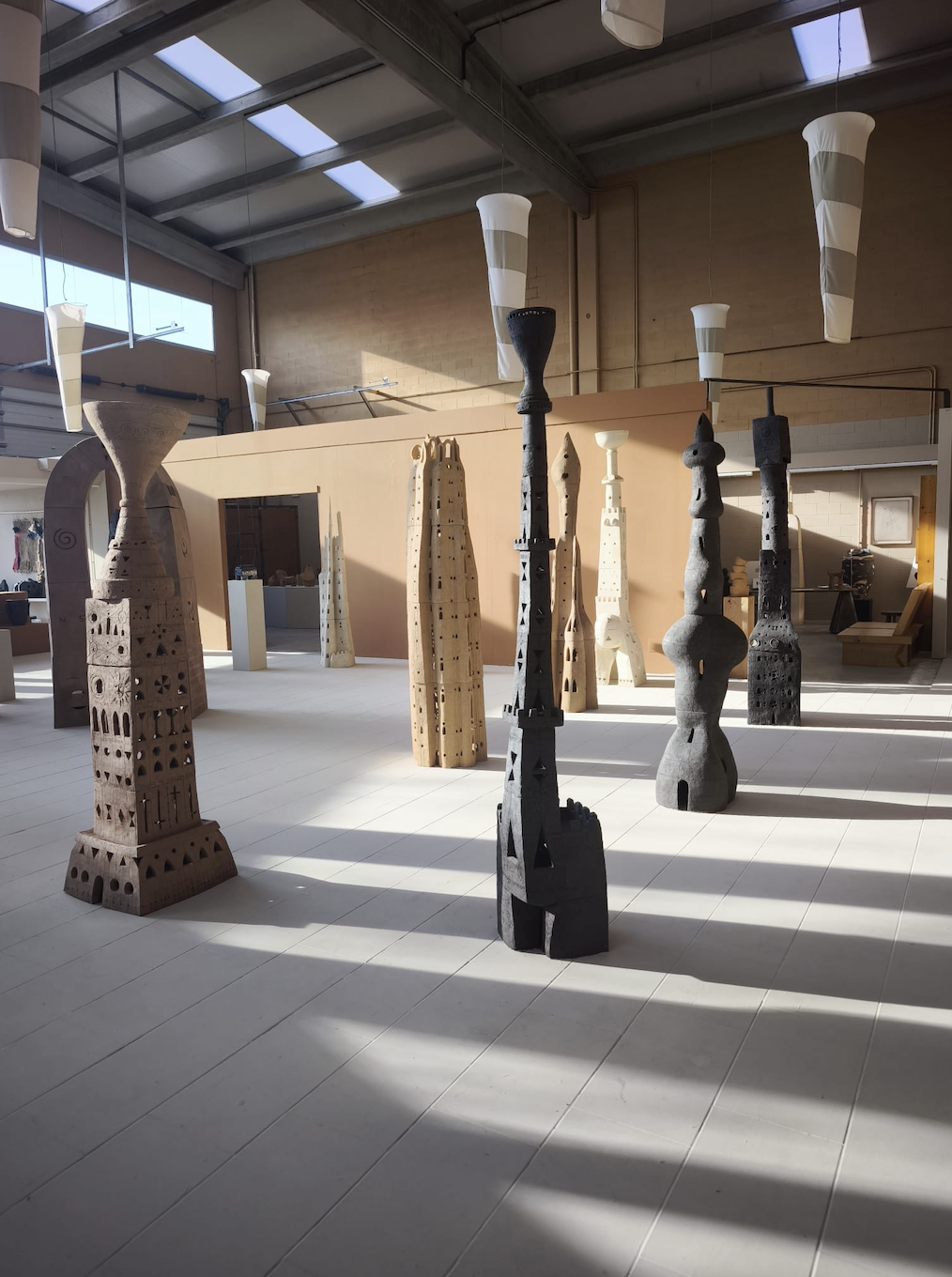
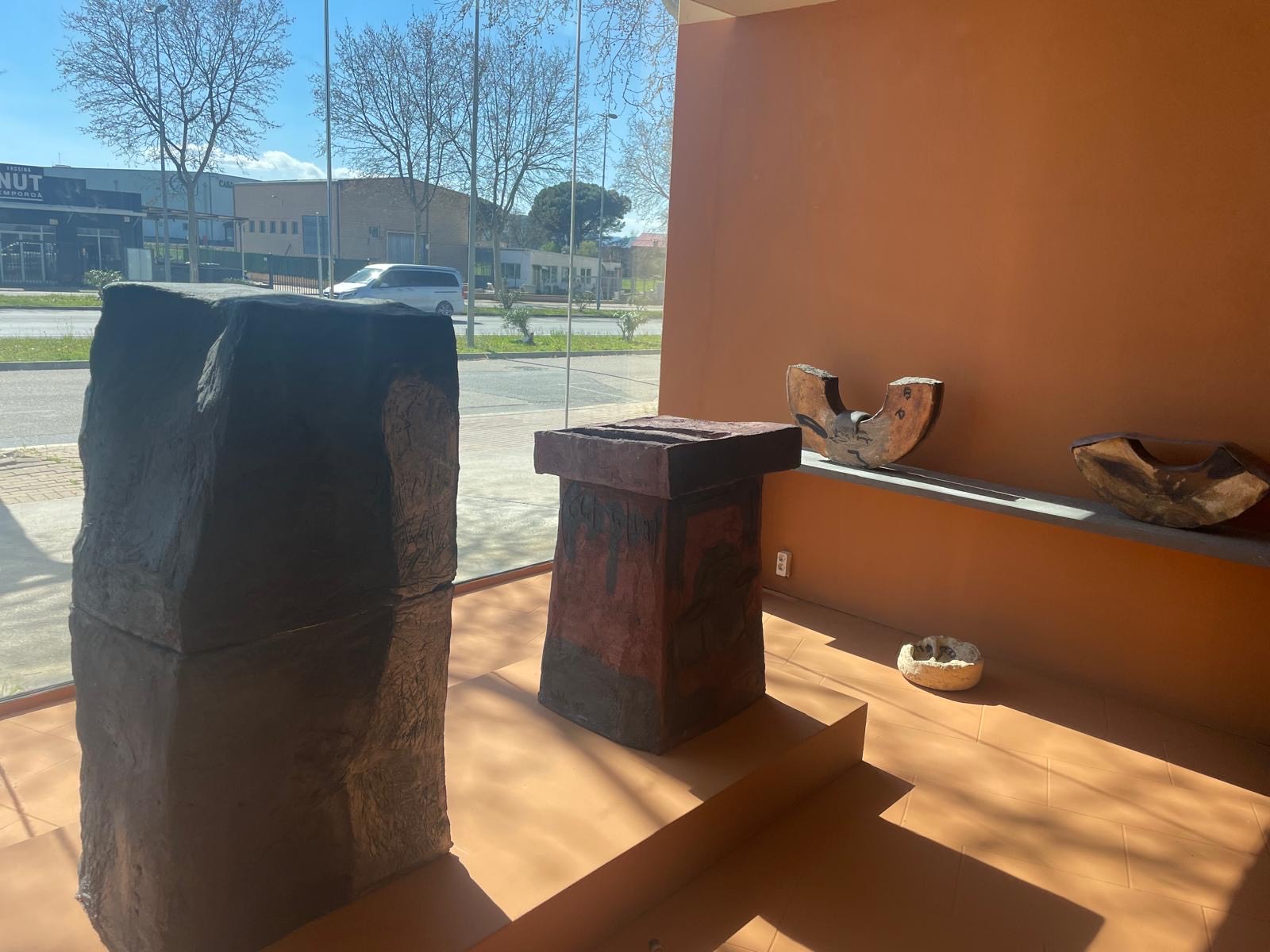
At Tramuntana Gallery, the new exhibition Archaeological Nature. Architectures of the Heart brings together the works of Madola i Vallverdú in a proposal that conceives ceramics and sculpture not as objects, but as records of memory and time. Ceramics is not a simple object; it is a process, a record of events. Everything that happens from the first contact of the hand with the clay to the final judgment of fire defines the pieces and their expressive force. The finished piece, apparently immobile, preserves a physical memory: that of the body that modeled it and that of the earth that accepted—or resisted—that will.
Madola builds contemporary ruins rather than conventional objects. Since her entry into La Massana in 1960 and her first exhibition presented by Salvador Espriu in 1966, her trajectory has been a constant excavation into the interior of matter. Her pieces operate as thresholds that separate the known from the intuited. There is no cosmetics or artifice: there are oxides, textures and geological time. The kiln becomes an accelerator of centuries that stops erosion just in time. Trained with Josep Llorens i Artigas and a doctorate in Fine Arts with a thesis on the legacy of Joan Miró in contemporary ceramics, Madola has left her mark in public works on four continents and is part of the Royal International Academy of Ceramics. After six decades of career and the National Crafts Award (2024), his volumes continue to raise open questions, faithful to a way of understanding the world through touch.
Vallverdú has followed a path of academic reflection poured into the workshop. Forty years directing sculpture at the University of Barcelona were not a parenthesis, but a methodology: teaching how to look at the material in order to understand it. His work is raw clay, stripped of any glaze; plates constructed and modeled simultaneously, completely empty inside, without any inner soul. If in his beginnings closed and hermetic forms predominated, time and his retreat to Concabella have gradually opened them up. Today, his architectures allow themselves to be crossed by air and light, which penetrates through large windows and holes. They are constructions that have learned to breathe, imaginary architectures that drink from history, legend and myth. Most are models of spaces that could be entered, and the presence of doors and openings establishes a direct relationship with the body of the viewer, turning the work into a tribute to moments and people that have marked his life.
Despite their differences in trajectory and way of working, Madola and Vallverdú agree on a fundamental certainty: the earth possesses an ancient nature that precedes us. Its forms, whether they are shelters or borders, are architectures of the unspeakable. It is an art that needs no explanation, because it appeals to something we carry within and that only clay is capable of materializing.

You may be
interested
...