Exhibitions
Sisquella: “Still Life.” It's never too late.
Àgora 3, the art gallery in Sitges, presents from March 27 to April 26 an exhibition in tribute to the painter born in Barcelona on April 25, 1900 and died in Sitges on September 2, 1964. The dean of the Garraf galleries brings together the good and the best in an exercise of teaching and homage.
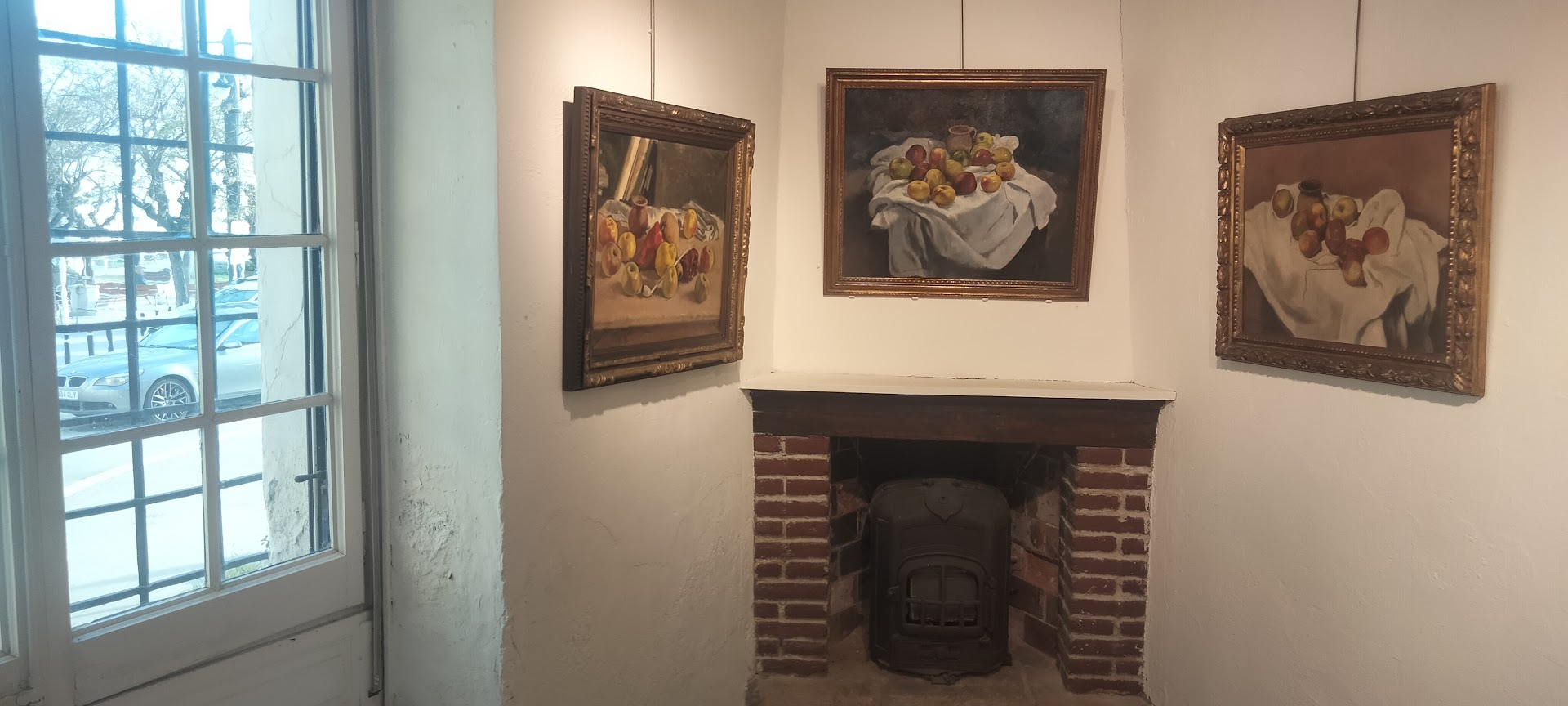
Alfred Sisquella was one of the founding members of the group Els Evolucionistes , which belongs to the Generation of 17. A contemporary of Joan Miró and Salvador Dalí, Sisquella renounced avant-garde experimentalisms, opting for the pictorial realism promoted by the Sala Parés, directed since 1925 by the brothers Joan Anton and Raimon, sons of the great Catalan poet Joan Maragall.
Alfred Sisquella's stylistic evolution starts from his knowledge of Cubism, which he practiced with great success and skill, but with disappointment and new fire. This is followed by a stage of realism close to the new objectivity, in love with Sunyer's Mediterraneanism.
The austere personality stands out in the portraits of his wife Antònia Rambla, the model of the Catalan woman, serene and a reader of the classics.
In the still life themes, maturity is captured, starting from the compositional simplicity of simple elements very much in line with the lesson of Paul Cézanne, apples and flowers, to the still lifes of hunting and poultry with well-resolved complexity and where the pictorial matter creates volumes and form.
In Still Life Sisquella , the exhibition at Àgora 3, the full-length portrait of a seated female figure dressed and covered with a black mantilla stands out: Antonia with a Fan was hung at the 1st Hispano-American Biennial Exhibition of 1951 at the Retiro Exhibition Palace in Madrid. The large-format piece currently belongs to the couple Adriana López-Dóriga Guerra and Francesc Gorgas i Ros, who have preserved it through the bequest of the collector Albert Oller i Garriga (Barcelona, 1923-2014).
The collection of small-format drawings and oils fills the walls of the office, a collection that the Pi-Andreu family, owners of the art gallery, Àgora 3, has been treasured since 1972 when the establishment opened, which has been and continues to be the emblematic reference and figurehead of Sitges' culture and art.
The pre-war paintings refer to the artistic tradition of painters of the Dutch school, while those from after the war have a marked French accent with Corot, Delacroix and Manet as masters whom Sisquella admired. The composition of mannequins with masks and stringed instruments is another example of the compositional versatility of a painter, Alfred Sisquella, whose work has maintained interest among the knowledgeable public and together we can now rediscover in a varied and exemplary exhibition.
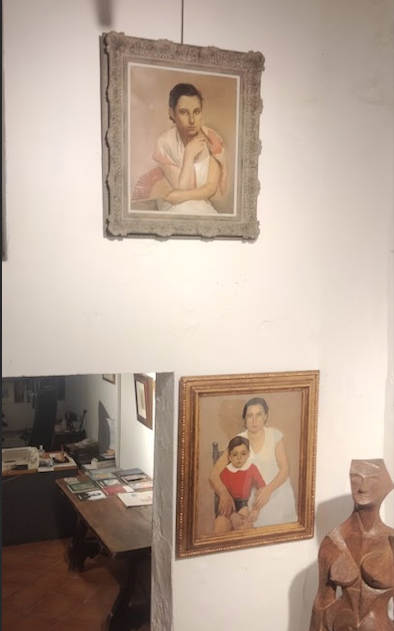
The curator of the exhibition, Isidre Roset i Juan, received his doctorate with the thesis entitled The anti-modern conception and the dehumanization of art; critical fortune in the work of Alfred Sisquella Oriol (Barcelona, 1900 – Sitges, 1964), which details his childhood education at the Horaciana school in Pau Vila at the beginning of the 20th century, his time at the art school with the mastership of Francesc Labarta, the formation of the group Els Evolucionistes, his move to austere realism with the Catalan dealers and the awards he won on several occasions: the Plandiura in 1923, those of the Montserrat monastery (1931 and 1947) and the Barcelona spring exhibition with a medal of honor (1953).
The rooms of the Àgora 3 art gallery shine now as never before with this select exhibition of one of the artists who are part of the artistic background, especially the pictorial, of a Sitges who, together with Joaquim Sunyer, Rafael Durancamps, Pere Pruna and Alfred Sisquella, set the standard for Catalan painting in the 20th century.
Alfred Sisquella wrote a small pamphlet entitled Decorativism and realism. Dehumanization and humanization of modern painting , published by Edimar in 1954, a collection of thoughts on pictorial art where the painter thinks aloud the knowledge and spirit of the tumultuous mid-twentieth century and beyond.

You may be
interested
...