Exhibitions
The MNAC revisits its past with Recuperated from the Enemy
An exhibition that examines the Francoist deposits guarded in the museum and claims memory, transparency and reparation in the history of Catalan artistic heritage.
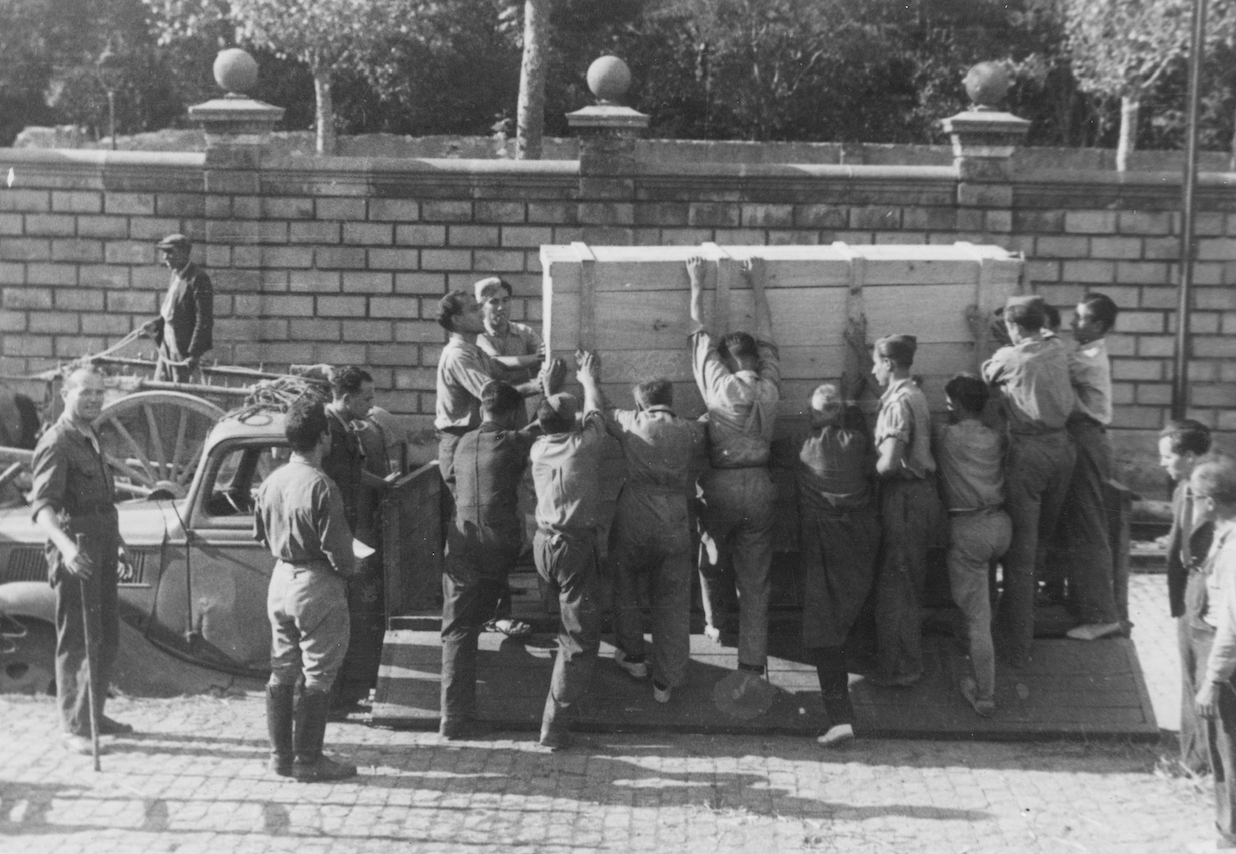
The new exhibition at the Museu Nacional d'Art de Catalunya (MNAC), Recuperado del enemigo . Els depots francistes al MNAC, proposes a critical look at the institution's own trajectory and the history —complex and often uncomfortable— of its collections. The exhibition focuses on the works that entered the museum through the Servicio de Defensa del Patrimonio Nacional (SDPAN), the Francoist organization created after the victory in the Civil War to manage artistic heritage under the new regime.
Curated by Gemma Domènech i Casadevall and Eduard Caballé i Colom, the exhibition brings together 135 pieces —many of them without acknowledged authorship— that were deposited in the Palau Nacional once the official post-war management was concluded. In most cases, that process entailed the restitution of the works to their legitimate owners; in others, however, their journey was interrupted in the museum's deposits, where they have remained to this day.
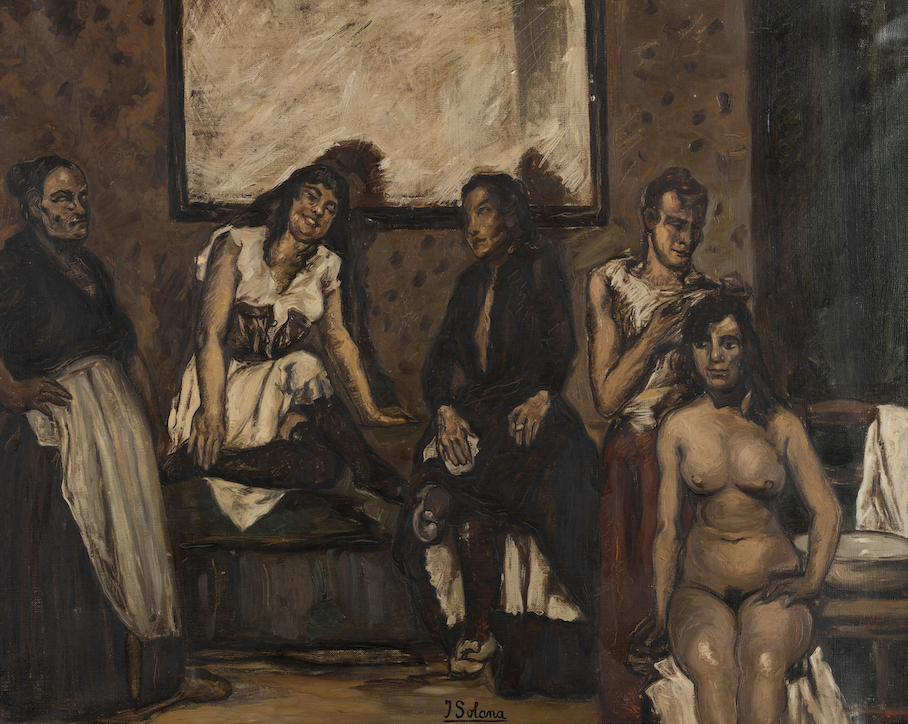
Anonymous, Las chicas de Claudia, C. 1929-1938.
The exhibition is part of a line of work that began in 2014 with the creation of permanent rooms dedicated to the Civil War, a project that has shaped the museum's policy of temporary exhibitions, public programs and acquisitions in relation to this period. In this sense, Recovered from the Enemy directly dialogues with the exhibition ¡El museo en peligro!, focused on the tasks of safeguarding artistic heritage after the outbreak of the conflict, under the direction of Joaquim Folch i Torres.
It should be remembered that the Museu d'Art de Catalunya, predecessor of the current MNAC and inaugurated in 1929, assumed during the war the mission of protecting its collections from the risk of bombings and looting. The works were moved to various places in the territory, such as the church of Sant Esteve in Olot or deposits set up in Bescanó, Darnius and Agullana, with the aim of preserving them from destruction.
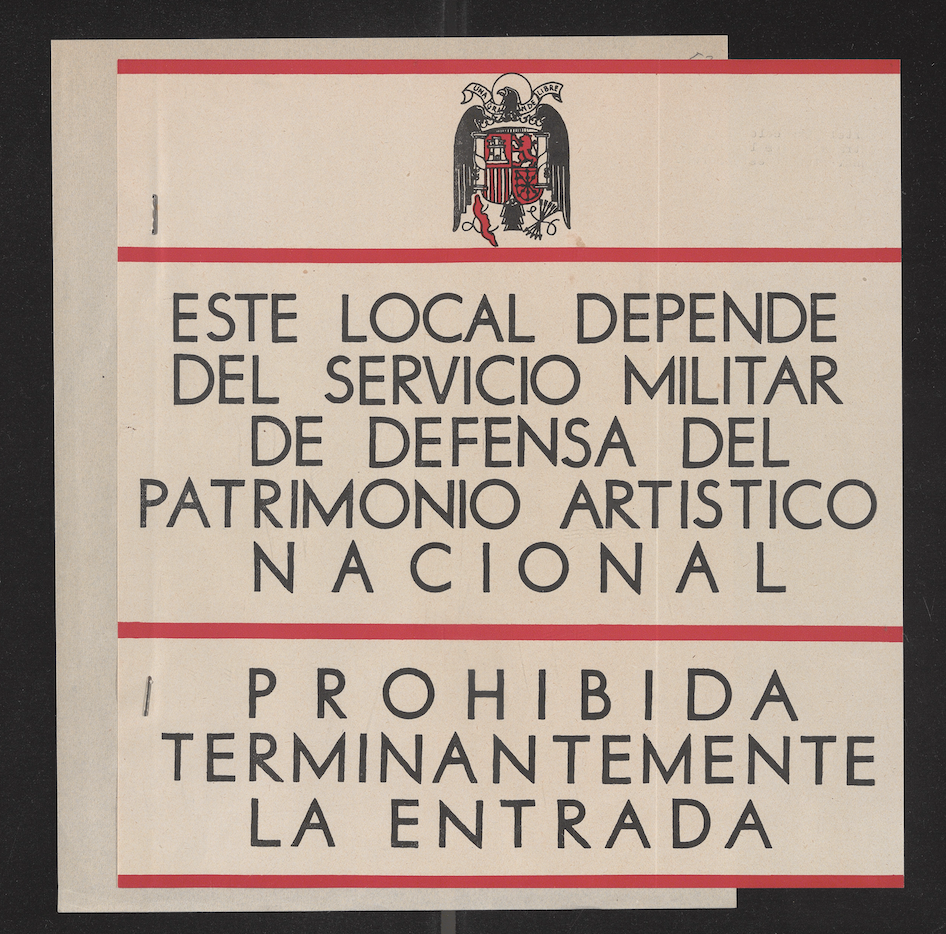
SPDAN sign 'Strictly prohibited entry'.
With the Republican defeat, those deposits organized by the Generalitat passed into the hands of the victors. The SDPAN assumed their management and once again used the museum as a center for the reception, custody and administration of the works. This dual role —as a museum institution and at the same time as an art depository both during and after the conflict— explains why today the MNAC preserves a collection directly linked to those safeguarding and appropriation operations.
The 135 pieces presented form a heterogeneous set that reflects the diversity of origins and circumstances. On the labels of the frames, the inscription "Recuperado del enemigo" becomes an eloquent testimony: more than a simple administrative annotation, it symbolizes the manu militari imposition of a new political order that was also projected onto the artistic and heritage sphere.
The museum's director, Pepe Serra, has defined the exhibition as "an exercise in memory, transparency and reparation." In this sense, the exhibition not only reviews the institutional past, but also opens a space for reflection on the responsibilities of museums in the construction—and revision—of historical narratives.
You may be
interested
...