Exhibitions
Teresa Gancedo and art as a space of revelation
The cycle Verònica. Visionary Women is inaugurated at the Vayreda Foundation in Olot with a work that unites memory, intuition and life experience.
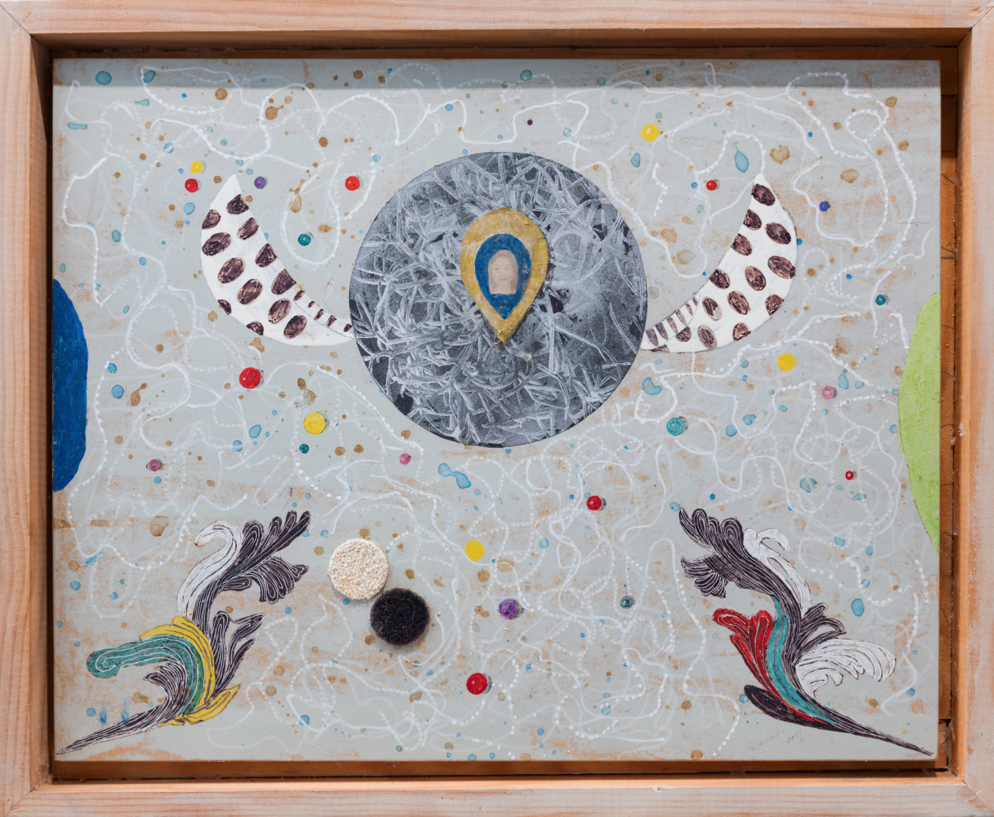
Teresa Gancedo inaugurates a new cultural stage at the Vayreda Foundation in Olot with the opening of the cycle Verònica. Dones visionàries , a project that proposes understanding art as a space of revelation, vital experience and sensitive knowledge, under the curatorship of Natàlia Chocarro. The initiative begins with an exhibition dedicated to one of the most singular voices in contemporary painting, which can be visited from January 31 to April 12. The cycle will later continue with the exhibitions of Magda Bolumar, Josefa Tolrà and Joana Cera, configuring a choral journey through female practices that have overflowed the canonical stories of art history.
Teresa Gancedo's work is built from a free, eclectic and deeply intimate language, which crosses diverse disciplines - painting, drawing, engraving, ceramics, collage, installation and intervention - without hierarchies or rigid borders. Her artistic practice is often rooted in humble materials and everyday elements, transformed into carriers of meaning through a dense and persistent symbolic universe. In this space, personal memory becomes active matter and dialogues with collective experiences, creating a visual story that oscillates between memory, myth and intuition.
One of the most defining features of his work is the presence of a dreamlike and symbolic iconography, where religious, popular and historical images coexist with natural elements - flowers, animals, plant forms - and configure scenarios loaded with ambiguity and meaning. Through this network of signs, Gancedo does not offer closed readings, but rather proposes a poetic experience of reality, a space open to interpretation where the viewer's gaze is summoned as an active part of the process of meaning. His work does not illustrate, but suggests; it does not affirm, but hints.
Teresa Gancedo thus belongs to a unique genealogy of creators who have understood painting as a form of knowledge and not only as a formal exercise. Over more than five decades of career, she has built a universe populated by minimal signs, subtle tensions and fragile balances that, when deployed on the pictorial surface, acquire a presence of unexpected intensity. In her work, the visible, the spiritual and the intangible merge without stridency, configuring a territory where the image manifests itself as revelation.
Approaching his practice implies accessing a particular way of inhabiting the world, where perception is not an immediate act, but an exercise in slowness, listening and silence. In Gancedo's canvases, the image does not emerge as the result of a rational process or as the expression of a spontaneous or voluntarist gesture; its genesis is rooted in a latent space, located between waking and dreaming, where memory, experience and intuition become creative matter.
The title of the cycle, Verònica , refers to the concept of vera icon, the "authentic image", and to the idea of an image that is not limited to being represented, but is revealed by contact, like an imprint, like a presence that leaves a trace. From this perspective, each exhibition is conceived as an experience of proximity and intensity: rather than articulating a chronological or retrospective narrative, the project invites a direct encounter with the work and with what persists in it as memory, absence and sedimented time.
As curator Natàlia Chocarro points out, the cycle proposes “an inner journey through the creative itineraries of four artists who approach the world from a singular perspective and establish a deep link between artistic practice and life experience.” Teresa Gancedo, Magda Bolumar, Josefa Tolrà and Joana Cera share a way of understanding art as a space of contemplation and revelation, where gesture becomes thought and the gaze opens up areas of meaning that blur the boundaries between the visible and the intuited.
In their practices, light—both their own and that emanating from the environment—acts as a matrix of sensitive knowledge, the fruit of an open, vulnerable and permeable relationship with the world. The work of these four creators demonstrates that form is not only the result of a formal construction, but also the imprint of life, experience and consciousness, an imprint that persists beyond matter and that still challenges our way of looking today.
You may be
interested
...