Exhibitions
Josep Bartolí graphic witness of the republican exile
The MUME presents the drawings of the Catalan creator who captured the horror of the French concentration camps and the long path of exile.
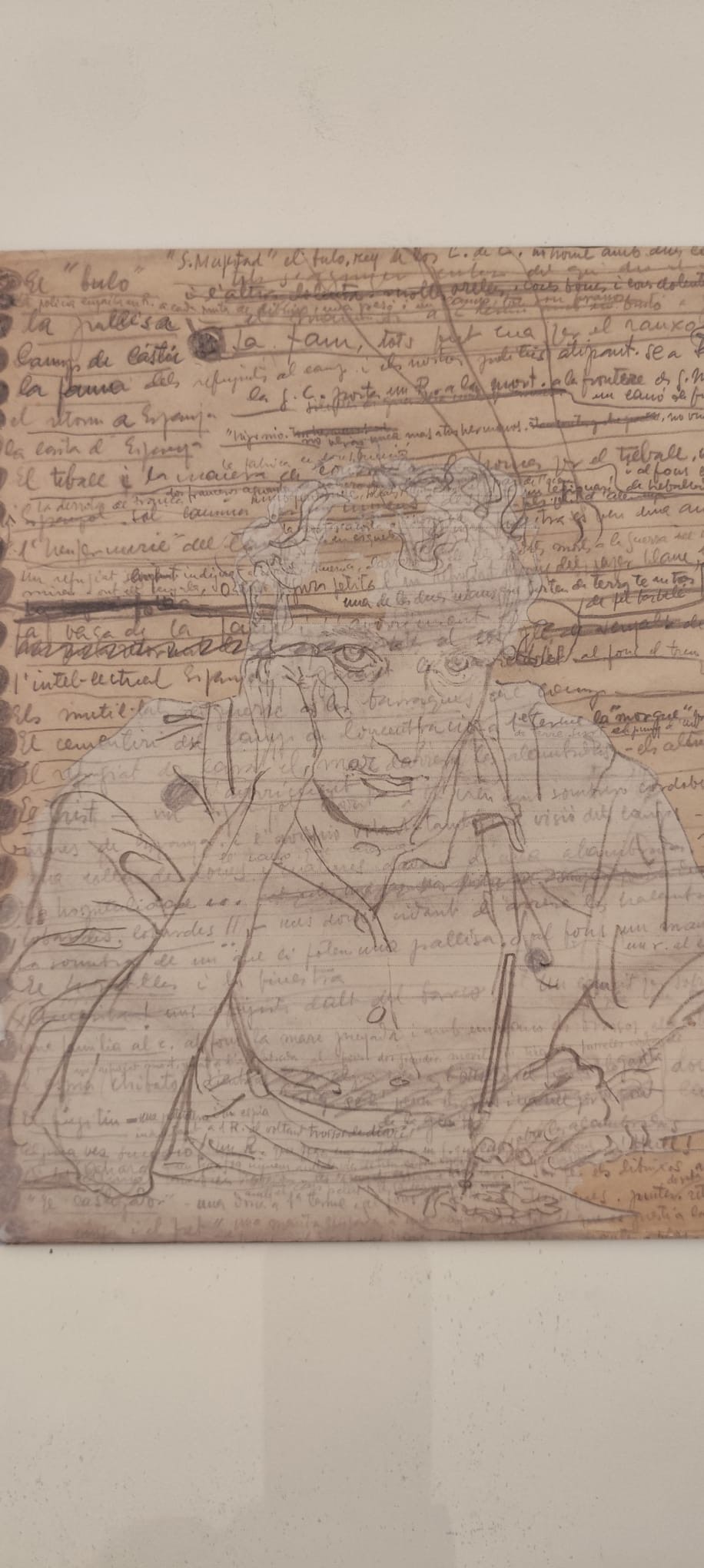
“My works do not intend to be just another essay, neither literary nor artistic, but a living, painful and brutal document”, Josep Bartolí
Josep Bartolí, the forgotten cartoonist who captured the horror of the Republican exile in France. A Catalan illustrator, Bartolí survived several French concentration camps after the Civil War and transformed the horror he experienced into drawings of striking intensity. His works, with great dramatic charge, are characterized by a semi-realistic, fast, clean, direct, precise and deeply sensitive stroke.
Surrounded by barbed wire, hunger, violence and humiliation, his drawings constitute an essential visual testimony to a tragedy that is often silenced. Bartolí was a man who survived the extermination and who managed to escape the camps to begin a long exile that would take him first to Mexico. There he established a close friendship with Frida Kahlo and continued to develop his artistic career. Later, in the United States, he worked painting sets for major historical film productions in Hollywood.
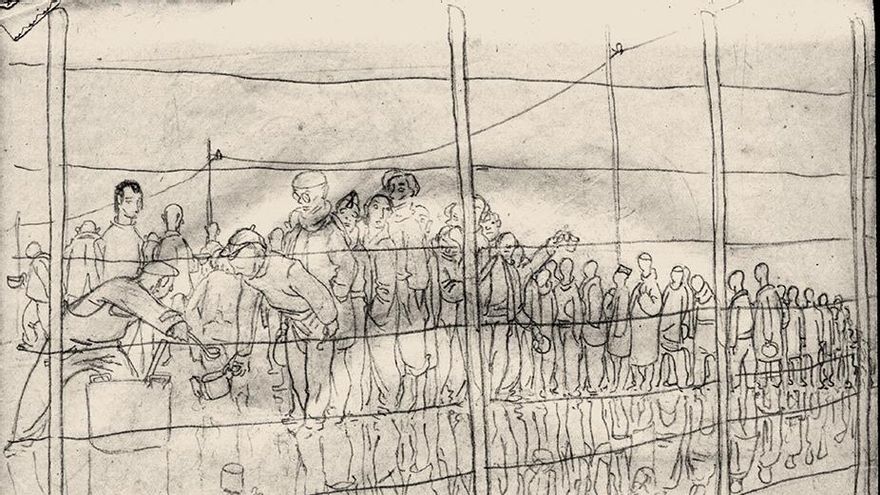
Now, the Exile Memorial Museum (MUME) is exhibiting Josep Bartolí: Drawing is Fighting which will be on view until May 31. His work, marked by the experience of repression and exile, is today a fundamental legacy for understanding the visual memory of the 20th century and the role of art as a tool of resistance and denunciation.
Based on the collections preserved at the Ribesaltes Memorial, consisting of sketches and preparatory drawings by the cartoonist and artist Josep Bartolí Guiu (Barcelona, 1910 – New York, 1995), the exhibition offers a journey through the evolution of his creative process. These are drawings made between 1939 and 1941 that, years later, would be published in Mexico, in 1944, by Ediciones Iberia, in the volume Campos de concentración (1939-194…) .
This work, which combines the texts of Narcís Molins i Fàbrega (Tortellà, Garrotxa, 1901 – Cualta, Mexico, 1962) with the illustrations of Bartolí, was born with the explicit desire to document the reality of the French concentration camps. The drawings, initially conceived as notes and sketches, thus become a direct and striking graphic testimony of an experience marked by repression, exile and survival.

You may be
interested
...