Exhibitions
Huguette Caland, the body as territory
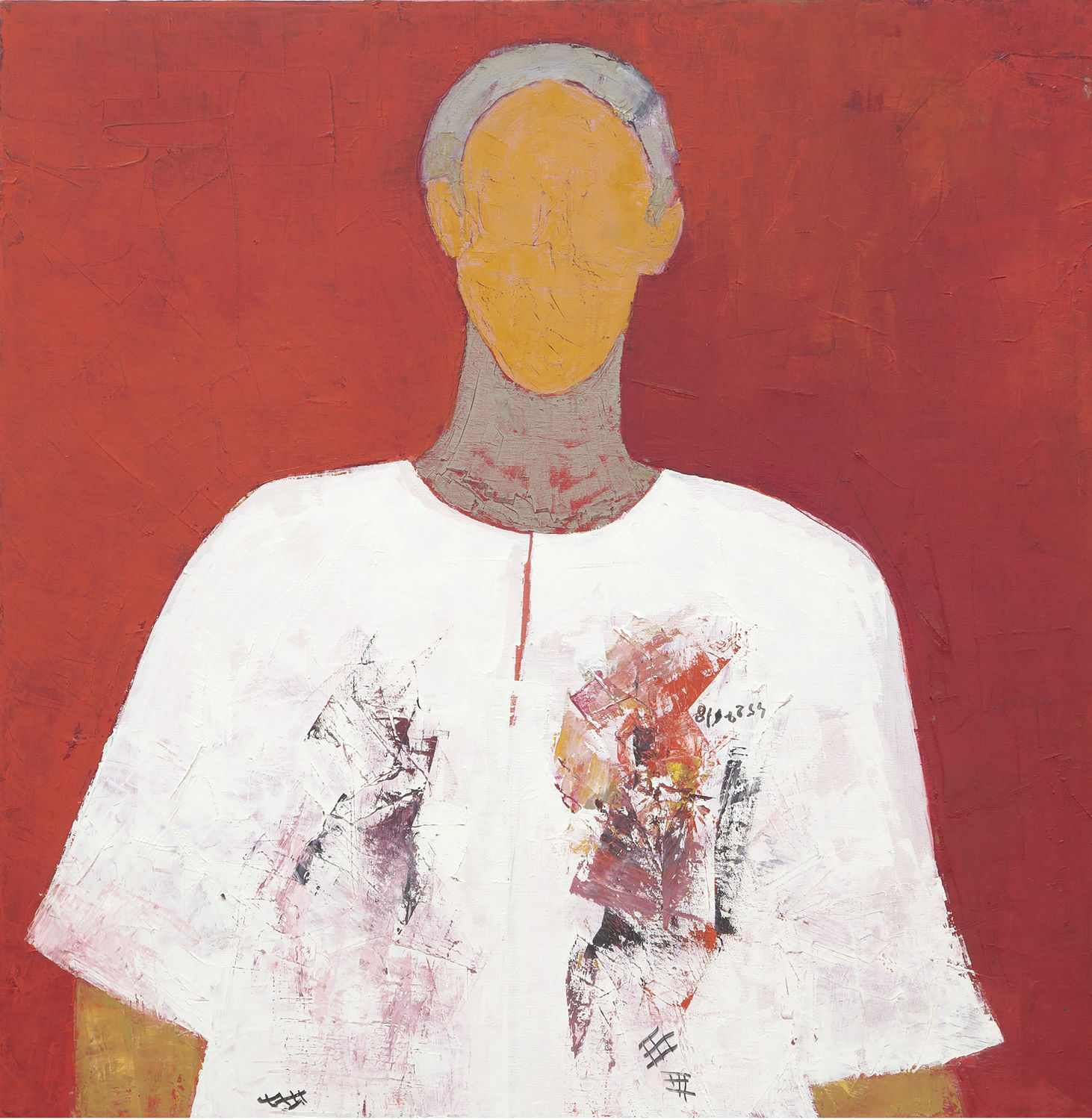
There is a scene that succinctly encapsulates much of Huguette Caland's work: that of a woman entering Pierre Cardin's boutique in Paris, dressed in a caftan, that long, flowing garment she had adopted as her own skin and which a fashion designer eventually transformed into a line called "Nour." This small episode became the culmination of a process of detachment that this Lebanese artist had been exploring for years: shedding the form-fitting European clothing that society expected of the only daughter of Bechara El Khoury, the first president of independent Lebanon. The caftan gave her back her body. And the body, in her work, is always the starting point.
Huguette Caland: A Life in a Few Lines is an exhibition at the Hammer Museum in Los Angeles that reconstructs her life through some 150 pieces—drawings, paintings, sculptures, textiles, and archival material. This exhibition was organized and produced in collaboration with the Reina Sofía Museum in Madrid and the Deichtorhallen in Hamburg. It tells the story of a late-blooming artist, given that Caland only enrolled at the American University of Beirut after turning thirty, when she was already a mother and wife, and burdened by the weight of belonging to a family exposed to the public eye.
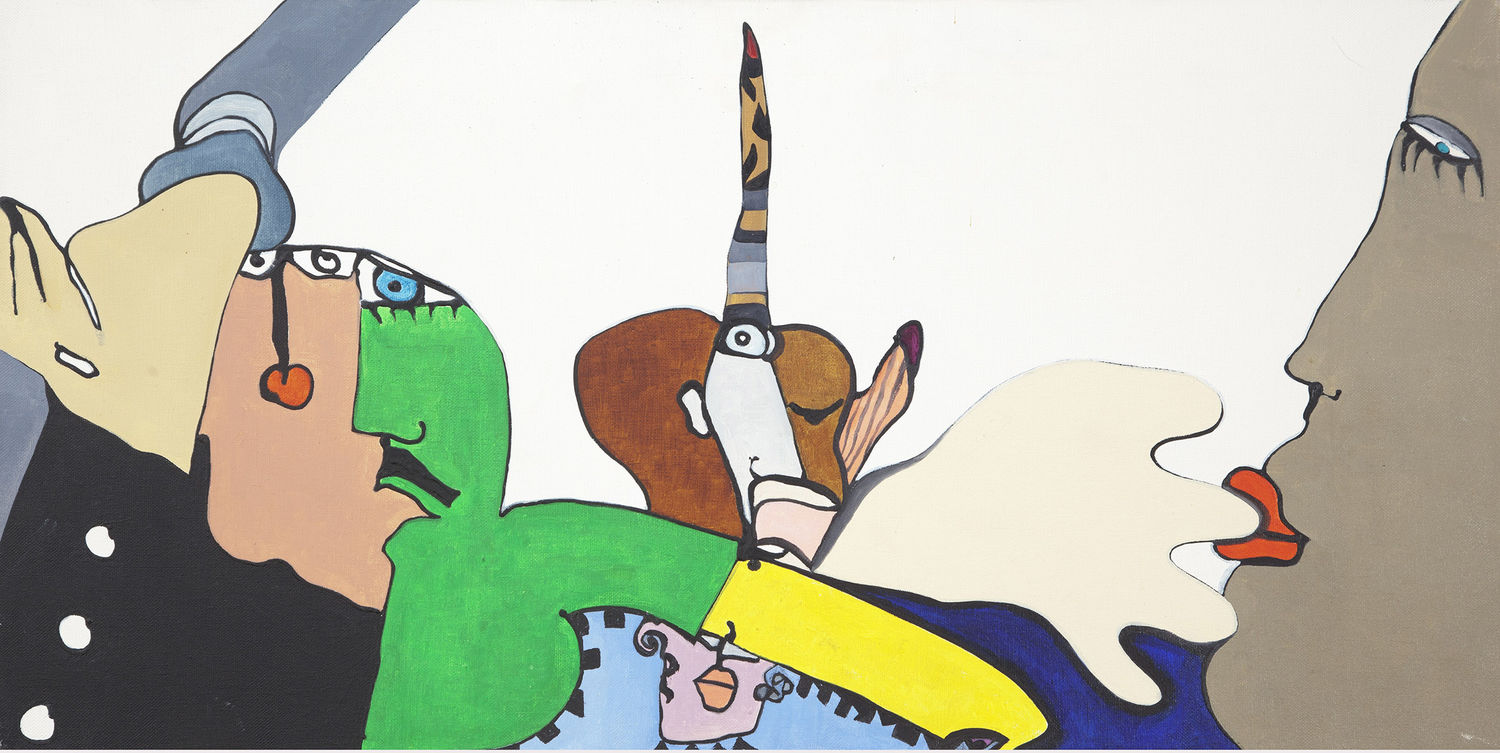
Huguette Caland, Enlève ton doigt, 1971. Private collection. © and courtesy of Huguette Caland Estate. Photo © and courtesy of Huguette Caland Estate.
The turning point came in 1970, when she left Beirut for Paris, where she lived for seventeen years in what she herself described as a genuinely bohemian existence. It was during this period that her most celebrated series, Bribes de corps (Body Strips ), was born, of which the Hammer is exhibiting pieces such as Self-Portrait (Body Strips) (1973) and Enlève ton doigt (1971). These were compositions of great chromatic force and minimal formal expression, where different parts of the body metamorphose into ambiguous forms that evoke, rather than represent, flesh. They are paintings that dissolve corporeality into color and that proved as audacious in Paris as they had been in the conservative Beirut to which Caland barely belonged.
The exhibition also includes her dress-objects, such as Foule (Dress #2) (1970) and Miroir (Dress #4) (1974), caftans embroidered with faces and bodies that translate to fabric what her paintings did on canvas. In both groups of works, the body is presented as a territory of freedom and also as a counterpoint to the beauty ideals of her time. Caland, who lived her entire life with being overweight in a culture that demanded thinness, did not hide her figure; she always celebrated it, adorned it, and multiplied it in self-portraits.
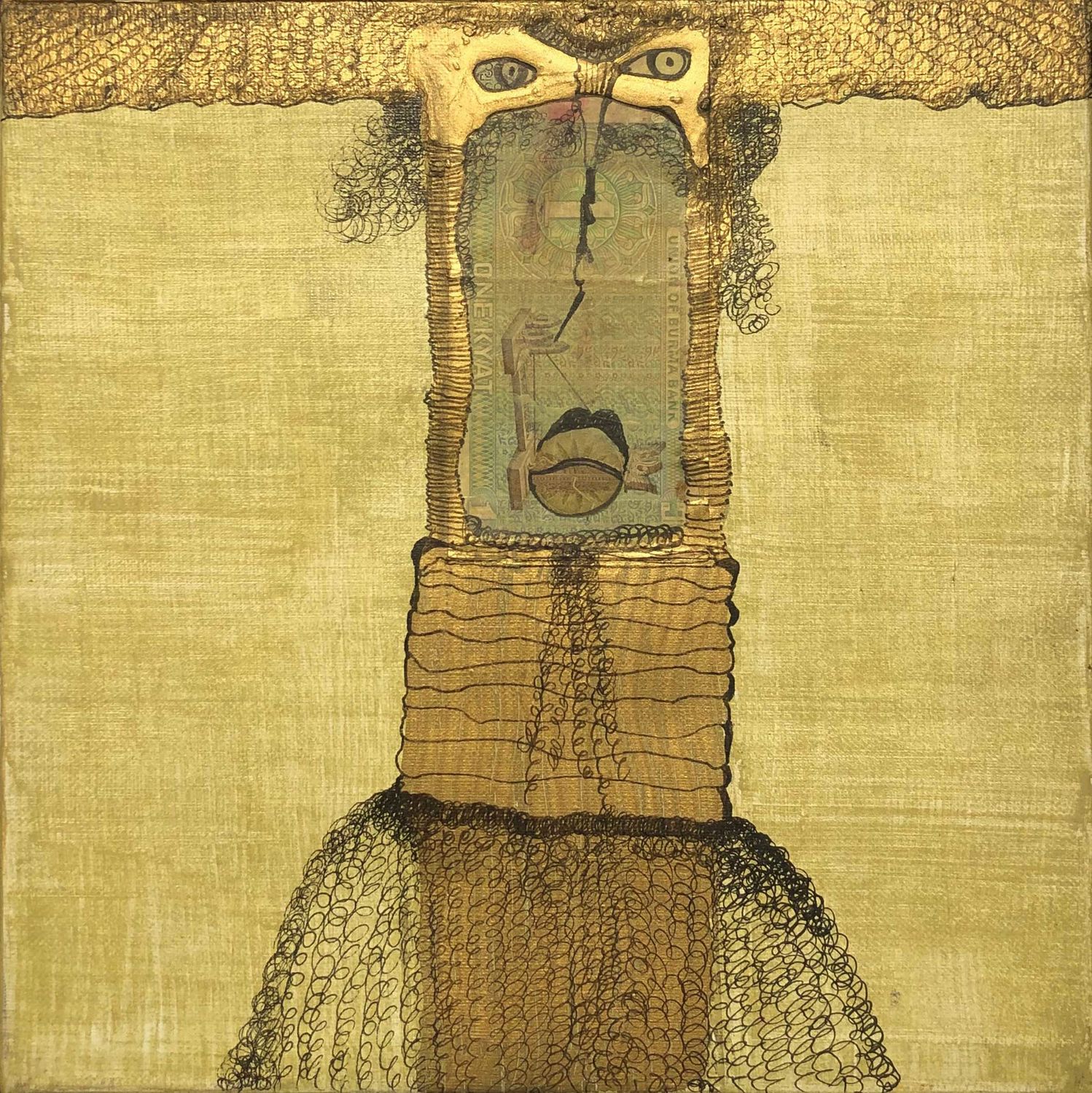
Huguette Caland, L'argent ne fait pas le bonheur mais il y contribue largement: Ancestor, 1994–95. Private collection. © and courtesy of Huguette Caland Estate. Photo © and courtesy of Huguette Caland Estate.
During the 1980s and 90s, his style became more austere, and themes related to the body or the fashion industry were less prevalent. The series *L'argent ne fait pas le bonheur mais il y contribue largement* (Argent Doesn't Bring Happiness But It Contributes Largely) , begun in 1994 during his time in Venice, California—where he moved in 1987 and lived his final decades—presents small paintings made from coins from around the world, an ironic commentary on value that retains the characteristic humor of his entire oeuvre.
Caland spent much of her career outside the mainstream. It wasn't until 2016 that she was included in Hammer's Made in LA biennial, and from then on, her work began to circulate within the circuit that now celebrates her. She died in 2019 in Beirut, a city she had returned to in her later years, closing a circle that this exhibition confirms as a journey: Lebanon by birth, France by artistic choice, the United States by final decision. Three geographies that her work never ceased to inhabit simultaneously.
You may be
interested
...