
Exhibitions
Randa Maroufi stages the realities we don't want to see at La Fabra
Between reconstruction and fiction, the Franco-Moroccan artist questions the power structures that determine bodies, identities, and ways of occupying space.
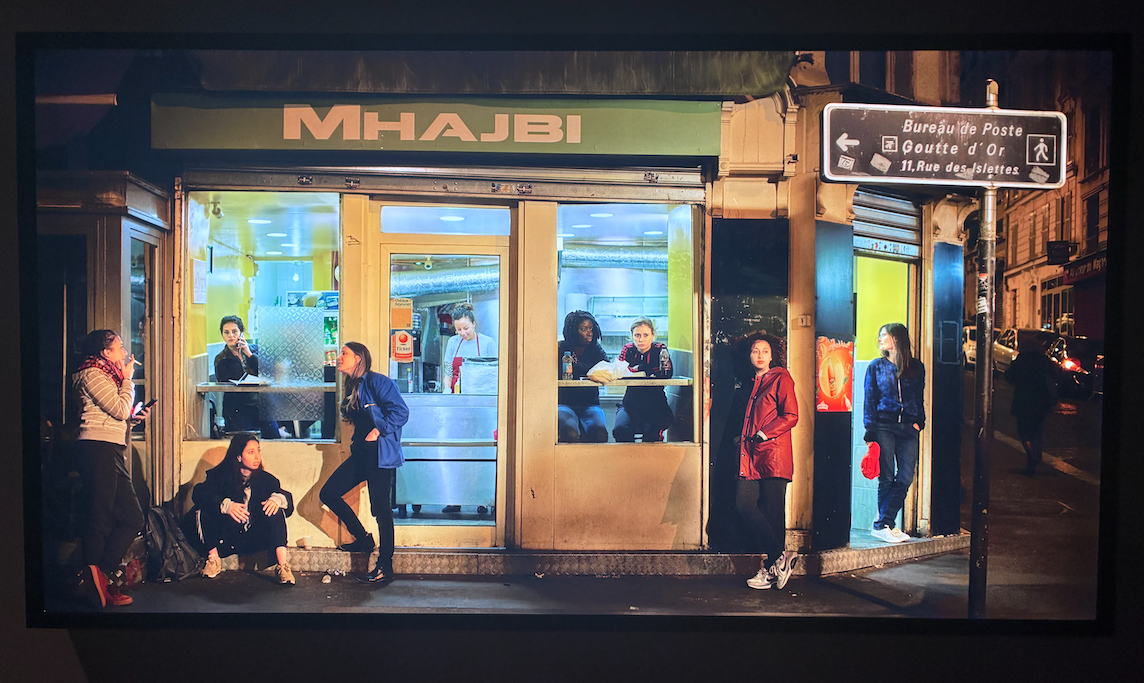
A mine in Jerada, an amusement park in Casablanca, the Ceuta border, or the interiors of institutional buildings. Randa Maroufi chooses these settings to create images that, although based on real situations, introduce an operation of displacement: gestures are repeated, movements are suspended, and people play roles that sometimes coincide with their own experience and sometimes question it. The result is scenes that blur the boundaries between documentary and fiction and force us to look again at what often goes unnoticed. This is the line of work that structures Scenes, the exhibition that La Fabra Centre of Contemporary Art presents from October 24, 2026, to March 28, 2027, curated by Claudia Elies.
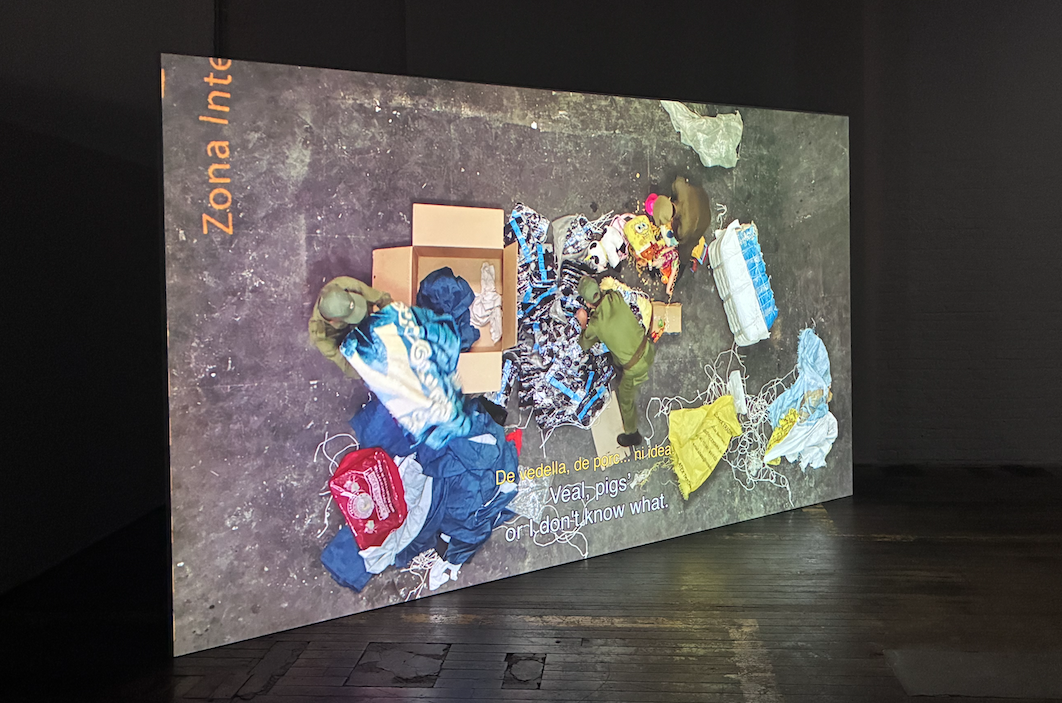
The exhibition brings together a selection of films and photographs made over the past ten years, in continuity with the reflection on gazes from and towards the Mediterranean that the Art Centre has developed in previous exhibitions. Her practice addresses issues such as work, bureaucracy, borders, and the use of public space, areas where political, economic, and institutional rules determine who can occupy a place, how they can move there, and under what conditions.
The body becomes the connecting thread of these investigations. Through the gestures, attitudes, and movements of the protagonists, the artist examines how corporeality is conditioned by systems that go beyond individual will. The communities she works with occupy a fundamental role in this process. Proximity, trust, and listening allow her to access the contexts and experiences she wants to represent and to build images based on a direct relationship with the people involved.
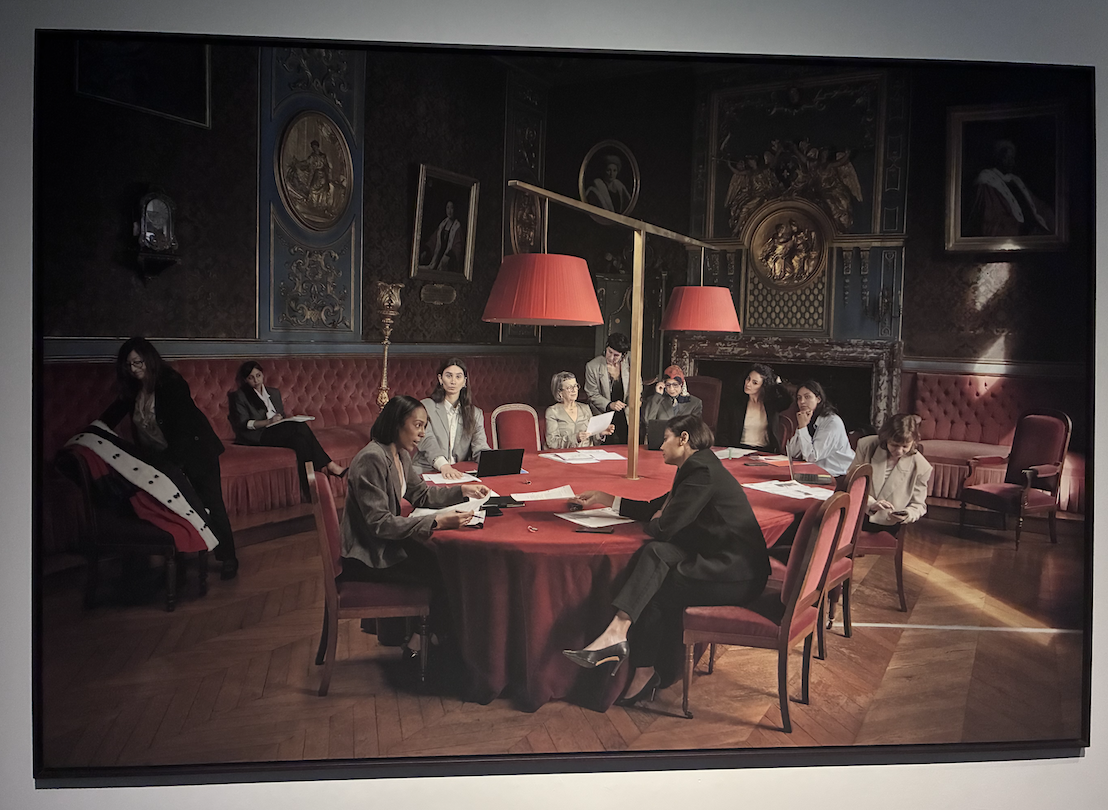
Salon Doré (series Les Intruses), 2015. Courtesy of the artist.
The situations that appear in her works maintain a relationship with the everyday life of the represented spaces: workers during the workday, moments of rest in commercial establishments, institutional meetings, or informal activities in abandoned and border places. In some cases, participants play themselves; in others, they assume roles different from their usual ones. This displacement introduces a distance between identity and representation that allows questioning to what extent social roles are constructions conditioned by the environment.
The scenic dimension also manifests itself in the treatment of time. Slow-motion images, frozen actions, and suspended movements alter the usual rhythm of the situations and introduce a temporality that accentuates the fictional character of the pieces. But this fiction is not an escape from reality. On the contrary, it is the resource that allows approaching it from another perspective, making visible experiences that often remain outside the dominant narrative and pointing out situations that, despite existing before our eyes, continue to be ignored.
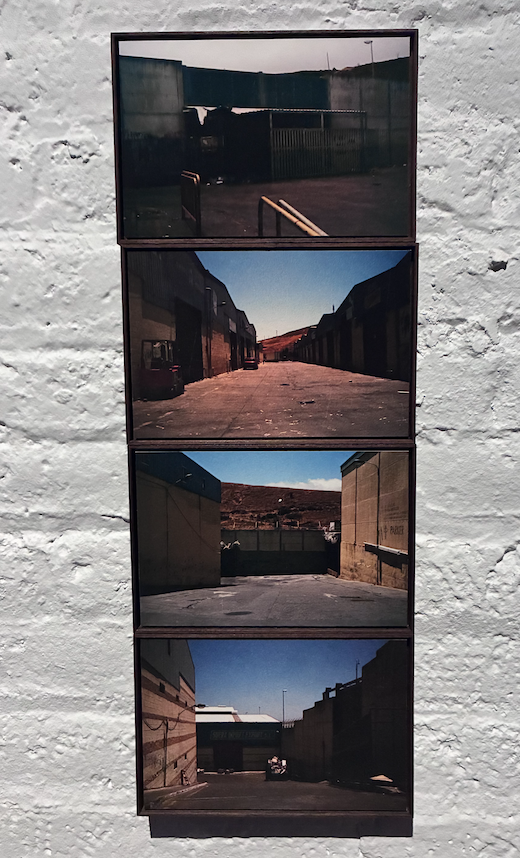
Around the Gate, 2018. Analog photographs, courtesy of the artist.


You may be
interested
...