
Exhibitions
Marta Povo, light as a way of looking at the world
The Photographic Archive of Barcelona presents the most comprehensive review of the work of the Barcelona photographer, a career marked by sensitivity to light, shapes, and landscape.
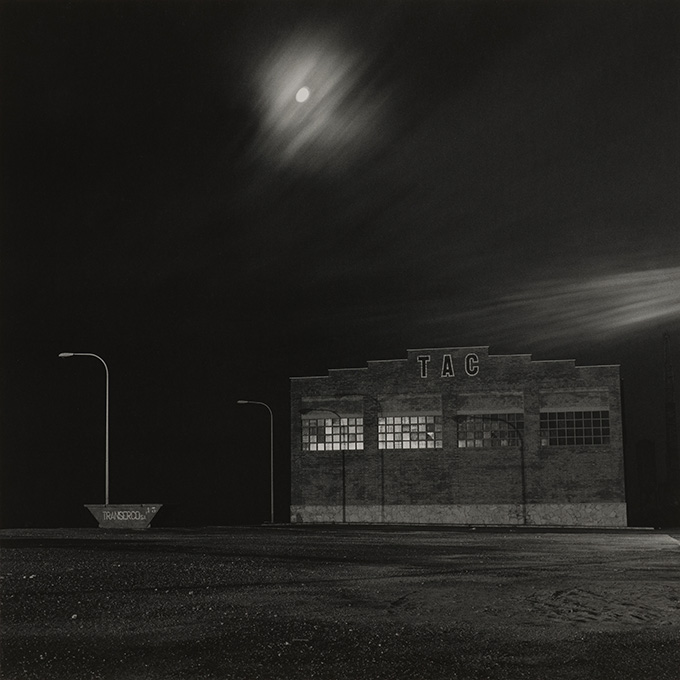
The Barcelona Photographic Archive dedicates an exhibition to Marta Povo (1951-2026), one of the singular voices of contemporary Catalan photography, with Marta Povo. The Poetics of Light, a show that asserts the artistic and professional dimension of an author who made photography a space for visual exploration and reflection on the world. The photographer, who died last October 16, developed a career especially linked to architectural photography, landscape, and territorial documentation, always from a personal perspective that transcends the strictly documentary function of the image. The exhibition can be visited from November 19, 2026, to May 23, 2027.
Curated by Món Casas, who collaborated with Povo during the early years of her professional career, the exhibition proposes a journey through the author’s different collections, from professional commissions to more personal investigations. Light, texture, color, and forms constitute the axes of a photographic language where observation transforms into expression and reality becomes material for sensitive interpretation.
The project is structured into seven areas —Constellation, Architecture and Landscape, Portrait, Gesture, Light, Color, and Geometry— which allow approaching the different concerns that crossed her production. The photographs, mainly made between the seventies and nineties, alternate black and white with color and largely share the square format and the use of medium format cameras. This formal coherence accompanies a vision that finds in spaces, objects, and landscapes expressive possibilities that go beyond their appearance.
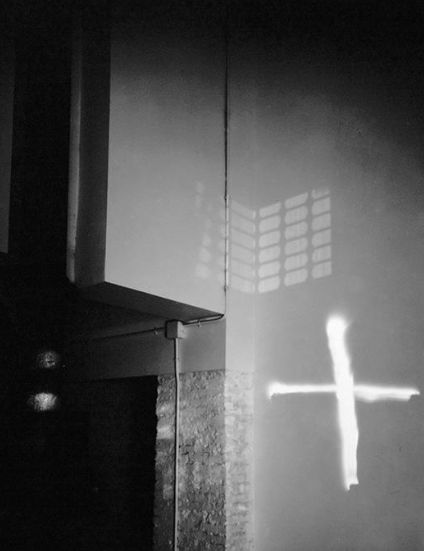
With more than 140 photographs, including vintage prints and prints made from original slides, the exhibition constitutes the most extensive review of Marta Povo’s work presented so far. The journey also incorporates materials from her personal archive, such as sketches, classification cards, documentation of the series, and correspondence with photographers and cultural agents. A documentary set that allows reconstructing not only the results of her practice but also the work processes, concerns, and relationships that contributed to defining her creative universe.
The recovery of this trajectory takes on special significance when considering the context in which Povo developed her activity, in a still predominantly male professional sector. Her participation in the first Catalan Photographic Spring in 1982, and the presence of her work in more than a hundred solo and group exhibitions, testify to the recognition she achieved both in the Catalan scene and internationally.
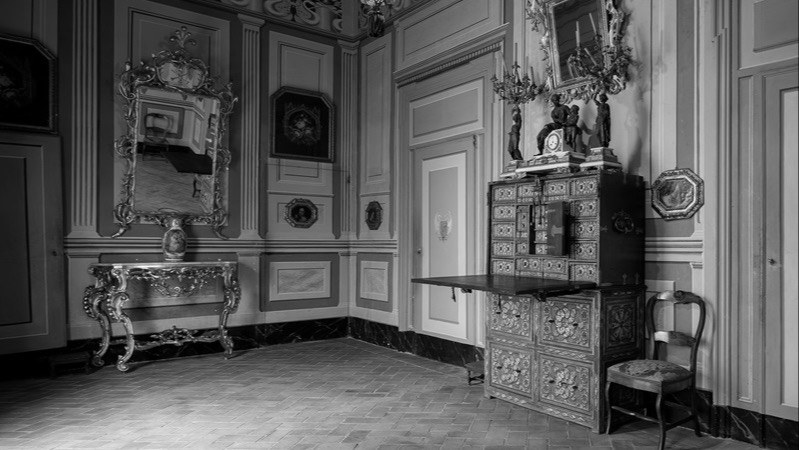
The first area, Constellation, functions as an introduction to her imagery through a set of images that establish connections between the main themes of her production. Next, Architecture and Landscape highlights her ability to find a poetic dimension in spaces initially conceived from a documentary perspective. This is the case of the series Balneary Architecture in Catalonia (1982-1986), in which the photographer offers an intimate approach to Catalan spas, or Manor Houses of Catalonia: Life and Customs of Catalans (1990), a work that observes these buildings through their architectural structures and decorative details.
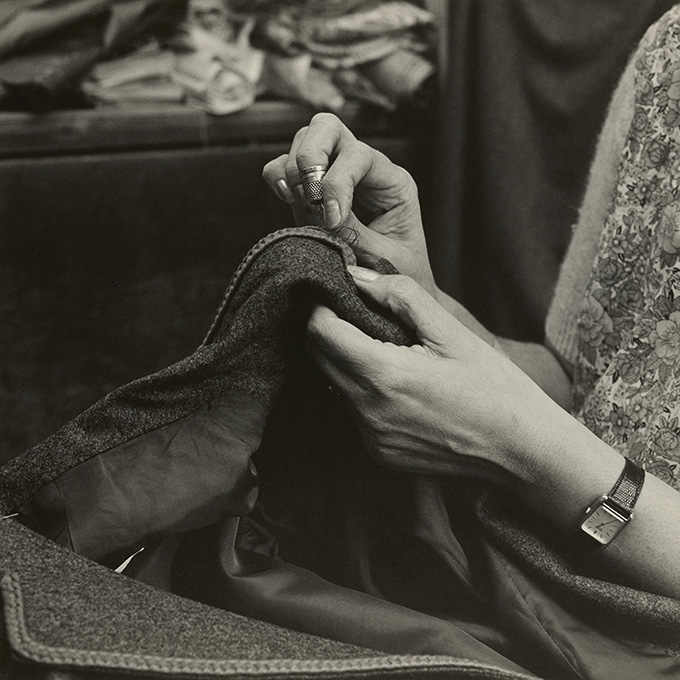
This same sensitivity towards space is manifested in Gardens of Catalonia (1991), a commission dedicated to landscape architecture that collects gardens from different parts of the country, many linked to the work of architect and landscaper Nicolau Maria Rubió i Tudurí. Povo explores there the relationships between nature, composition, and visual balance. A research also present in Subjective Landscapes (1980-1990), a series in which the territory ceases to be a mere setting and becomes a space for personal, contemplative, and sensitive interpretation.
The third area, Portrait, recovers the series Organic-Inorganic (1985-1987), in which the author directs her gaze toward sculptural figures and inert elements to investigate their expressive capacity. Marble statues situated in gardens are observed from a proximity that reveals their shapes, textures, and almost organic qualities. Images that invite viewers to pause on details and discover how light can transform the perception of objects.



You may be
interested
...