Exhibitions
From Celluloid to Algorithm: Loop Barcelona Maps Fifty Years of Moving Image
The fair and the festival present during November a program that spans more than five decades of experimental cinema and explores new digital languages, artificial intelligence, and ways of inhabiting space.
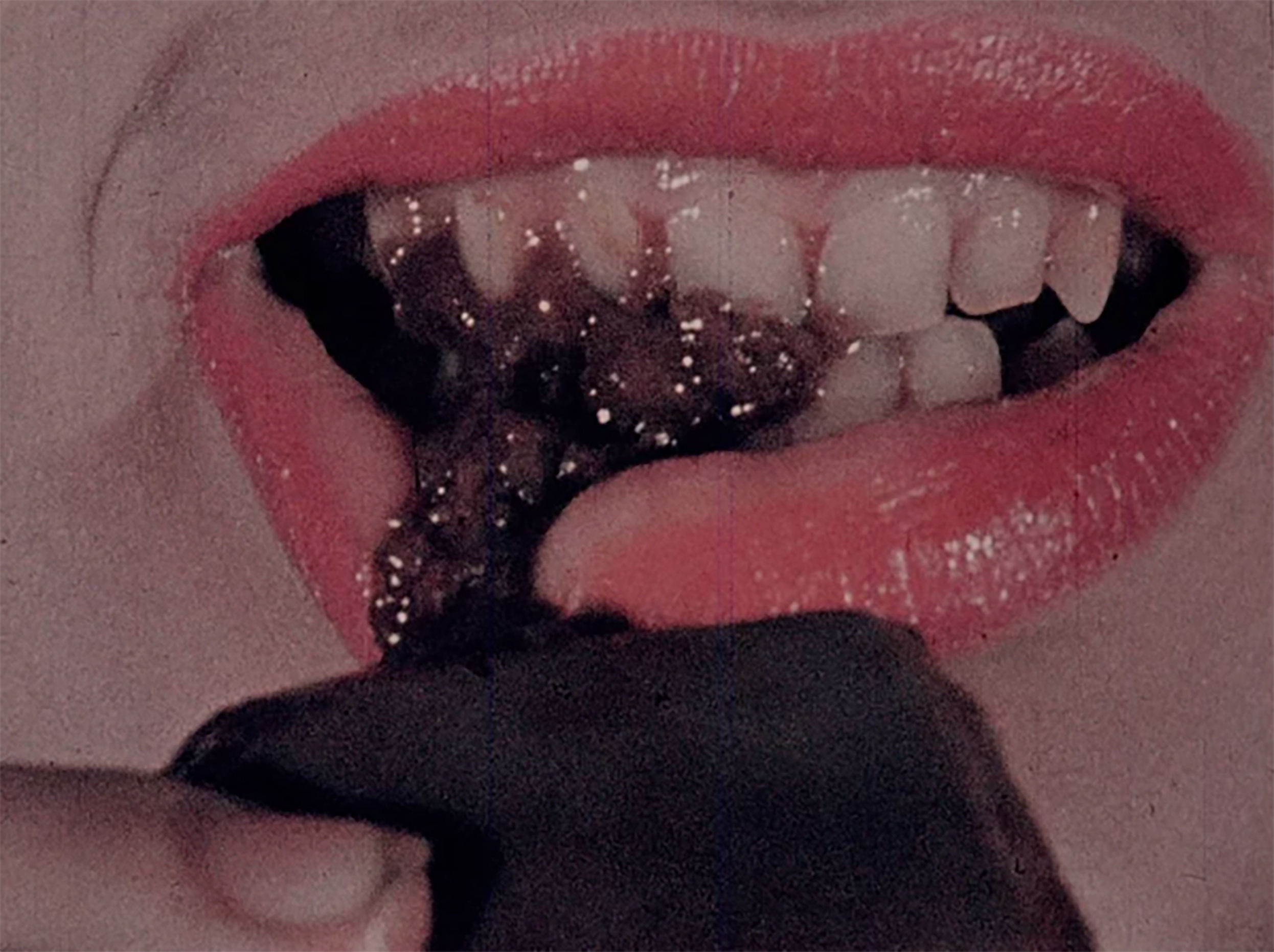
Barcelona has one of its major events in contemporary audiovisual creation in November. Loop Barcelona puts moving image back at the center of artistic debate with an edition that relates the history of experimental cinema to the most recent practices, from analog formats to computational images, artificial intelligence, and virtual environments. The fair and festival propose a broad journey through the expressive, political, and technological possibilities of the image while opening a reflection on memory, identity, historical conflicts, and social transformations.
The selection of Loop Fair 2026 spans more than five decades of production, with works made between 1971 and 2026. This dialogue between different generations and languages allows tracing the evolution of the moving image as an autonomous artistic field and as an instrument to interpret the world. Analog cinema, experimental documentary, and animation coexist with digital technologies and computational simulations, in a program that addresses issues such as historical memory, political conflicts, colonial narratives, and forms of identity construction.
One of the starting points of this journey is Canciones napolitanas (1971) by Narcisa Hirsch, presented by Rolf Art. Recently digitized from the original 16 mm film, it is the oldest work at the fair and allows approaching the trajectory of one of the pioneering figures of Latin American experimental cinema. At the other chronological extreme is Workweek (2024) by Casper Braat, presented by TORCH Gallery. This forty-hour digital film documents the transformation of a cubic meter of marble into a cubic centimeter and pushes to an extreme the notions of duration, work, and observation. Two works distant in time that highlight the diversity of approaches with which artists have explored the possibilities of the image.
The review of archives, museum collections, and historical narratives is another axis of the selection. East Side Story II by Igor Grubić, presented by Laveronica Arte Contemporanea, fits into this look at memory and history. So does Prateek Vijan’s trilogy around Tipu's Tiger, an object from the collection of the Victoria and Albert Museum in London, which takes the museum piece as a starting point to interrogate the narratives that accompany it. Meanwhile, We Can Hear Your Heartbeat by Meryl McMaster, presented by Pierre-François Ouellette art contemporain, explores 130 years of history of a Cree family in Saskatchewan, Canada, and situates family memory in relation to a collective history.
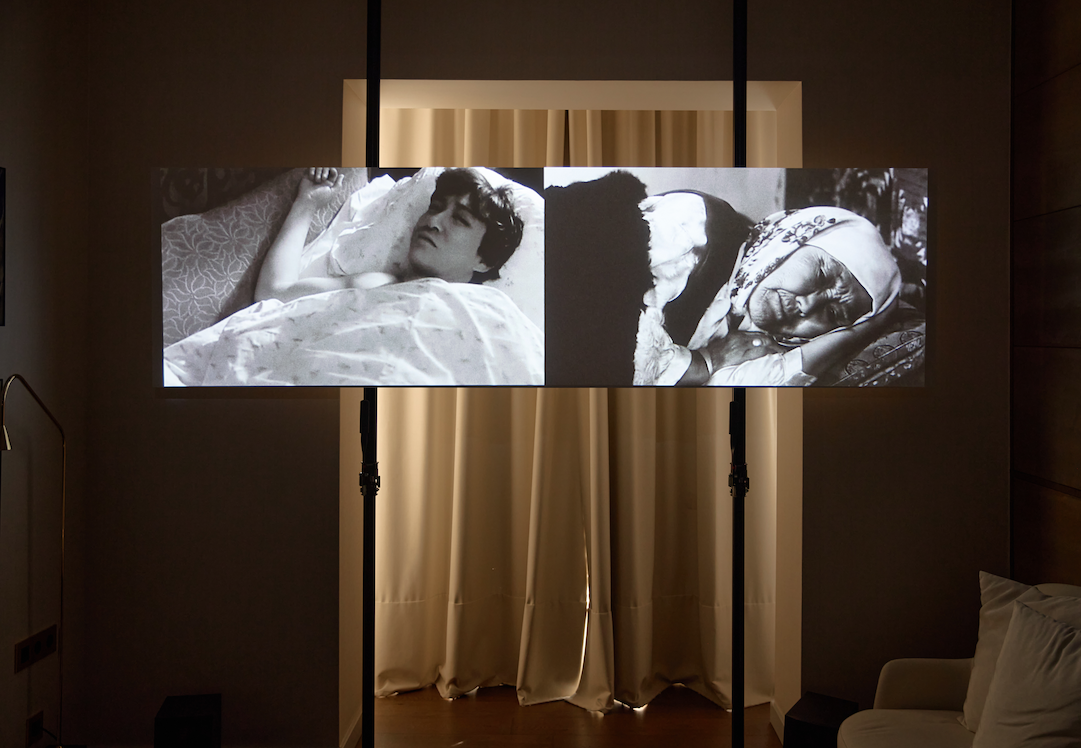
LoopFair 2026, Angels Barcelona, Saodat Ismailova.
New technologies also occupy a prominent place in this edition. Several proposals investigate the possibilities of artificial intelligence, generative systems, computational simulation, and the construction of virtual spaces. Waves 2.0: Terra by Memo Akten, presented by DAM Projects, explores relationships between nature, technology, and generative systems. Shape of Wind and Fire (2026) by Jaehun Park, presented by Bradwolff & Partners, is an 8K simulation of a windmill on fire created specifically for Loop. In another direction, the work of Eva L’Hoest, presented by Galerie Eric Mouchet, probes the links between memory, digital image, and virtual spaces. These practices expand the field of the moving image and raise new questions about perception, representation, and the relationship between reality and simulation.
Xiu Xiu, a reflection on shared space
The exhibition dimension of Loop also extends to the Loop Festival program, held from November 10 to 21 in various spaces in Barcelona. Coinciding with the year in which the city is the World Capital of Architecture, the festival presents Xiu Xiu, a program initially conceived by Filipa Ramos and developed by Aitana Vélez and Eva Pobeda, which explores the conditions of inhabiting and sharing space.
The proposal broadens the reflection on the moving image toward issues related to architecture, environment, and forms of coexistence. Among the highlighted presences are works by Ben Rivers, Carlos Casas, and Étienne Chambaud, as well as a program developed in collaboration with KADIST and Le Nouveau Printemps. The festival was inaugurated on November 10 at the Centre d’Art Tecla Sala with La mirada catalana (2026) by Maria Alcaide, a work awarded the 12th Videocreation Prize.

You may be
interested
...