Exhibitions
Pilarín Bayés draws the soul of Figueres and the landscape of the Empordà
The El Claustre Art Gallery in Figueres hosts, from November 6 to 21, a new exhibition by the artist that pays tribute to the territory through scenes full of life, humor, and imagination.
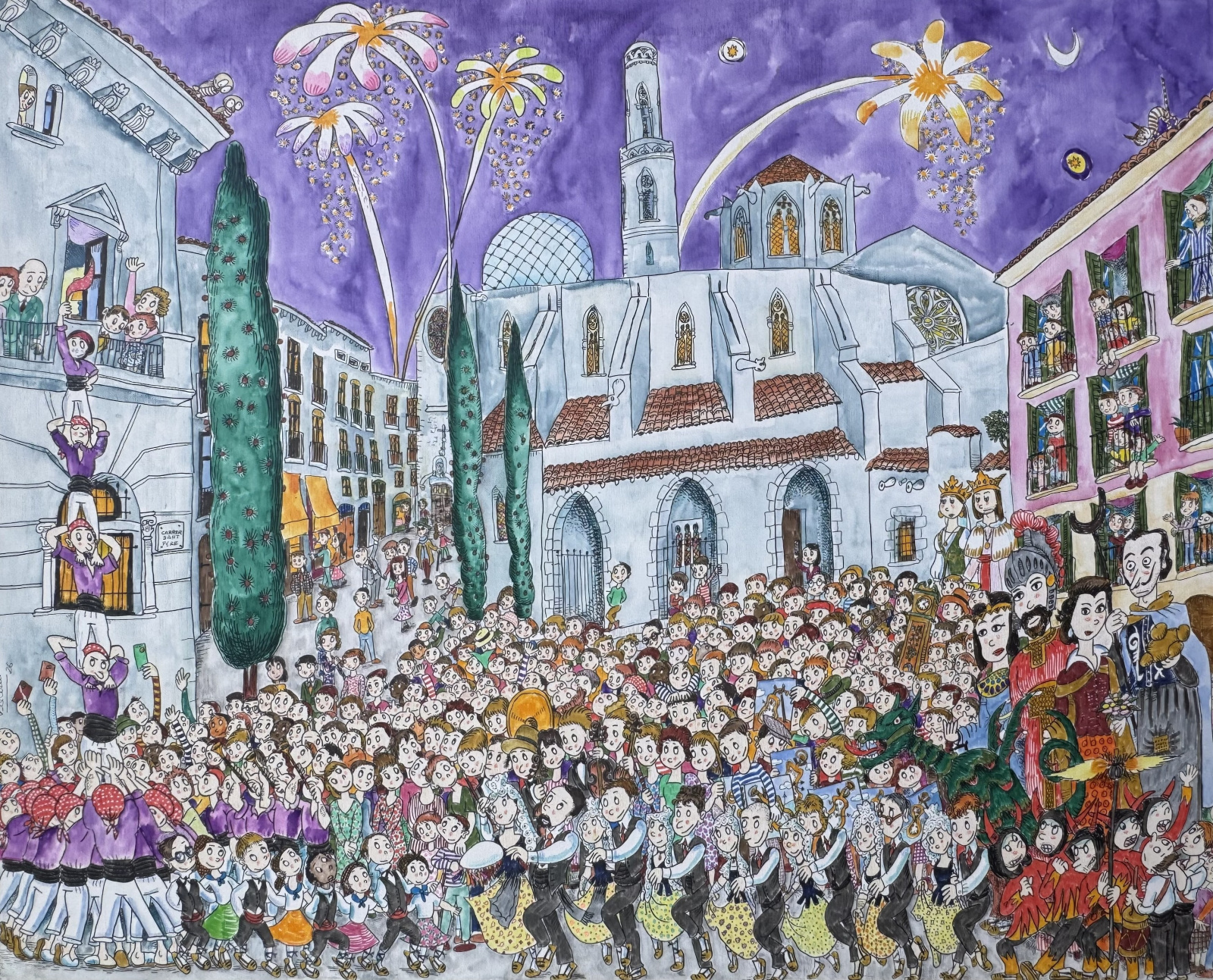
Pilarín Bayés returns to the El Claustre Art Gallery in Figueres with an exhibition conceived as a gesture of gratitude to the city and the Empordà territory. After the warm reception of her first show in the space, the artist wanted to respond to the affection received with a proposal specially dedicated to Figueres and Empordà, two landscapes that become protagonists of an unmistakable graphic universe.
With her characteristic gaze, full of dynamism, irony, and narrative ability, Bayés explores spaces, traditions, characters, and episodes that are part of the collective imagination of the region. Her illustrations, filled with figures and situations that invite observing every detail, build a festive and affectionate portrait of a territory revealed both through its heritage and its ways of life.
Figueres appears in all its vitality in Figueres en festes (Figueres in Celebrations), a scene that situates the popular celebration under fireworks and the presence of the Church of Sant Pere. The footprint of Salvador Dalí and Gala also has a prominent place with El llegat de Dalí i Gala (The Legacy of Dalí and Gala), a composition imagining the artists flying over a museum full of visitors. The fantastic imagery of the territory emerges in Les dones d’aigua (The Water Women) and Les bruixes. Llers (The Witches. Llers), while the seafaring life and coastal customs take shape in Hora de plegar a Cadaqués (Time to Finish in Cadaqués), with fishermen returning from the day’s work.
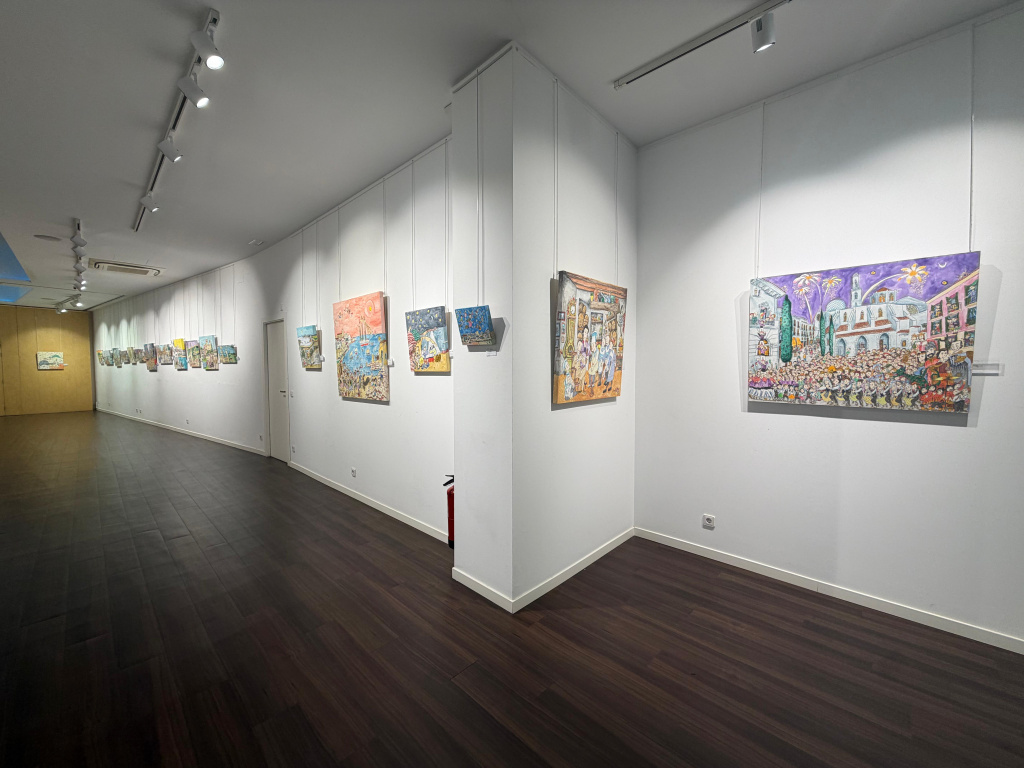
The artist also recovers episodes and transformations linked to the tourist history of Empordà with Les primeres turistes noruegues (The First Norwegian Tourists), a scene that evokes the arrival of bikinis. The architectural heritage is present in Catedral de l’Empordà (Cathedral of Empordà), dedicated to the Basilica of Santa Maria of Castelló d’Empúries, while European memory finds its space in Walter Benjamin. Portbou, featuring the figure of the sociologist and his famous suitcase.
The journey is completed with the festive exuberance of Rio, Sitges, Roses, which establishes a dialogue between different carnival imaginaries, and with the luminous scene of Cel i mar. Sant Pere Pescador (Sky and Sea. Sant Pere Pescador), where the beach becomes the setting of a joyful and dynamic composition.
You may be
interested
...