
Exhibitions
Picasso also built modern architecture
The Picasso Museum explores, with an unprecedented exhibition of 150 works and documents, the dialogues between the artist, architecture, and the city, in a journey that culminates with the intellectual and visual encounter with Le Corbusier.
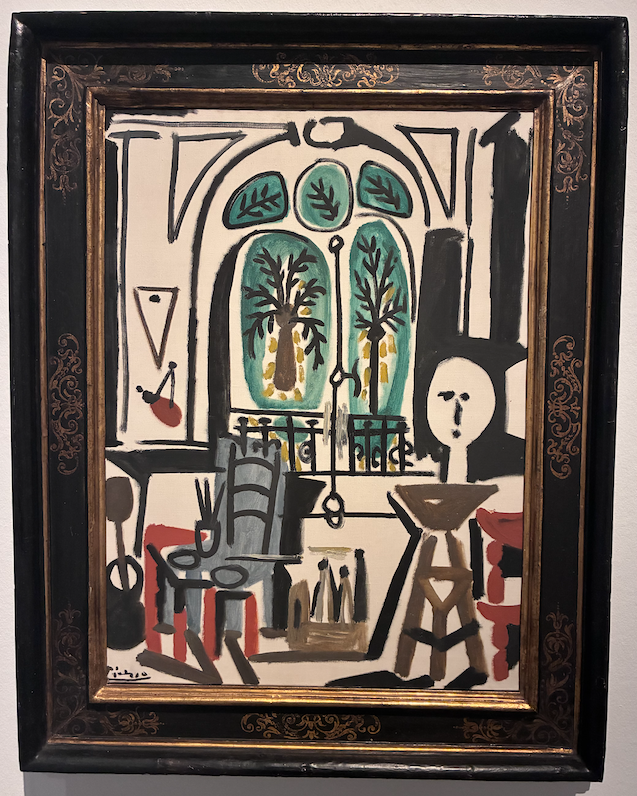
Discomfort did not bother him; it could even be said that it stimulated him...
One morning, when I arrived at his house, I found the paint pots, the brushes scattered... those that Picasso's fingers had feverishly soaked... The canvas he had painted during the night was still in the same place, leaning against the wall... Without worrying about comfort, he worked far from the easel, with his body bent, sometimes sitting on the floor, after having placed the canvas anyhow and anywhere...
Brassaï
For decades we have read Pablo Picasso through the body, the myth, or the line, but rarely through the structure. Picasso and Architecture corrects this bias and proposes a cross-sectional reading of the artist through a little-explored territory: the dialogue with the city, architecture and volume. With nearly 150 works and documents—including top international loans such as those from MoMA—the exhibition puts on the table that redefining painting necessarily involved reinventing space.
Curated by Enrique Granell, Emmanuel Guigon and Maisa Navarro, three voices with broad knowledge of the relationships between art and architecture, the exhibition goes beyond Picasso's condition as a painter and sculptor. Without being an architect in the strict sense of the word, the artist acted as a true architect of painting: he dismantled the conventions of perspective, questioned the traditional representation of reality, and experimented with new ways of visually constructing the world. Especially from Cubism onwards, fragmentation, the superposition of planes, intersections, and the multiplicity of viewpoints opened a field of investigation that would connect with some of the great architectural debates of the 20th century.
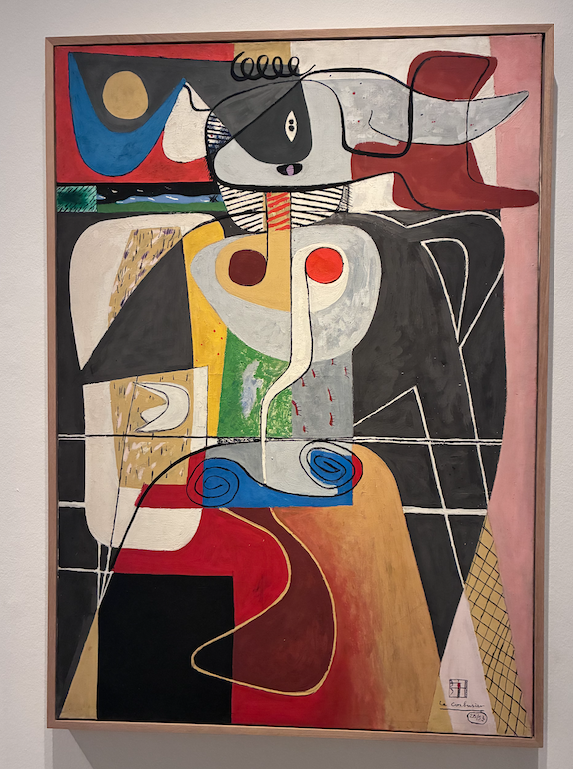
Le Corbusier, Toro II, 1953, Fondation Le Corbusier, Paris.
The exhibition articulates a reading in which space, time, form, and materials become fundamental elements to understand this proximity. It is not simply about locating buildings, interiors or urban landscapes in Picasso's production, but identifying a way of thinking about space that crosses his entire work. The city ceases to be a stage to become a visual structure; the domestic interior transforms into a territory of relationships and tensions, while objects, volumes, and forms acquire a new autonomy within the composition. In this sense, the exhibition establishes correspondences, echoes, and parallels between the Picasso universe and the evolution of contemporary architectural thought.
The route is organized around various areas that function as chapters of the same research: the architect, urban visions, the interior, space cages, and the synthesis of the arts. Each of these spaces allows an approach to a different facet of Picasso’s relationship with the built environment, from his way of conceiving volumes to the dissolution of boundaries between disciplines. The diversity of materials and perspectives helps build a narrative that does not seek to establish one-way influences but to reveal a network of connections between artistic and architectural practices.
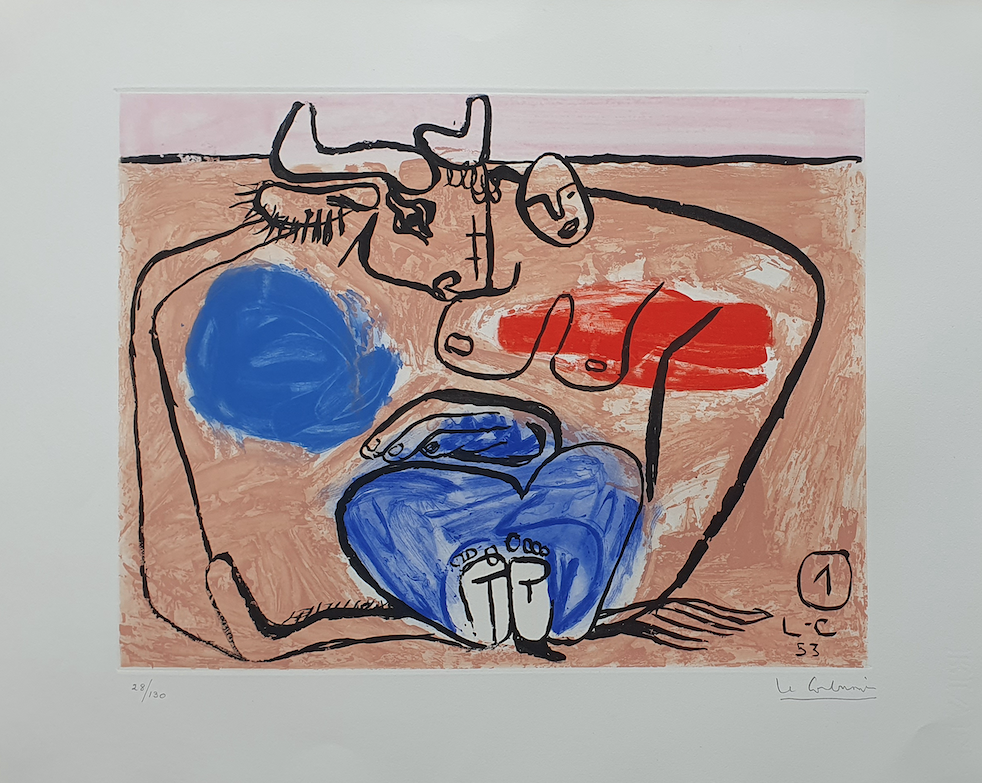
Le Corbusier, Plate no. 1 from the Album Unité. Etching dossier, 1 (28/130). Etching and aquatint printed in eleven colors by Atelier Crommelynck in March 1965, based on an original pastel by Le Corbusier from 1953. Fondation Le Corbusier, Paris. © Le Corbusier, VEGAP, Barcelona, 2026© Le Corbusier, VEGAP, Barcelona, 2026.
One of the most significant moments in the exhibition comes with the encounter between Picasso and Le Corbusier, two figures who, from different languages, led radical transformations in the conception of modern space. The relationship between the two becomes the convergence point of a discourse that, as Maisa Navarro points out, presents a certain circularity: a first approach through the plastic works, which establish links and affinities, and a second documentary reading that expands and contextualizes these relationships.
The comparison even allows reversing roles and imagining Le Corbusier as the Picasso of architecture, two personalities who shared a willingness to break with inherited models and a profound investigation into the possibilities of form. In this dialogue, the Unité d'Habitation of Marseille becomes an especially significant reference, both for its conception of housing and for its way of understanding the building as a complex organism capable of articulating life, space, and community.
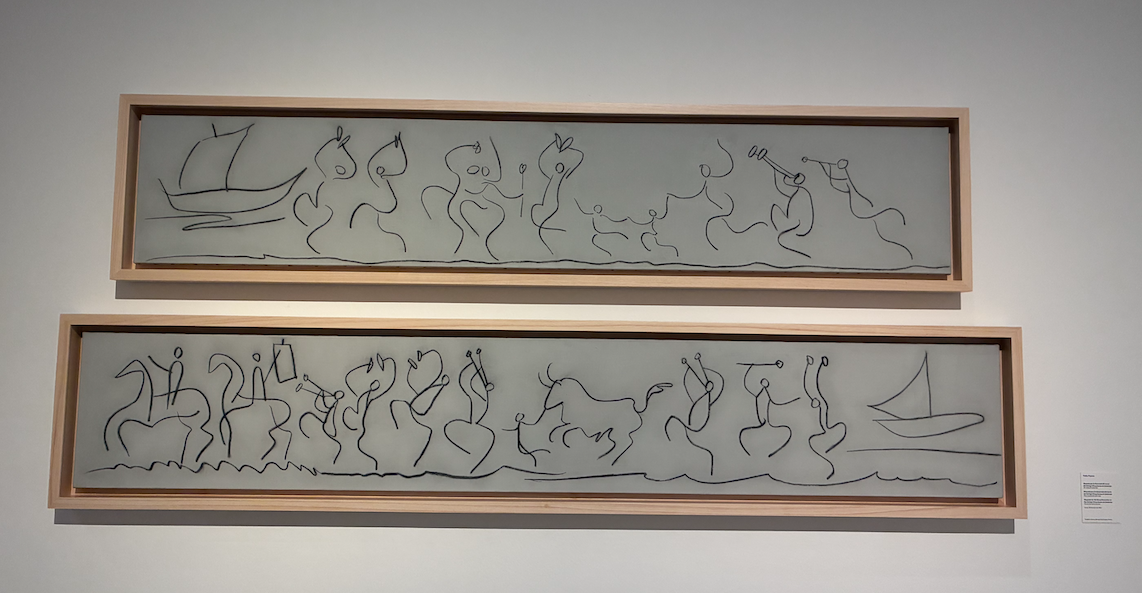
Model for the decoration of the mural at the College of Architects of Catalonia.
This final encounter is thus not an appendix to the route, but a way of returning to the origin and understanding the architectural dimension of Picasso’s revolution. The artist’s work appears as a laboratory of forms and ideas that contributed to transforming the visual culture of his time and maintains a profound relationship with the issues that still challenge architecture today.
With this exhibition, the Picasso Museum joins the celebration of Barcelona 2026 World Capital of Architecture from a singular perspective. A proposal that expands the usual limits of reading Picasso and reclaims his capacity to think, build, and inhabit space. More than a thematic approach to architecture within his work, it is an invitation to discover that behind the painter who changed the history of art, there was also a creator who radically transformed the way of seeing and imagining the world.

You may be
interested
...