
Exhibitions
Eder Santos unfolds a universe of images and perceptions at the Oscar Niemeyer Museum
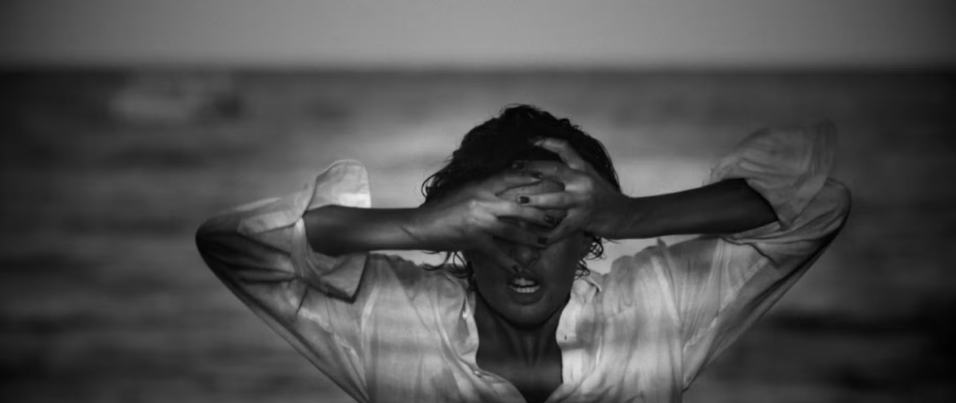
The Oscar Niemeyer Museum (MON), in Curitiba (Brazil), presents Daquilo que nos escapa, the first exhibition dedicated to contemporary artist Eder Santos at this institution. The exhibition, inaugurated on September 3, 2026, in Room 11, brings together twelve video installations and video sculptures conceived between 2003 and 2024, offering an approach to the different stages and research lines of a career marked by experimentation with moving images and audiovisual languages.
Internationally recognized as one of the pioneers of multimedia art in Brazil, Eder Santos has developed an artistic practice that transcends traditional boundaries between disciplines. His projects establish connections between visual arts, cinema, theater, video, and new technologies, generating proposals where audiovisual resources cease to be merely representation tools and become elements that transform the space and the viewer's experience.
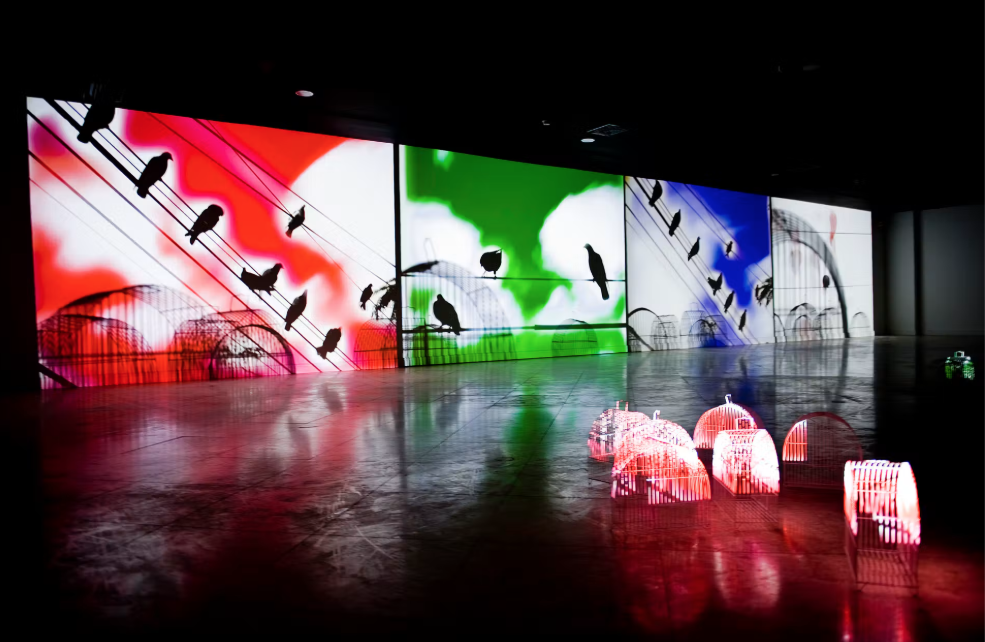
Throughout his career, the artist has explored the expressive possibilities of the image and its capacity to construct narratives, activate memories, and alter our perception of reality. In this sense, the works gathered in Daquilo que nos escapa allow approaching a creative universe in which technology and formal experimentation serve a reflection on what we see, what we remember, and everything that remains beyond our reach.
The exhibition transforms Room 11 of the Oscar Niemeyer Museum into a space of experiences and interactions. Images and sounds directly engage with the architecture, establishing relationships between the different installations and modifying the way the public occupies and moves through the exhibition space. Visitors do not face a closed sequence or a chronological itinerary, but an open proposal that allows them to construct their own route and establish personal connections between the pieces.
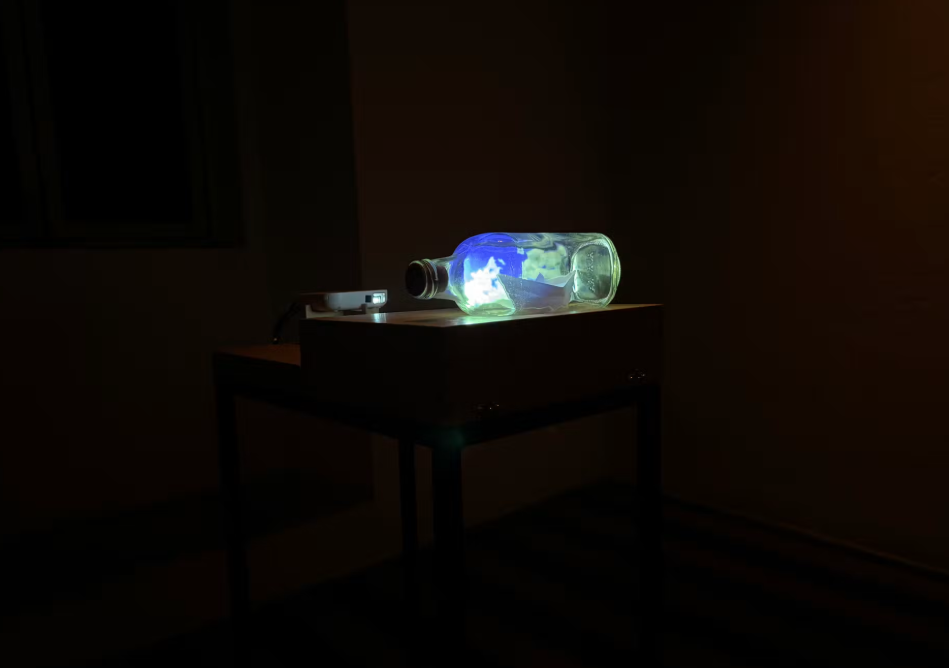
This non-linear arrangement is fundamental to understanding the exhibition’s approach. The works are not presented as isolated units but as part of an investigative territory where different temporalities, materials, and languages converge. The image thus acquires a spatial and sensory dimension, while the sound contributes to generating atmospheres that extend the experience beyond conventional contemplation.
Curated by Luiz Gustavo Carvalho, Daquilo que nos escapa moves away from the approaches of a traditional retrospective. Instead of organizing the artist’s production from a strictly chronological perspective, it proposes an encounter between different moments of his trajectory and emphasizes the relationships established between the works. The result is an experience that invites reflection on the limits of perception, the presence of memory, and the possibilities offered by new technologies to expand the languages of contemporary art.


You may be
interested
...