Exhibitions
Dana Lixenberg. Escaping stereotypes
The exhibition covers four decades of Dana Lixenberg's career through her portraits of communities and social realities in the United States, always far from stereotypes.
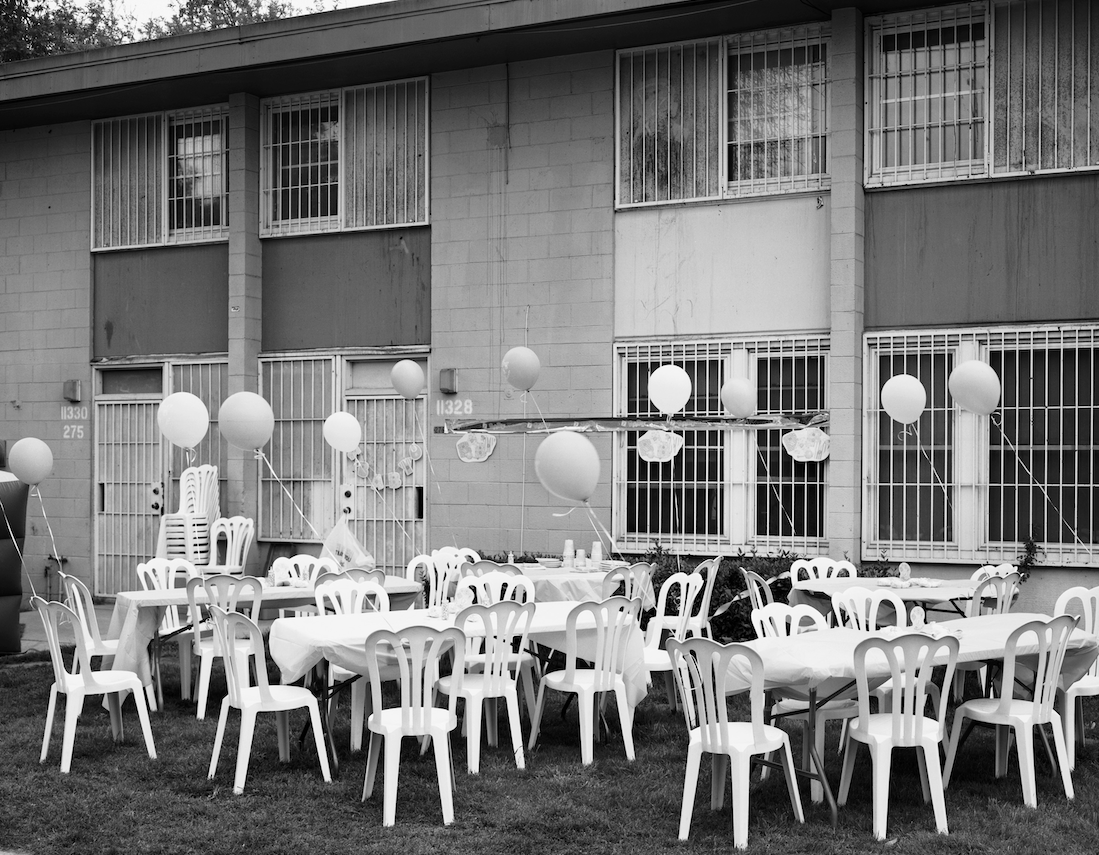
The exhibition American Images , co-organized by the MAPFRE Foundation and the Maison Européenne de la Photographie, traces four decades of the career of Dutch photographer Dana Lixenberg (Amsterdam, 1964), internationally recognized for her empathetic and rigorous approach to documentary portraiture. Lixenberg initially trained in New York, where she resided between 1989 and 2018, and developed her career during the swan song of print publications. Instead of following the frenetic or artificial rhythm of the commercial media with which she collaborated, she opted for a methodology based on patience, attention and commitment.
Courtesy of the artist and Grimm Amsterdam, London, New York © Dana Lixenberg.
The exhibition establishes a journey through contemporary American society from the early 1990s to the present. A society that has just lost its communist adversary and that must rebuild its ideology. Hence, for example, that during the 1990s art and photography resorted to the body as the last ideological refuge, and new urban cultures were formulated, heirs to the extinct pride of the working class. Lixenberg publishes his work in magazines such as Vibe , responsible for the popularization of the hip-hop aesthetic. In the same way that "video killed the radio star", the smartphone and social networks have loaded anything that recalls illustrated magazines; magazines that inhabited our imagination from the 1920s until less than fifteen years ago.
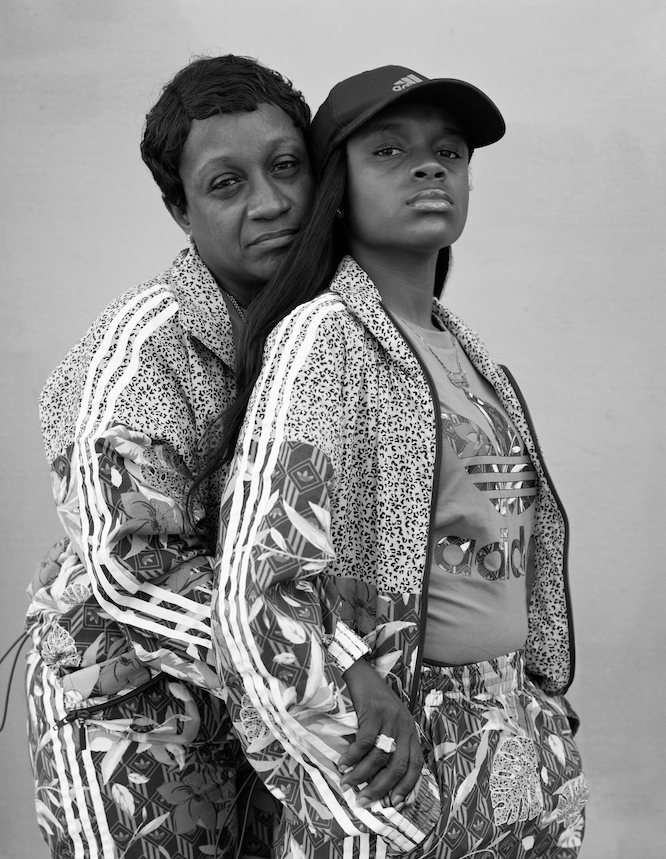
Lixenberg carries a heavy large-format camera (4×5-inch film), which requires a tripod. He often takes his photographs outdoors, in natural light. It is not a question of reaching out and kissing the saint. The artist usually settles into the environment he has to portray and lives with the people he will put in front of the camera. It is as if he wants to enter their intimacy in a non-aggressive way, while capturing their essence.

Courtesy of the artist and Grimm Amsterdam, London, New York © Dana Lixenberg.
Thus, he creates an atmosphere of intimacy and trust where people are shown without artifice or theatrical poses. The exhibition is developed through different projects: Imperial Courts (1993 – ongoing), his most monumental work. Begun in 1993 in the Watts social housing complex (Los Angeles), shortly after the riots caused by the Rodney King case. Avoiding stereotypes, he portrayed individuals from this community for more than thirty years.
Jeffersonville, Indiana (1997-2004), portraits of users of Haven House, a shelter for the homeless, who question the myths of social mobility and the "American dream."
The Last Days of Shishmaref (2007): made on Sarichef Island (Alaska), it documents an Inupiat community of 600 inhabitants threatened by permafrost erosion and rising sea levels due to climate change.



You may be
interested
...