Exhibitions
The fabrics tell the story of the journey
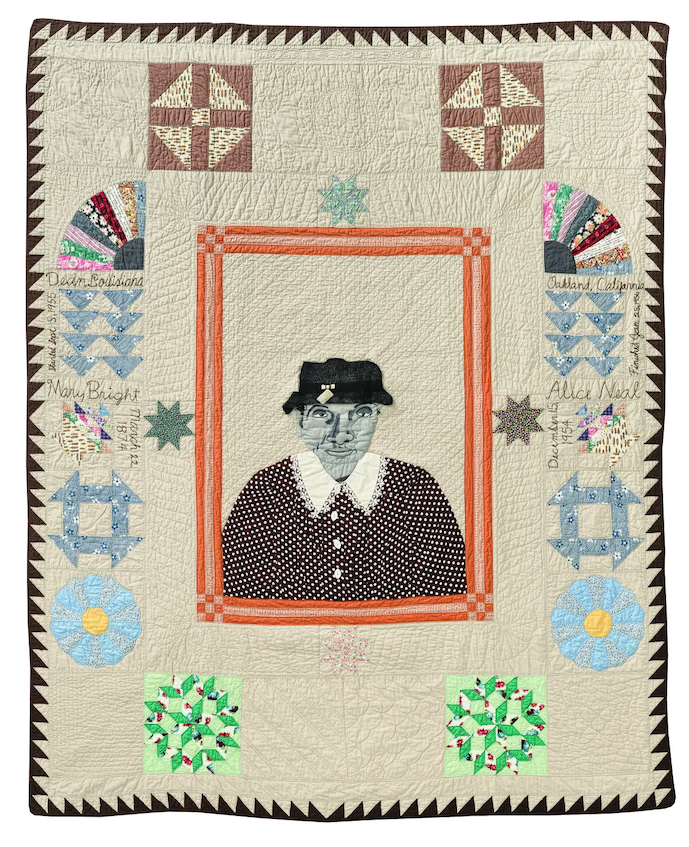
A quilt can protect from the cold, cover a bed, or accompany a journey, but it can also hold a family history, gather fragments from several generations, and become a way to preserve an identity. This dimension makes Routed West: Twentieth-Century African American Quilts in California an exhibition that transcends the boundaries between craft, art, and social history. From September 18, 2026, to January 17, 2027, the National Museum of Women in the Arts in Washington, D.C., presents nearly eighty works that explore the African American experience in California through quilts.
The exhibition takes as its starting point the so-called Second Great Migration, the displacement of approximately five million African Americans from rural areas of the southern United States to cities in the north and west between 1940 and 1970. The search for better living conditions and greater opportunities led hundreds of thousands of people to California. Many of them traveled carrying quilts that had been part of their homes. These were functional pieces, but also objects laden with memory: they protected the body and, at the same time, carried with them a piece of the past.
In Routed West , this material dimension takes on an artistic interpretation. The fabrics become documents of a social transformation of enormous magnitude, allowing us to reconstruct a history that appears not only in major political events but also in the everyday objects that accompanied those who experienced that migration. Each quilt can be understood as a small map of displacements, family ties, and shared experiences.
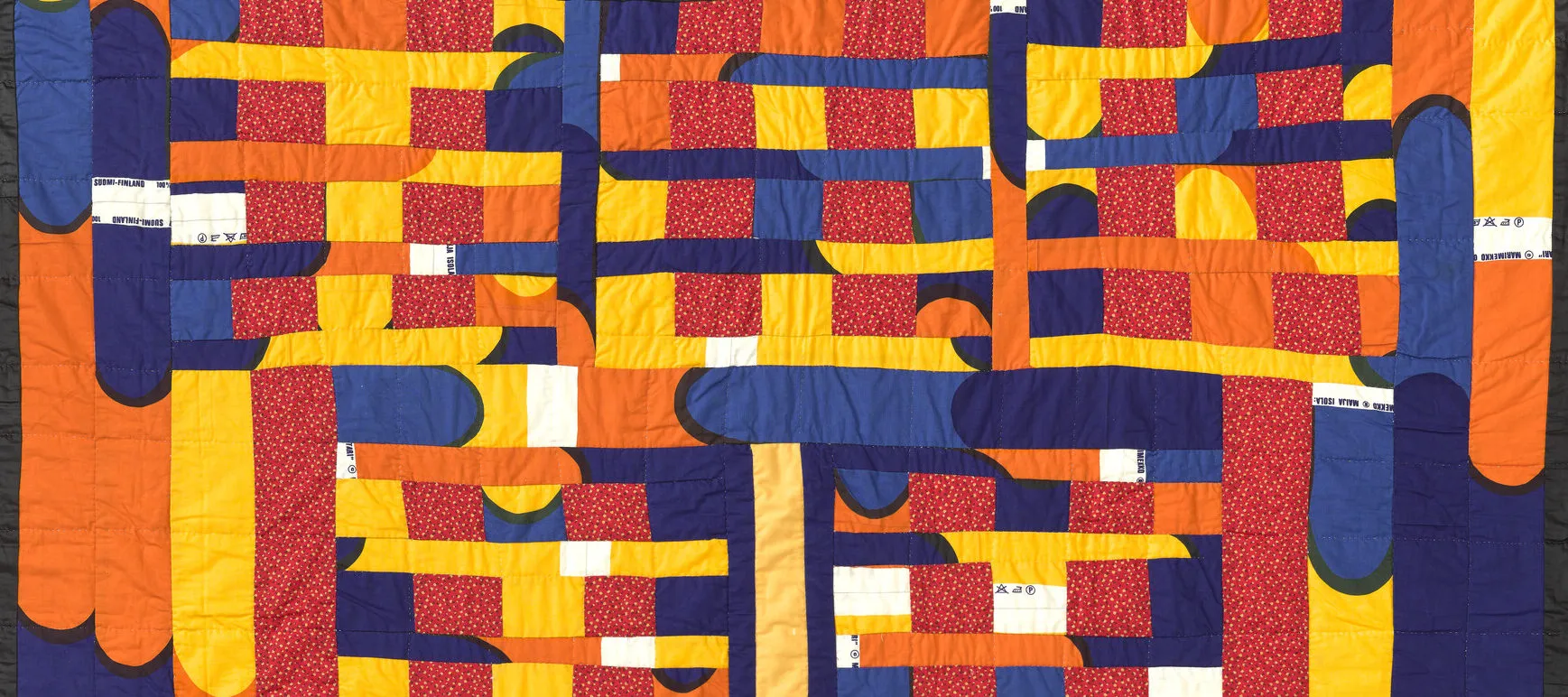
Sherry Ann Byrd (quilted 1990, Richmond, California) and Irene Bankhead (quilted 1990, Oakland, California), Cultural Merger at Crossroads, USA, 1990; Bequest of the Eli Leon Living Trust, BAMPFA; Courtesy of Sherry Ann Byrd; Photo by Kevin Candland.
The nearly eighty works brought together in the exhibition display an extraordinary diversity of colors, patterns, compositions, and formal solutions. The collection reveals the extent to which African American quilting has developed its own language, often based on the reuse of materials, improvisation, and the repetition of geometric structures. Work clothes, household textiles, and fabric scraps acquire a second life through composition and stitching.
This reuse also possesses a symbolic dimension. The materials are not neutral: they come from specific lives and bear the marks of those who used them. By incorporating them into a new work, the artists and creators transform objects associated with work and domestic life into pieces endowed with a new aesthetic autonomy. The quilt thus becomes a space where everyday experience can be reorganized and given new meaning.
Many of the quilts come from families originally from Arkansas, Louisiana, Mississippi, Oklahoma, and Texas—some of the states most represented in the westward migration. The quilts traveled with them and, once settled in California, continued to be an integral part of family life. They were passed down from mothers to daughters, from grandmothers to granddaughters, acquiring over time the status of inherited objects. This familial transmission is a central aspect of this tradition and demonstrates that the quilt functions simultaneously as a work of art, an archive, and a piece of domestic memory.
The exhibition also allows us to observe the relationship between creation and work. Many of the women who made these pieces were teachers, nurses, seamstresses, truck drivers, grocery store managers, or shipyard workers. Sewing developed alongside their professional occupations, and the time dedicated to quilting found its own space. Creating could become a meditative and liberating activity, a way to reclaim personal time within lives conditioned by work and family responsibilities.
From this perspective, the quilt raises a particularly relevant question for art history: what happens when a practice traditionally associated with domestic work comes to be seen as a form of artistic creation? Routed West helps to dismantle this separation between art and craft and allows us to contemplate these pieces not only in their formal complexity, but also in the social and cultural circumstances that made them possible.
Improvisation plays a prominent role. In contrast to a conception of quilting based solely on pre-established patterns, many of these works construct their compositions through intuitive decisions, combinations of materials, and variations on familiar structures. Repetition does not necessarily imply uniformity. On the contrary, it can generate rhythms, tensions, and balances that bring these pieces closer to certain abstract investigations in 20th-century art history.
But the aesthetic dimension is never separate from the experience. The colors, shapes, and fabrics speak of a community that found in creation a way to keep its traditions alive in a new territory. California does not represent the disappearance of the culture inherited from the South, but rather its transformation. Quilts accompany this process and become spaces where past and present can coexist.
The presence of contemporary artists completes the exhibition and demonstrates that this tradition continues to evolve. Their works maintain inherited techniques and principles, but introduce new perspectives and languages. The African American quilting tradition thus appears not as a closed legacy to be preserved intact, but as a living practice capable of incorporating new experiences.
Routed West ultimately presents an art history built from the ground up, from the homes, families, work, and migrations of a community. Their quilts are not merely surfaces of color and geometry; they are testimonies of people who traveled, worked, built new lives, and preserved, through their own hands, that which they refused to lose.


You may be
interested
...