News
Medellín, a city that found another perspective in art
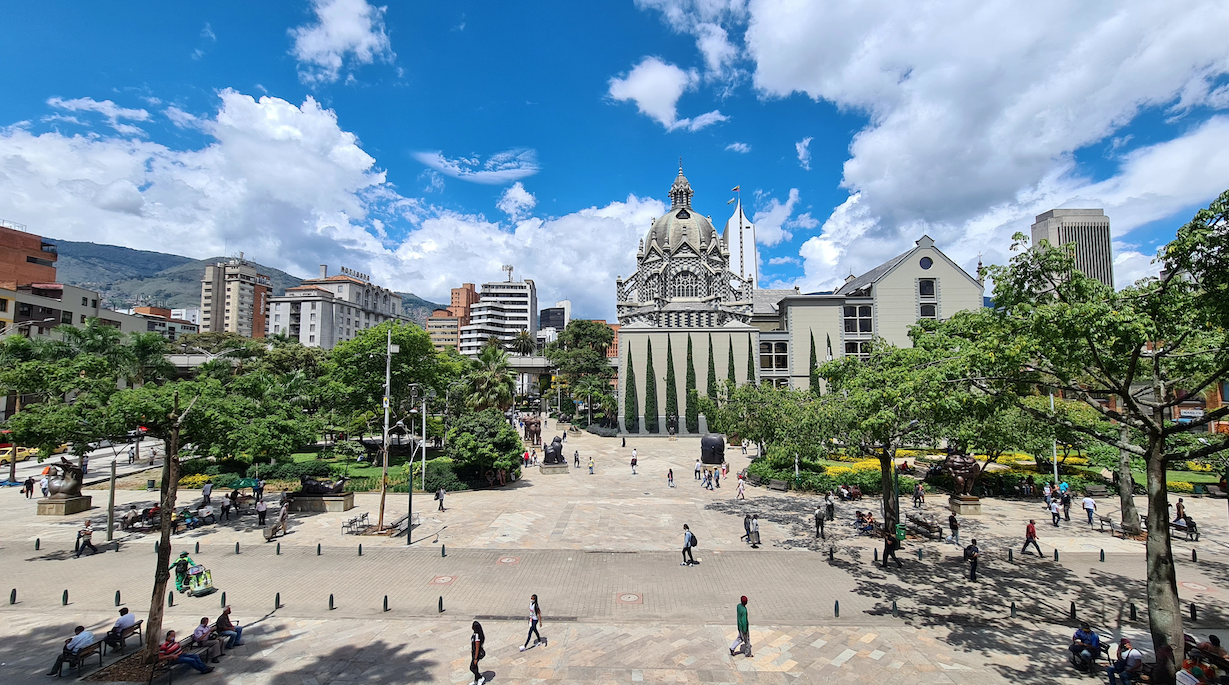
The capital of Antioquia has become one of the great cultural epicenters of Latin America and, especially, a vibrant hub for contemporary art. Its name is spoken with pride today and is linked to an artistic movement that continues to grow, experiment, and seek new ways of engaging with a city deeply marked by its history.
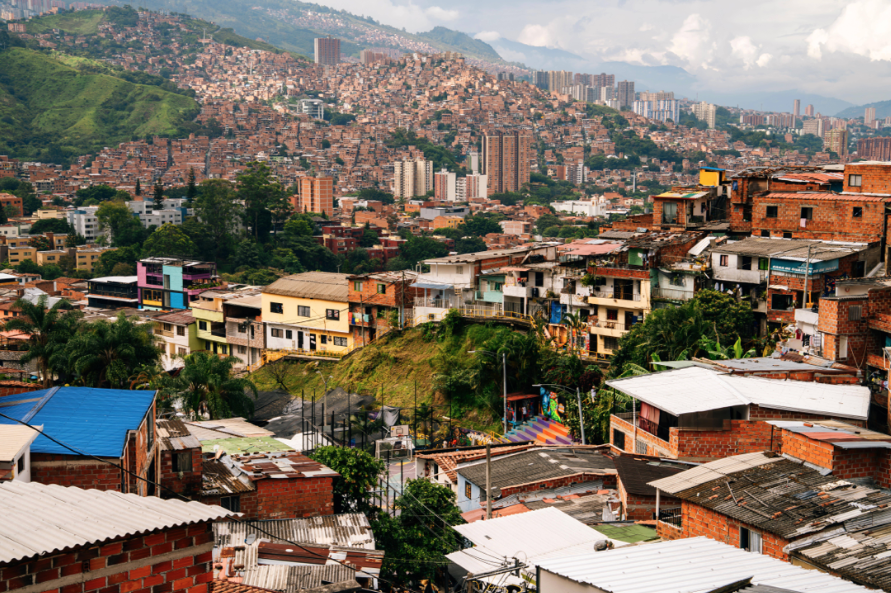
Nestled in a valley between mountains and bisected by the Medellín River, its unique geography has shaped urban growth for decades. So too has a recent history marked by violence and internal migration. A large part of the population arrived from rural areas, fleeing their homes, settling on the hillsides and building new neighborhoods in an urban expansion that ultimately resulted in a complex, unequal, and profoundly heterogeneous city.
That is precisely why it is especially significant to observe how art and culture have contributed to generating a new interpretation of Medellín. It is not about erasing a past that remains present, but about viewing it from different perspectives, introducing new questions, and allowing the city to explain itself through its creative processes. Comuna 13 is perhaps one of the most visible examples of this transformation, where urban art, community projects, and public space have acquired a prominence that transcends the strictly cultural dimension.
Another major example of this transformation is found in Ciudad del Río. The former industrial zone has given way to a new district where housing, parks, restaurants, cafes, galleries, and cultural spaces coexist. Contemporary architecture shares the space with the traces of that industrial past, in a particularly revealing coexistence: Medellín doesn't need to hide what it was to build what it wants to be.
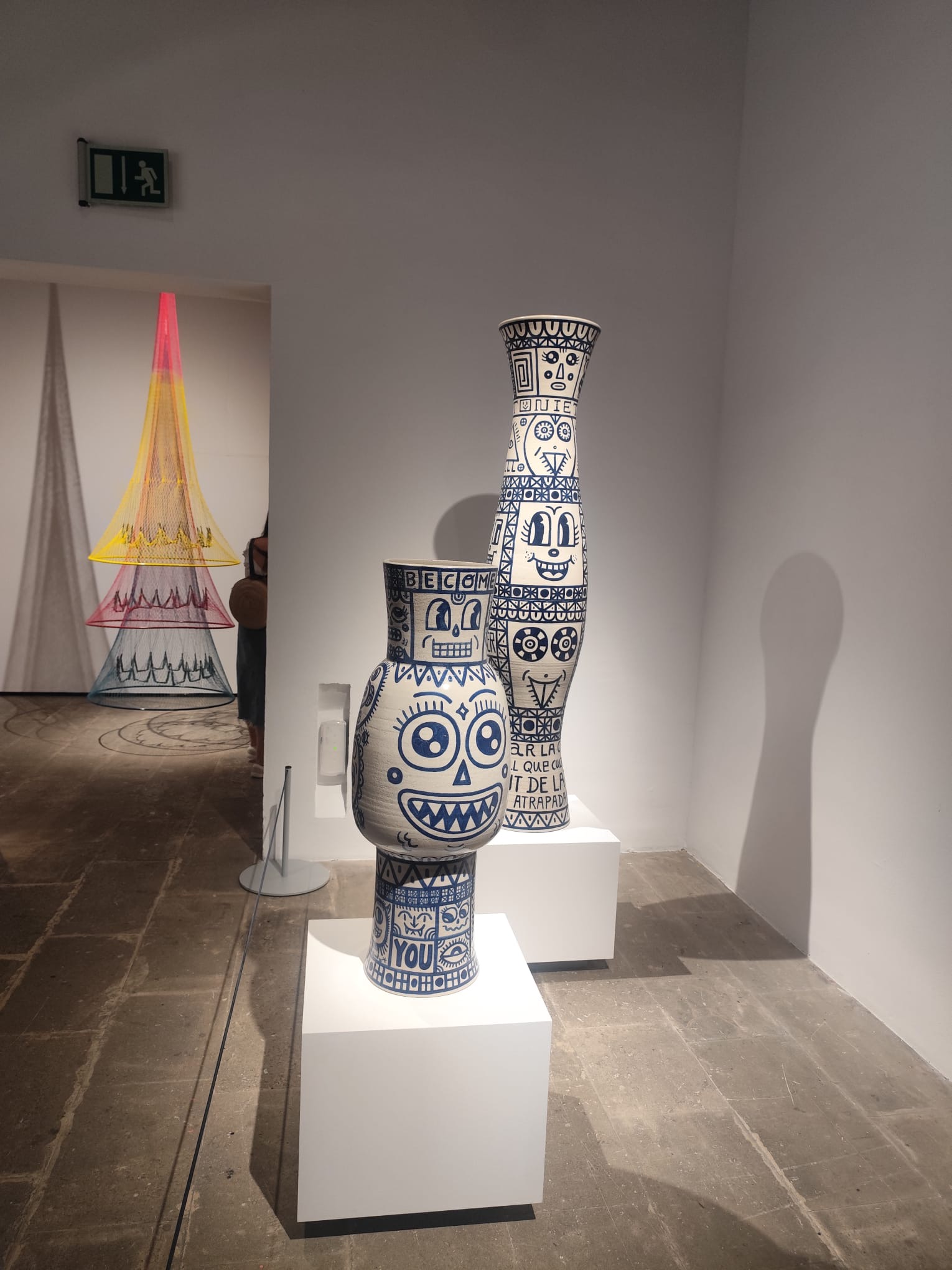
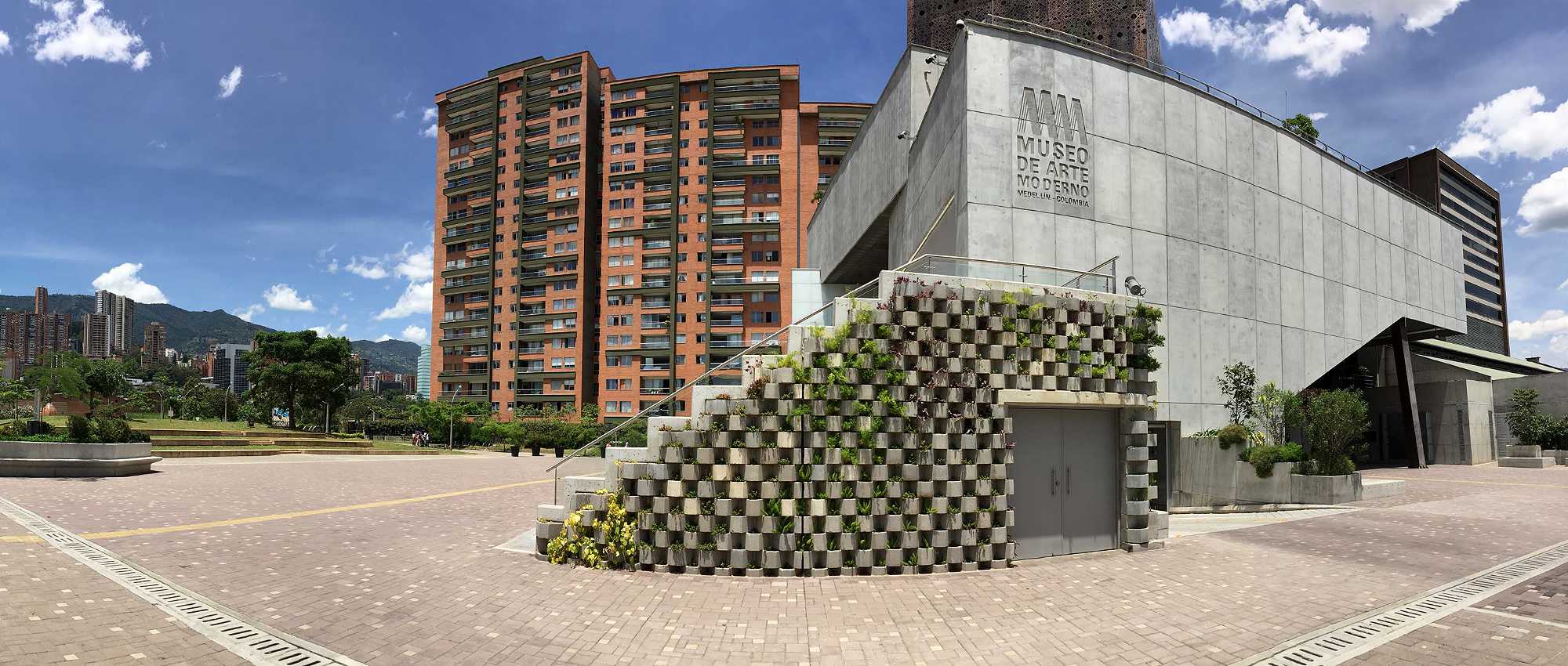
In this landscape, the Museum of Modern Art of Medellín, the MAMM, occupies a fundamental position. Housed in the space of a former steel mill, the museum preserves part of the site's industrial history while simultaneously serving as one of the city's main drivers of contemporary art. Its programming, exhibitions, and relationship with the urban space have helped solidify its position as a meeting point for artists, the public, and new ways of understanding contemporary creation.
The MAMM also represents a particular way of understanding culture: open and connected to the community. Free admission on Wednesdays and the open-air film screenings on the last Friday of each month exemplify a commitment to broadening access to art and taking cultural activity beyond traditional circuits. In Medellín, culture seems to be part of a collective conversation in which the museum is not isolated from the city, but rather engages in constant dialogue with it.
Also significant is the Kokhaproy exhibition, installed on the museum's terrace, which addresses the coca leaf from artistic, political, and symbolic perspectives. The exhibition moves beyond an interpretation solely associated with drug trafficking and recovers the historical and cultural complexity of an element deeply rooted in Colombia. Art thus returns to play an essential role: broadening the narrative and challenging the overly simplistic images that have been used for decades to explain Medellín and its surroundings.
All of this takes on special significance these days, coinciding with the presentation at the MAMM of the third international issue of Bonart . The magazine's arrival in Medellín is not merely a stop on its international tour, but an opportunity to establish a dialogue between two cultural scenes that share a common desire to explore the present through contemporary art. That this presentation is taking place precisely at the MAMM reinforces this link between creation, territory, and new perspectives on culture.
Medellín has changed, but perhaps the most interesting thing is not only how much it has changed, but how it has learned to tell the story of that change. The city, which for years was trapped in certain narratives about violence, drug trafficking, and marginalization, has constructed other discourses around art, architecture, public space, education, and culture. This urban transformation has been accompanied by a symbolic transformation.
In just two decades, Medellín went from ranking among the most violent cities in the world to receiving the Lee Kuan Yew World City Prize in 2016, an international award recognizing its urban transformation processes and the creation of more livable and sustainable communities. This process has been complemented by environmental initiatives aimed at expanding green spaces and moving towards a more sustainable city model.
But Medellín cannot be understood solely through urban transformation statistics or international accolades. Its true uniqueness perhaps lies in its ability to transform public space, museums, and contemporary art into tools for building new forms of belonging. Among the mountains, the river, the old factories, and the new neighborhoods, culture has found fertile ground to question what kind of city it was, what it is now, and what it aspires to become.

You may be
interested
...