News
Chan Chan's funeral secret is revealed
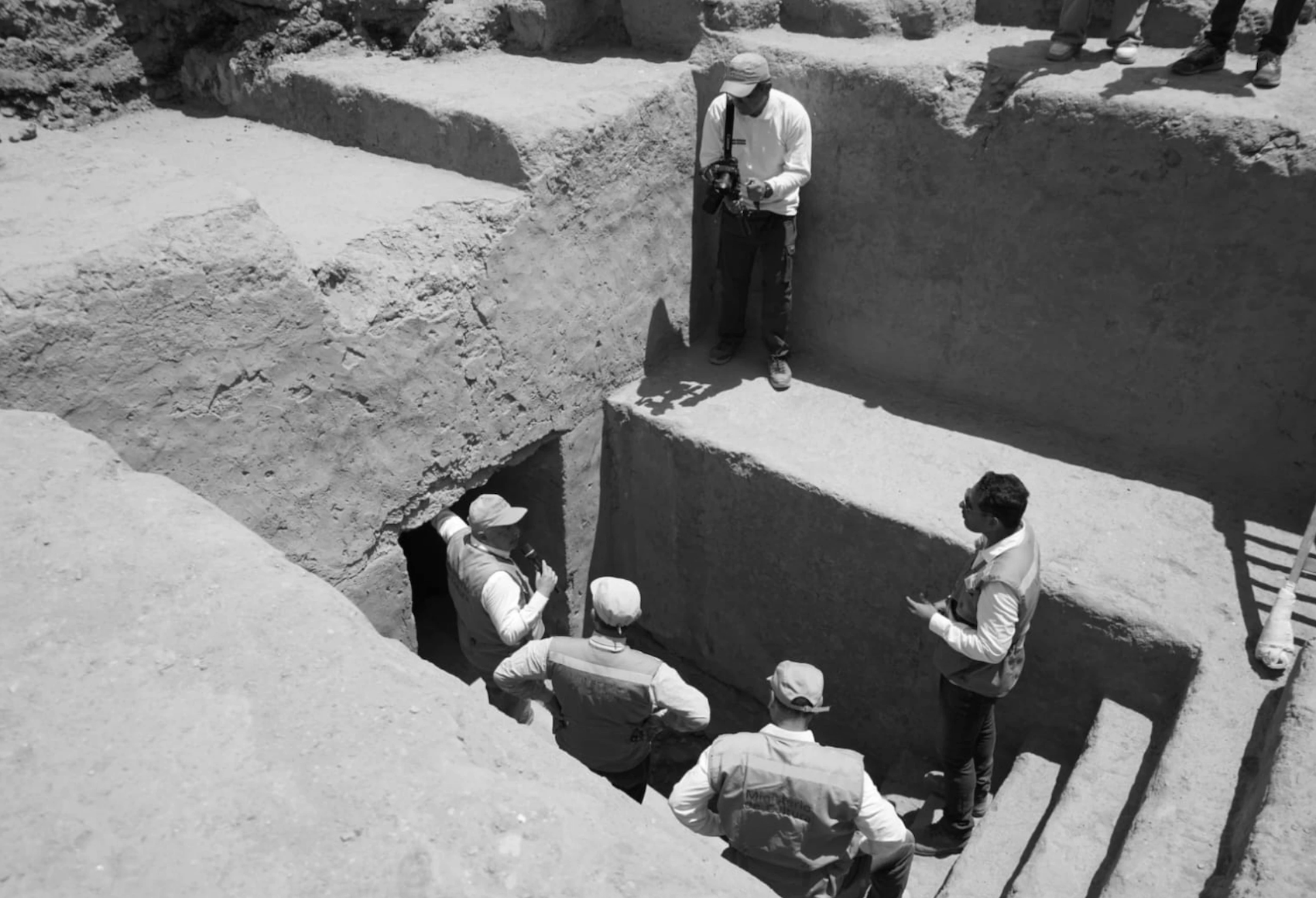
A team of Peruvian archaeologists has located a monumental Chimú funerary platform over 600 years old that has remained virtually intact in Chan Chan, an extraordinary circumstance in a territory where this type of structure has historically been the object of looting.
Inside the platform, five burial chambers have been identified, containing the remains of 38 individuals, along with a significant collection of grave goods including copper and gold objects, metal weapons, artifacts, and approximately 200 black ceramic vessels decorated with red pigments. The exceptional preservation of the site allows for the study of the human remains and objects in an arrangement very similar to that in which they were deposited almost six centuries ago.
Among the individuals identified, one stands out, considered by researchers to be the central figure in the burial. According to archaeologist Jorge Meneses, this individual was a member of the Chimú elite, although further study of the remains should provide new evidence regarding their identity, position, and role within the political and social structure of the time. Furthermore, their burial exhibits unique characteristics that distinguish it from other known funerary practices of this culture.
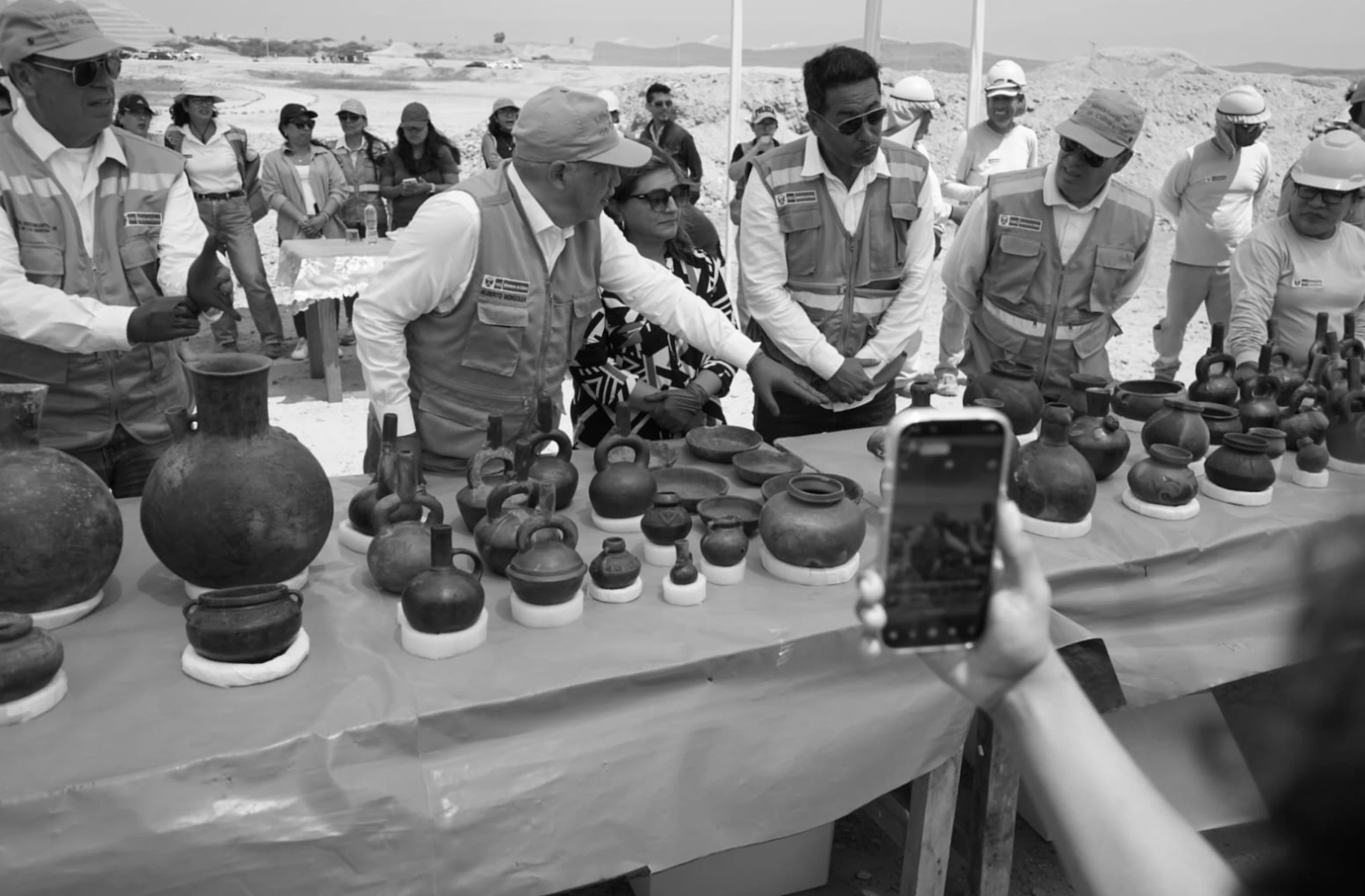
The importance of the discovery lies precisely in the possibility of viewing the funerary complex as a whole. It is not simply a matter of recovering isolated objects, but of reconstructing the relationships between the bodies, the burial spaces, and the grave goods that accompanied them. The weapons, precious metals, ceramics, and other items placed alongside the deceased constitute a material record capable of providing information about the social hierarchies, beliefs, and funerary rituals of the Chimú society.
The discovery is even more significant because of its location. Chan Chan was the capital of the Chimú kingdom and one of the great urban centers of pre-Hispanic America. The city, whose name is related to the expression "shining sun," covered an area of approximately 20 square kilometers and consisted of ten large walled palaces. At its peak, it may have had a population of around 30,000 people.
The Chimú culture flourished roughly between the 10th and 15th centuries on the northern coast of present-day Peru, before being incorporated into the Inca Empire. Their society developed a complex political, economic, and religious organization, and Chan Chan became the center of a powerful kingdom whose influence extended along a vast stretch of the coast.
Funerary platforms occupied a prominent place within this system. Elite members were buried in specially constructed spaces within large architectural complexes, where funerary rituals also helped to preserve their status and memory. In this context, the new tomb offers an exceptional opportunity to understand how power and death were intertwined in one of the most important civilizations of pre-Incan America.
The fact that the burial has survived to the present day in such a high state of preservation makes this discovery one of the most significant archaeological finds in recent years in Peru. The platform allows for the simultaneous observation of individuals and artifacts, something especially valuable for archaeological and anthropological research.
The study of the 38 bodies and the hundreds of recovered objects has only just begun. Future research will be able to determine aspects such as the age and sex of the individuals, their possible family relationships, their living conditions, and the circumstances of their deaths. It will also help to establish more precisely who the main figure in the mausoleum was and what the different offerings meant.
The city of Chan Chan, a UNESCO World Heritage Site, is once again revealing a part of its buried history. More than six centuries after those bodies were laid to rest on the funerary platform, archaeology is now recovering an exceptional fragment of the society that built this monumental urban center. And it does so not through an isolated piece, but through a virtually intact ensemble that allows us to approach, with unusual precision, the relationship between power, ritual, and death in the Chimú world.
You may be
interested
...