Exhibitions
Miró takes over São Paulo with more than a hundred works
The MAB FAAP presents a major international exhibition that covers more than six decades of the Catalan artist's career through paintings, engravings, sculptures, tapestries and photographs.
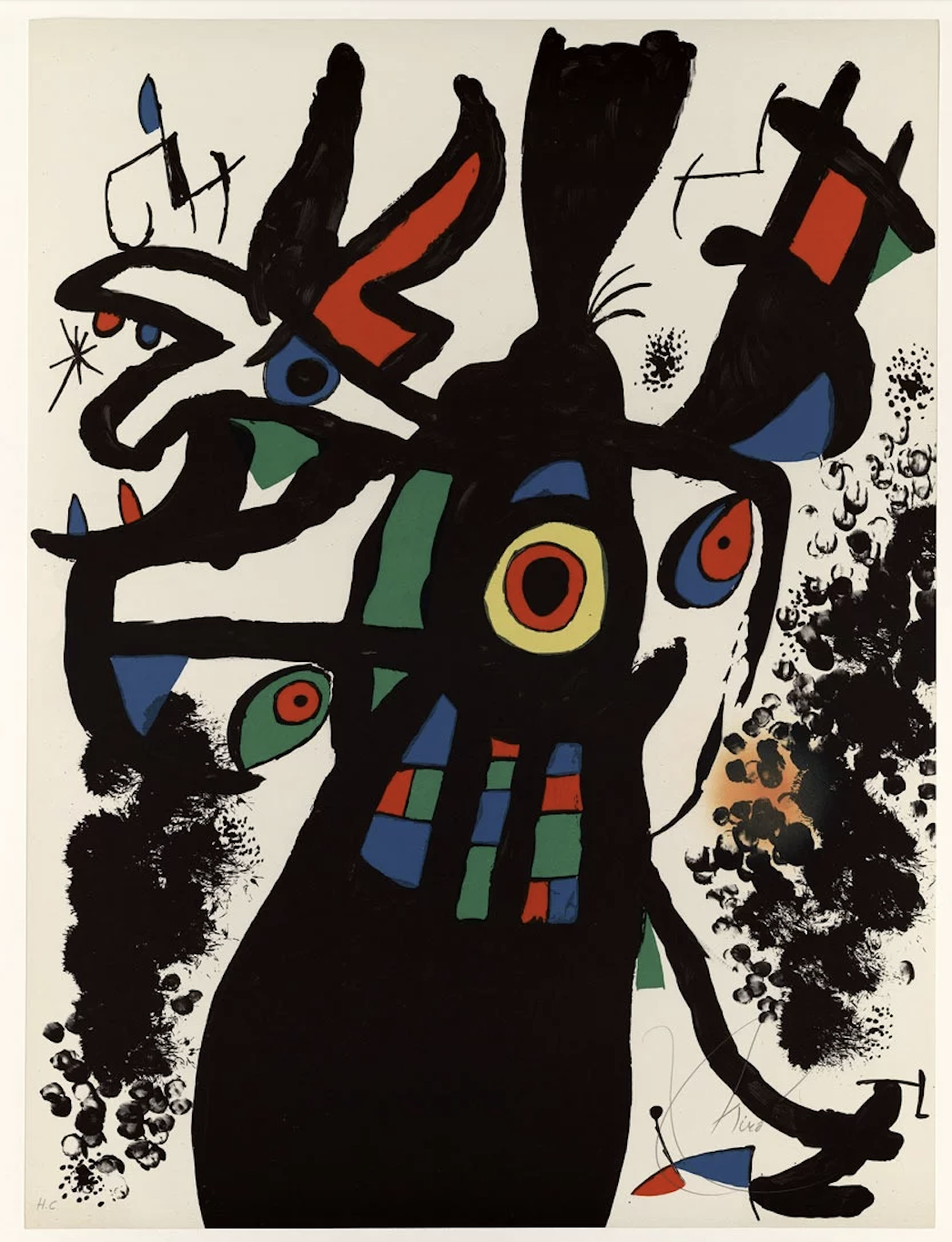
Joan Miró built an unmistakable visual universe throughout the 20th century, populated by stars, signs, organic shapes and vibrant colours. This ability to create a language of his own, far removed from strict classifications, is the focus of Miró: Mestre das Formas , an international exhibition that the MAB FAAP in São Paulo presents from August 7 to October 12, 2026 and which brings together more than a hundred original works by the Catalan artist.
Organized by the Instituto Totex and curated by the Spaniard Jordi J. Clavero, the exhibition proposes a structured tour in five thematic areas that allow us to follow different moments of Miró's production. Paintings, engravings, sculptures, tapestries and photographs make up a set that highlights his permanent desire for experimentation and the ability to transform apparently simple elements - a line, a spot of color, a shape or a symbol - into a poetic system of enormous freedom.
The tour covers more than six decades of creation and allows us to observe how Miró gradually developed his own visual grammar without being trapped within the boundaries of a specific artistic movement. His dialogue with surrealism, abstraction and the different European avant-gardes of the 20th century never meant absolute adherence, but rather a personal appropriation that allowed him to advance towards an increasingly essential and imaginative painting.
One of the attractions of the exhibition is also the provenance of the pieces. The set incorporates works from European institutions and collections, including the Fundació Joan Miró in Barcelona, the Fundació Pilar i Joan Miró in Mallorca and Es Baluard Museu d'Art Contemporani in Palma, in addition to several private collections. Some of the works are presented for the first time in Brazil, while others stand out for their rarity and for having exceptionally left Spain.
Born in Barcelona in 1893, Miró went through some of the great transformations of modern art without ever giving up a deeply personal perspective. His universe, at once recognizable and constantly changing, starts from reality to transform it into open signs, floating forms and mental landscapes. The line ceases to be a simple outline, the color acquires an almost autonomous dimension and the symbols become doors to a world between dream and matter.
The exhibition coincides with the 65th anniversary of the MAB FAAP, which thus reinforces its vocation of presenting great names in national and international art to the Brazilian public. In this context, Miró: Mestre das Formas not only recovers an essential trajectory of 20th century art, but also offers the opportunity to contemplate the coherence of an artist who made creative freedom one of his most powerful forms of contemporaneity.
You may be
interested
...