Exhibitions
Art as a received message
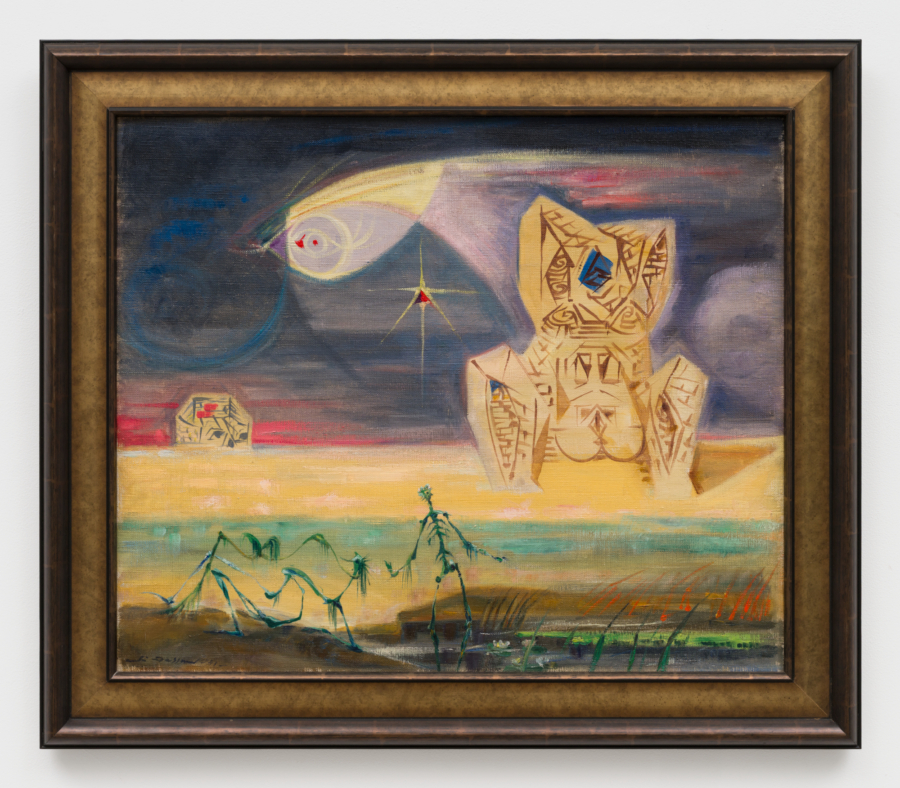
Karma in Los Angeles presents Dictation from the Other Side , an exhibition curated by Laura Whitcomb that brings together artists from different generations and backgrounds who worked within the surrealist tradition or extended some of its most radical principles. The exhibition, which will be open from July 23 to September 12, 2026, brings together works by Gertrude Abercrombie, Sara Kathryn Arledge, Paul Beattie, Wallace Berman, William S. Burroughs, Steven Lowe, Eugenia P. Butler, Bruce Conner, Enrico Donati, Renate Druks, Esteban Francés, Madge Gill, George Herms, Aleksandra Ionowa, Louise Janin, Ted Joans, Jacqueline Lamba, André Masson, Roberto Matta, Michael McClure, Grace Pailthorpe, Paulina Peavy, Betye Saar, Kurt Seligmann, Harry Smith, Marian Spore Bush, Beatrice Wood, Anna Zemánková, Unica Zürn and other names linked to this artistic constellation. The project starts from a particularly suggestive premise: understanding creation not as an expression of individual subjectivity, but as a process of reception, transmission or dictation from a force located beyond the will of the artist.
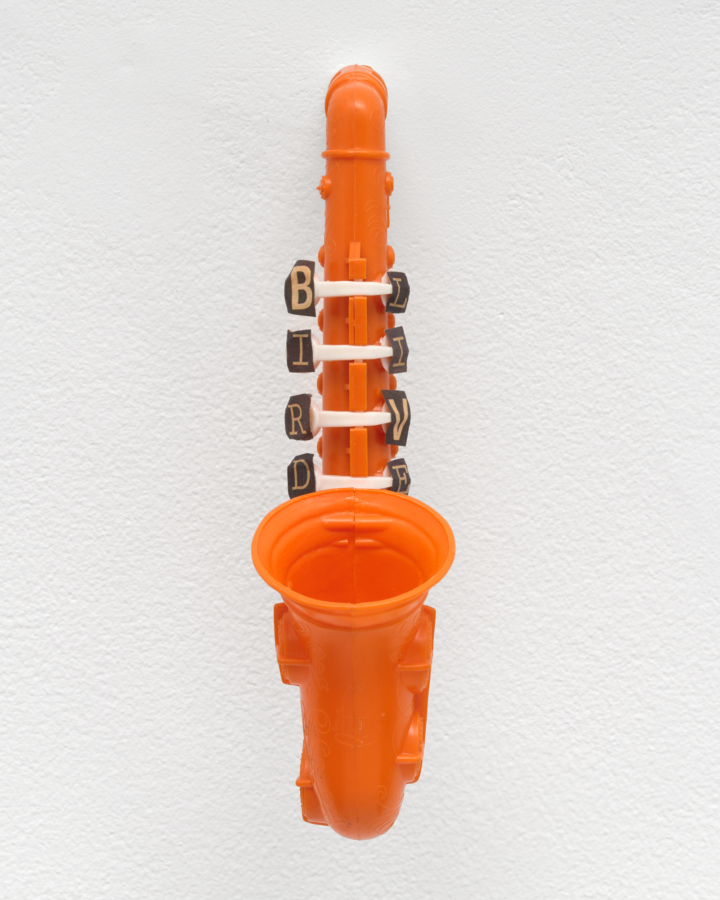
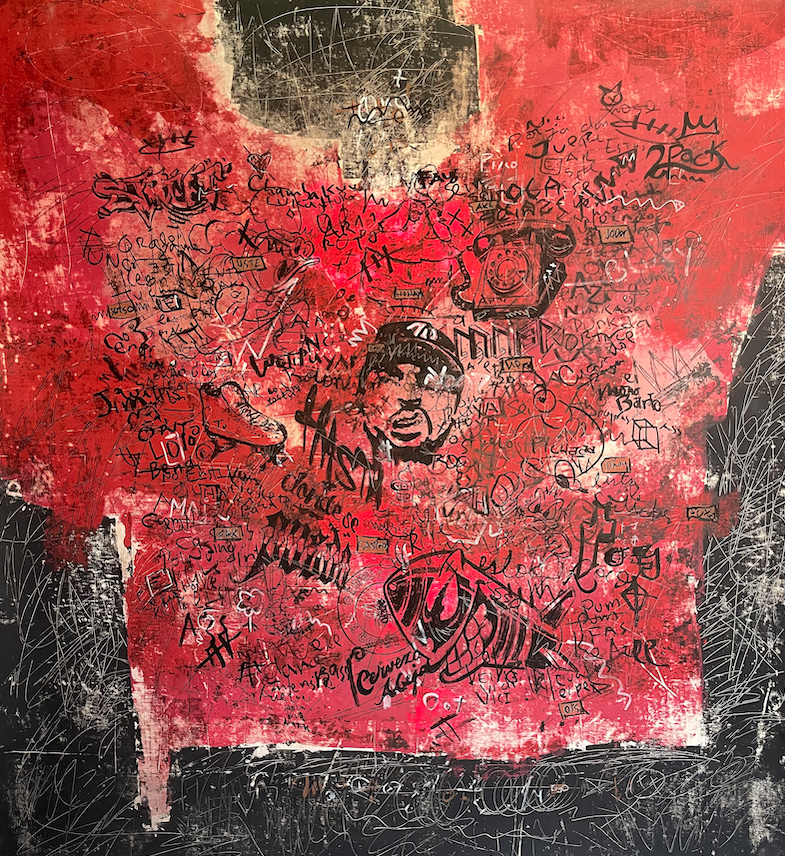
Ted Joans, Bird Lives.
The exhibition thus recovers a little-explored dimension of modern art history: the relationship between Surrealism, mediumship, automatism, Hermetic research, Theosophical thought, and improvisational structures. From the Surrealist interest in mediums and figures like Hélène Smith, considered by the Surrealists themselves a key figure in automatic writing, Dictation from the Other Side traces different forms of creation understood as channels of communication with that which remains beyond the visible. Special attention is given to the Surrealists who lived in exile in New York during and after World War II, including Kurt Seligmann, Roberto Matta, Enrico Donati, Esteban Francés, André Masson, and Jacqueline Lamba. For these artists, Enochian rituals and Hermetic practices could become forms of psychic resistance against the oppressive forces of their time.
The exhibition also focuses on artists who took this idea of dictation to the point of constructing veritable systems of cosmology and prophecy. Marian Spore Bush spoke of "They" or "the People" as entities that guided her hand and her materials; Madge Gill attributed her extraordinary output of drawings and textiles to a spirit called "Myrninerest," while Paulina Peavy understood her paintings, masks, and diagrams as collaborations with an ethereal intelligence called Lacamo. In the case of Beatrice Wood, her relationship with Marcel Duchamp and her long-standing interest in theosophy led her to conceive of ceramics and enameling from an almost alchemical perspective, transforming the kiln into a space for the transformation of matter and color. A similar sensibility appears in Aleksandra Ionowa and Anna Zemánková, for whom the plant world could function as a structure capable of making visible a psychic, spiritual, and emotional order.
Poetry constitutes another fundamental territory within this conception of creation. Paulina Peavy, George Herms, Wallace Berman, Ted Joans, Cameron, and Jacqueline Lamba explored language as a space capable of receiving and transmitting materials that transcended individual will. William S. Burroughs took this logic even further through his cut-up and collage techniques, subjecting language to interruptions, recombinations, and external pressures that challenged the conventional notion of authorship.
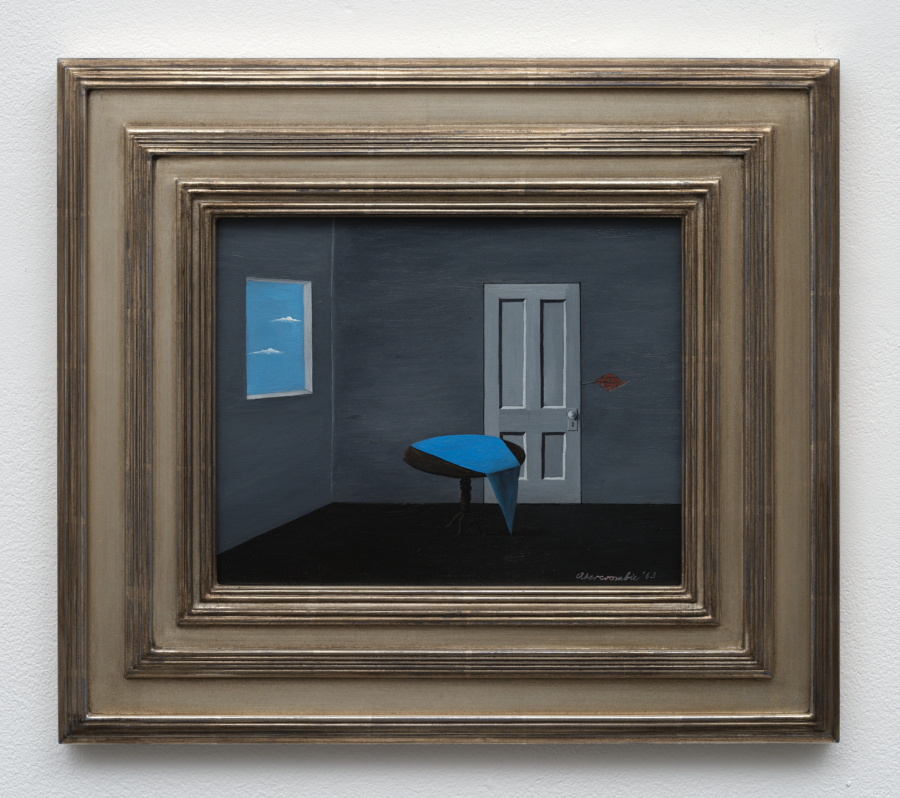
Gertrude Abercrombie, Lonely Table, 1963.
One of the lesser-known chapters of the exhibition focuses on the studio Lionel and Joanne Ziprin maintained on New York's Lower East Side. Around their short-lived greeting card business, artists such as Harry Smith, Jordan Belson, and Bruce Conner created small drawings, mail art pieces, and other graphic materials populated with fold-out diagrams and astrological and Kabbalistic references. The Ziprins' apartment thus emerges as a veritable laboratory of dictated graphic culture, where letters, recordings, poetry, and documents constituted a single experimental field. In this context, jazz also acquired particular importance. Smith, Conner, and Ziprin, along with close friends of Charlie Parker such as Gertrude Abercrombie, Wallace Berman, Cameron, Ted Joans, and Arthur Monroe, found in Parker's music a model for the reception, recombination, and transmission of materials that transcended the figure of the solitary author. Harmolodic improvisation thus becomes a kind of living equivalent of the very concept of dictation.
Dictation from the Other Side ultimately proposes a reconsideration of these practices not as biographical extravagances or marginal episodes in art history, but as rigorous methodologies of creation. Image, writing, and composition appear as disciplined exercises in reception and transcription, while hermetic and esoteric languages acquire a political and spiritual dimension: they can function as tools of resistance against tyranny, but also as instruments of knowledge, transformation, and healing. The question that runs through the entire exhibition is as simple as it is radical: how does the history of modern art change when form ceases to be understood as something invented by the artist and comes to be conceived as something received?

You may be
interested
...