Exhibitions
Beatriz Olano opens the space inwards
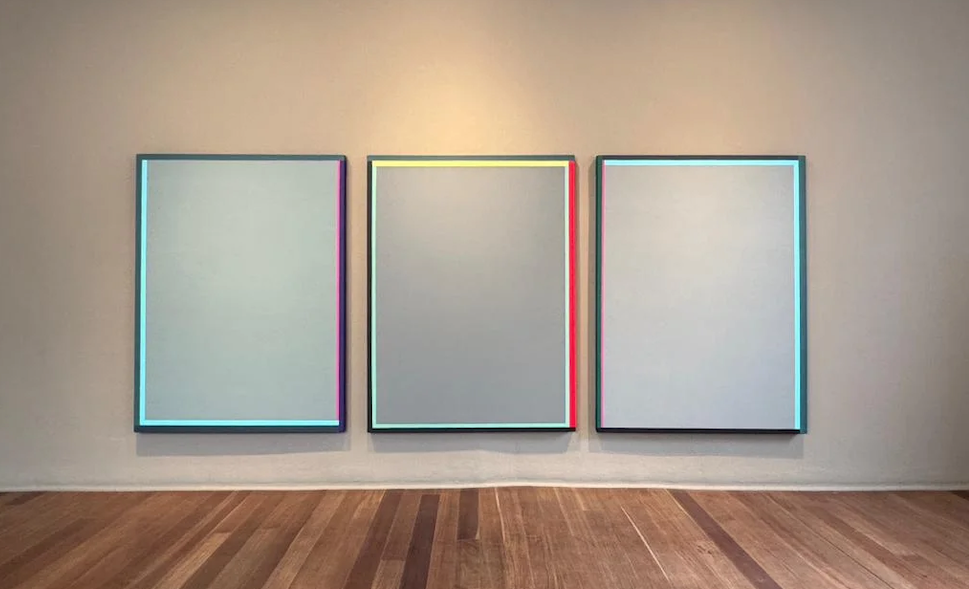
Looking inward can also be a way of expanding space. In Beatriz Olano's work, the canvas is not a definitive boundary, but rather a territory that can extend, transform, and establish new relationships with the place that contains it. This idea permeates *Al interior* (Inside) , the exhibition the artist is presenting at Espacio nueveochenta in Bogotá between September 3 and October 10, 2026.
The proposal stems from a meticulous observation of the exhibition space and the relationship each work establishes with the surrounding architecture. Olano does not conceive of his pieces as isolated elements, but rather as parts of a whole in which painting and space are in constant dialogue. The interior of the painting thus becomes a field of exploration where lines, forms, and colors construct relationships that can extend beyond the conventional limits of the work.
One of the fundamental aspects of Al interior lies precisely in this desire to overflow the canvas. Certain compositions transfer their lines and chromatic fields to the gallery walls, visually modifying the space and altering the perception of the place. The architecture ceases to be a mere container and becomes an active part of the artistic experience.
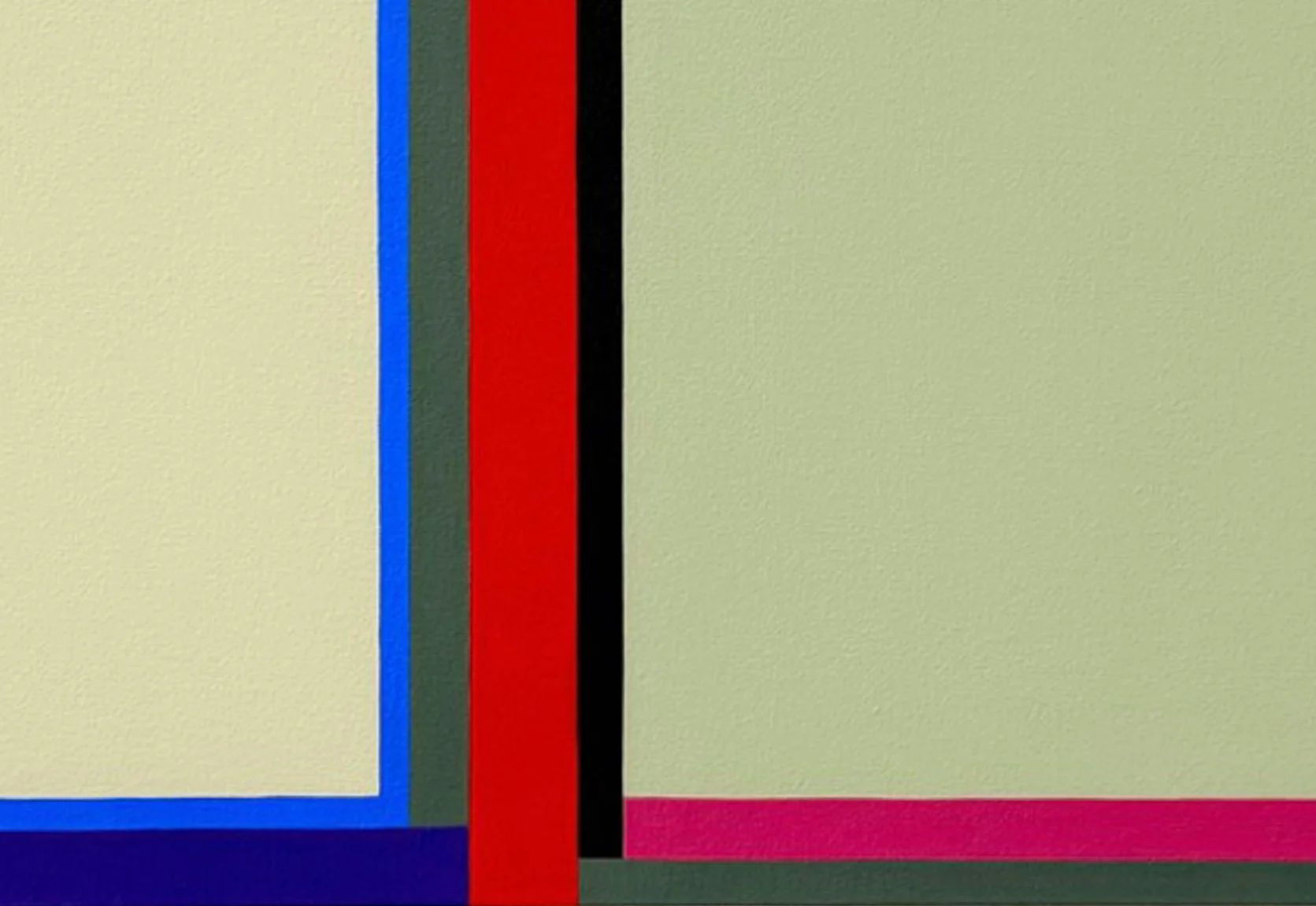
This shift between artwork and space allows Olano to investigate what happens within the painting itself. Each element establishes connections with the others, generating new areas of reading, visual paths, and possibilities for interpretation. The painting ceases to function as a closed surface and becomes an open structure, capable of extending and transforming its surroundings.
But the concept of interior also takes on an intimate dimension. The exhibition can be understood as an exploration of the artist's own creative process, that less visible territory where intuition, perception, and the decisions that precede each work come into play. Looking into the painting's interior also means looking into the interior of its creator.
In this sense, Al interior presents an exercise in introspection that allows Olano to re-examine his own artistic practice. The works function as spaces of exploration where the rational and the intuitive coexist, while the expansion of their forms into architecture externalizes a process that initially occurs within the canvas.
The exhibition ultimately proposes to open up and expand different kinds of interiors: that of the painting, that of the architecture, and that of the artist herself. In doing so, it generates new areas that can be explored visually and that modify our relationship with the work. Space no longer ends where the painting ends; it begins, precisely, where its boundaries cease to be evident.

You may be
interested
...