Exhibitions
The Museum of Fine Arts of Asturias connects centuries and perspectives
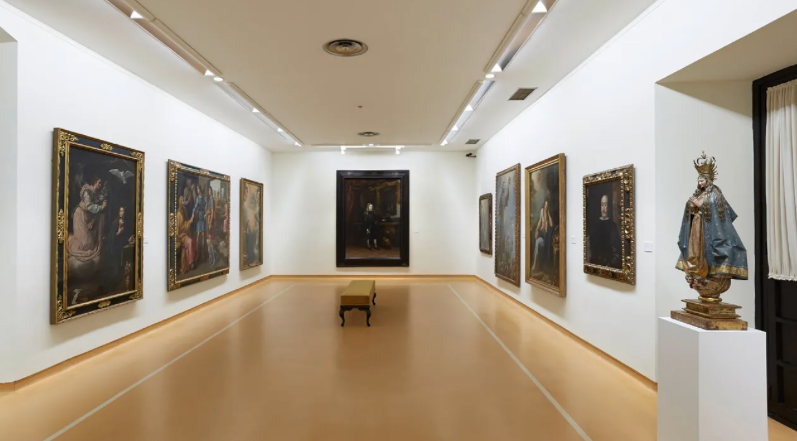
The Museum of Fine Arts of Asturias opens a new chapter in its programming with EXCHANGES , an exhibition that proposes a contemporary and cross-disciplinary review of its collections. The exhibition, which can be visited from June 4 to October 25, 2026, begins with a highly relevant question: how have the exchanges that have accompanied humanity throughout history transformed the way we relate to one another, construct identities, and interpret the world?
Globalization is the central theme of the exhibition, understood not only as a contemporary phenomenon but also as a historical process marked by displacements, contacts, influences, and transfers of all kinds. Its consequences, both positive and negative, are addressed from different political, cultural, economic, and social perspectives.
INTERCAMBIOS establishes associations between pieces from different periods and styles. The result is a network of connections that allows us to view familiar works from new angles and discover relationships that a traditional reading of the collection would hardly reveal.
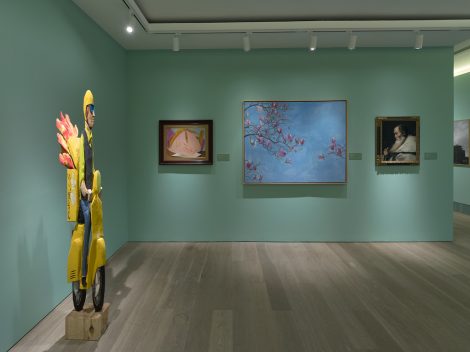
The exhibition brings together pieces from the museum's various collections: paintings, sculptures, drawings, prints, photographs, and applied arts. This collection also includes recent acquisitions and donations related to contemporary Asturian art, thus broadening the dialogue between historical heritage and current artistic practices.
This convergence of eras and languages allows us to address issues particularly relevant to 21st-century society. Sustainability, migration, individual and collective identity, privacy in the digital environment, new forms of spirituality, the democratization of information, hyperconnectivity, and multiculturalism emerge as some of the major themes explored throughout the journey.
One of the main aims of INTERCAMBIOS lies precisely in using historical works to formulate contemporary questions. The museum ceases to be presented solely as a place dedicated to preserving a specific heritage and becomes a space from which to interpret problems that continue to affect society.
Among the dialogues presented, the encounter between Juan de la Abadía the Elder and Evaristo Valle stands out. The relationship between these two artists allows for reflection on physical contact, tenderness, and closeness in a present dominated by speed, information overload, and constant stimulation. In contrast to the immediacy that characterizes much of our daily experience, the works reclaim the value of proximity and physical connection as forms of resistance.
Another section establishes a conversation between Juan Carreño de Miranda, Francisco de Goya, and Mónica Dixon to explore the transformation of forms of spirituality. This dialogue between artists separated by centuries allows us to observe how concerns linked to the transcendent do not disappear, but rather take on new forms and reappear in different languages and with different sensibilities.
Artistic influence is another fundamental aspect of the proposal. The encounter between El Greco, Pablo Picasso, and Antoni Clavé allows us to analyze how these artists engage with their predecessors and how art history is also constructed through processes of appropriation, inspiration, emulation, and transcendence. Tradition thus appears not as a closed territory, but as a material susceptible to continuous reinterpretation.
This approach to constructing the exhibition also transforms the role of the viewer. Instead of offering definitive answers, EXCHANGES proposes associations that require an active engagement and allow visitors to make their own connections between works, periods, and issues. The visitor, in a way, becomes another participant in this exchange.
The exhibition thus responds to one of the strategic lines of the new phase of the Museum of Fine Arts of Asturias: to re-examine the diversity and magnitude of its collections in light of the interests and concerns of contemporary society. The universal perspective of the proposal allows us to transcend the boundaries between disciplines and periods, understanding the collection as an open territory capable of generating new interpretations through the dialogue between past and present.
Curated by Dr. Laura Baños, EXCHANGES transforms the museum's collection into a space for encounter. The artworks cease to function merely as testimonies of specific eras and instead engage in conversations about some of the major contemporary challenges. The strength of this exhibition lies precisely in the tension between the historical and the current, an exhibition that understands the museum not as a place where the past remains static, but as a stage from which to continue questioning the present.

You may be
interested
...