Exhibitions
The MNBA reopens the Bernardelli Room with ten stories made into art
The Bernardelli Room reopens its doors with an exhibition that brings together ten works from the museum and recovers the narratives of the institution's first podcast.
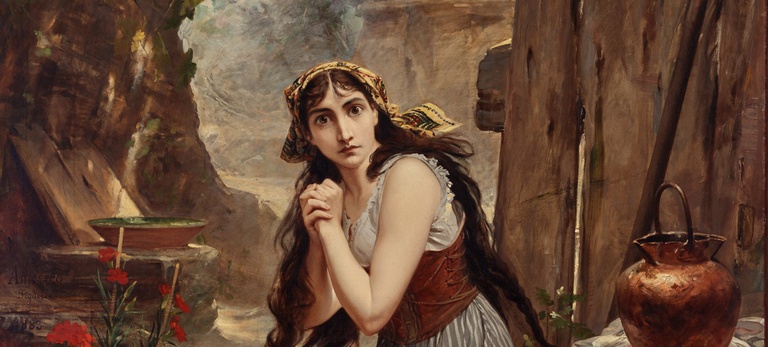
Brazil's National Museum of Fine Arts (MNBA/Ibram) has reopened one of its most emblematic spaces, the Bernardelli Room, which is hosting the exhibition "Histórias que a Arte Conta" (Stories that Art Tells) until August 28. The exhibition offers a journey through ten works from the museum's collection, told through the stories and narratives developed in the eponymous project, the MNBA's first podcast.
Curated by museum educator Simone Bibian, the exhibition brings to the physical space some of the narratives addressed in the podcast and also incorporates accessibility resources, such as interpretation in Brazilian Sign Language (Libras).
The reopening of the Bernardelli Room is thus presented as an opportunity to establish a dialogue between listening and visual experience. According to Bibian, the space becomes 'an artistic and poetic workshop' conceived as a place of encounter and experimentation, where the colors, dimensions, brushstrokes, forms, and materiality of the works expand the sensory experience initiated through the stories.
The selection brings together pieces by artists such as Firmino Monteiro, Pedro Américo, Chaves Pinheiro, Correia Lima, Raimundo Cela, José Maria de Medeiros and Rodolfo Amoedo, representatives of different generations, styles and moments of the 19th and 20th centuries.
Among the works on display, Antinous also stands out, an archaeological piece dating from between the 2nd and 3rd centuries AD and considered one of the oldest in the MNBA collection. The sculpture represents the young man associated with the emperor Hadrian and was also the inspiration for the graphic identity of the project "Stories that Art Tells."
Beyond presenting a selection of pieces from the museum's collection, the exhibition aims to highlight the capacity of artworks to generate narratives, connections, and new interpretations. The project seeks to transform the Bernardelli Room into a space where individual and collective stories can converge and construct new narratives based on the artistic experience.
The proposal stems from a central idea of its curator: stories create bonds and can generate a community capable of imagining other futures. Thus, the reopening of the room not only recovers a historic space within the museum, but also proposes a new way of engaging with its collection through words, listening, and observation.
You may be
interested
...