Exhibitions
Vain Thread, the memory that continues to stitch time
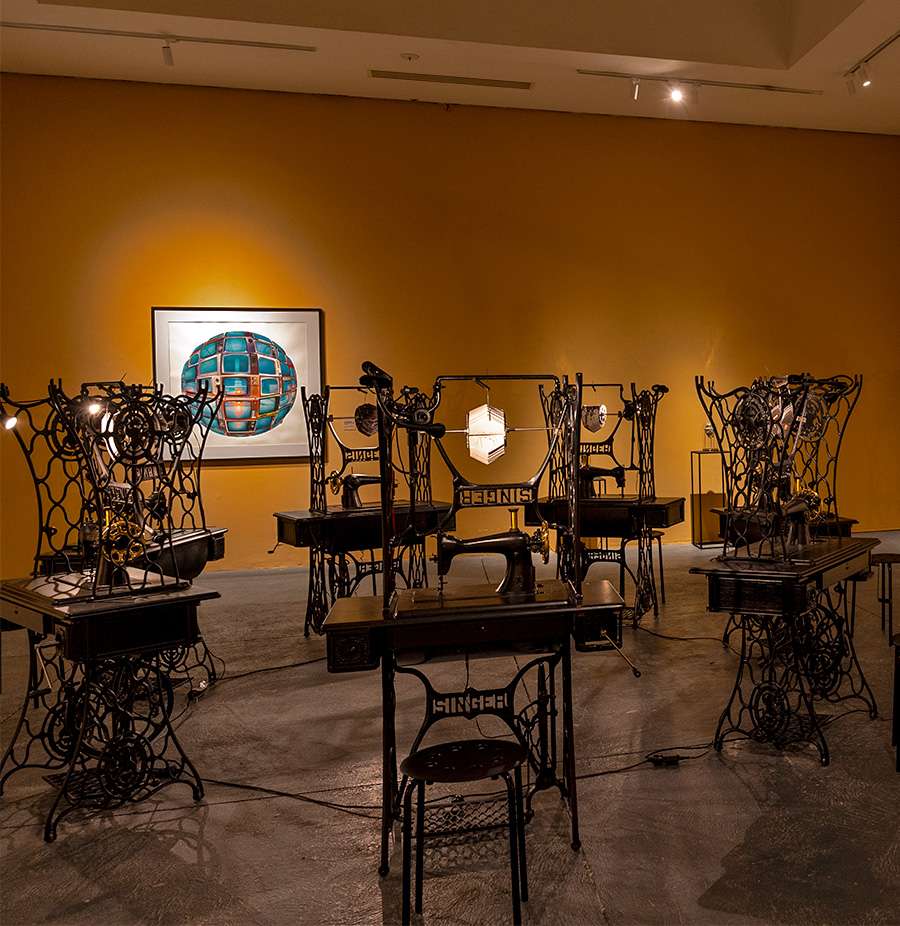
Room 2 of the Tolima Art Museum hosts, from July 9 to August 13, 2026, Hilo Vano , an exhibition by the Colombian artist Gonzalo García Gaitán, curated by Darío Ortiz, which investigates the relationship between memory, work and material culture based on an object deeply rooted in Latin American domestic history: the Singer sewing machine.
The installation brings together salvaged machines and looped animations that activate a choreography of repetitive movements, transforming these devices into technical bodies marked by the passage of time. Far from being limited to their original function, the machines appear as repositories of experiences, learning, and forms of transmission linked to care, autonomy, and everyday tasks.
In much of Latin America, the sewing machine was much more than a work tool. It was an integral part of family economies and accompanied generations of women and artisans, leaving a mark on the collective memory through repeated, precise, and silent gestures. Hilo Vano reclaims this legacy, placing it in a space of contemplation where mechanical movement acquires an almost choreographic dimension and memory manifests as a shared experience.
The exhibition's title itself encapsulates this perspective. "Vain Thread" combines the idea of weaving with the meaning of the Latin term "vanus ," associated with lightness, openness, and expansion. Memory thus ceases to be understood as a static archive and becomes a living network of relationships, where objects, gestures, and memories continue to intertwine, allowing us to imagine new forms of closeness and care.
Born in Bogotá in 1981, Gonzalo García Gaitán develops an artistic practice that moves between watercolor, drawing, and installation. A graduate in Fine Arts from the University of the Andes in 2007, his work investigates the relationships between technology, perception, and cultural memory, constructing imaginaries that connect the technocultural landscape with contemporary mediation devices. Series such as Panopticopias , focused on televisions, screens, and visual architectures, have consolidated a trajectory marked by reflection on surveillance, nostalgia, and media culture.


You may be
interested
...