Exhibitions
Mexico and the invention of a destination
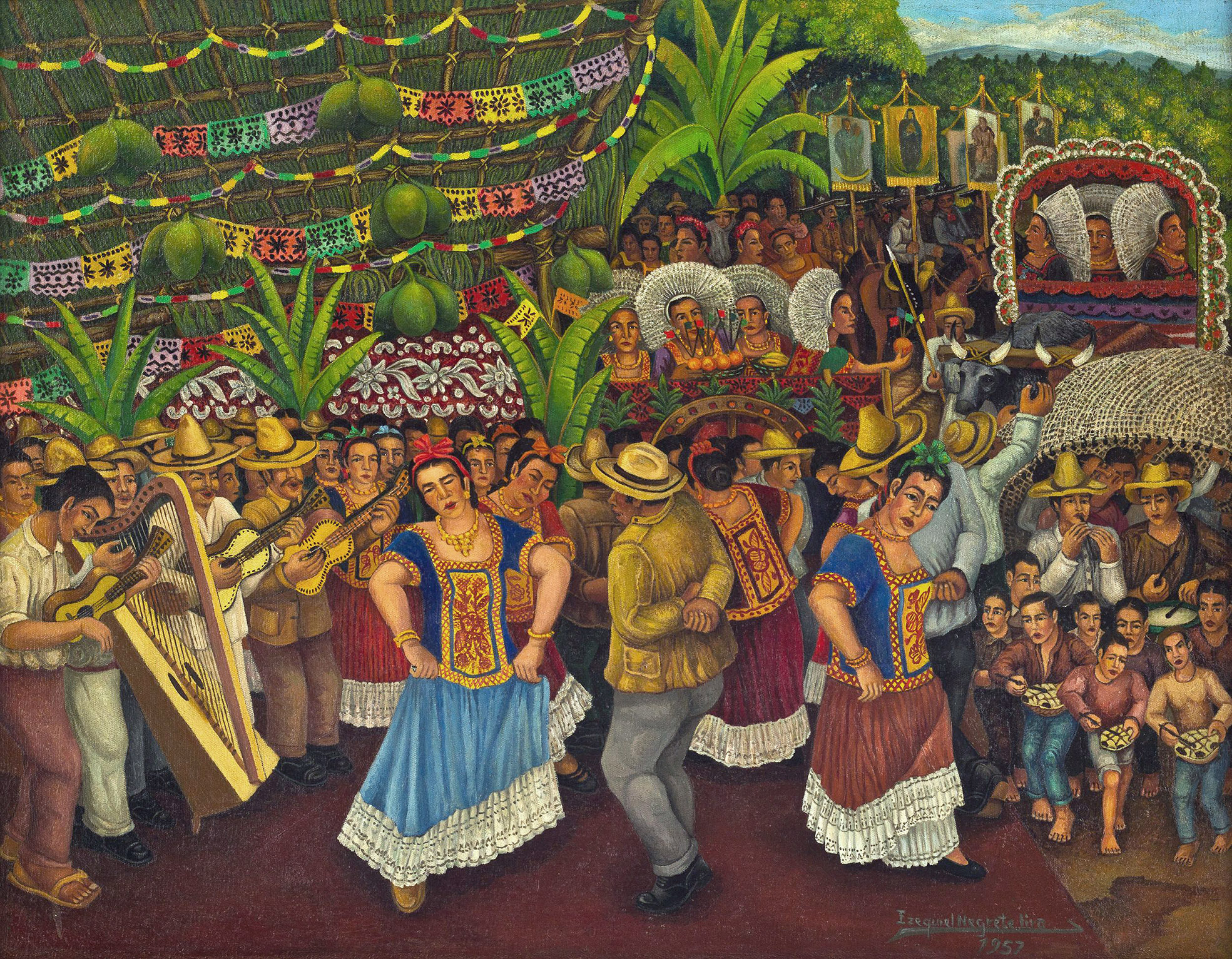
Throughout the 20th century, Mexico not only transformed its territory through highways, hotels, and tourism infrastructure; it also constructed a powerful image of itself. Landscapes, monuments, traditions, and figures circulated in paintings, photographs, posters, magazines, and postcards, becoming recognizable symbols both within and beyond its borders. This history of representation and visual construction is the central theme of Mexico: Route and Destination , the new exhibition presented by the National Museum of Art (MUNAL).
The exhibition brings together nearly 380 pieces that trace how artists, designers, photographers, and institutions participated in creating a national imaginary linked to tourism, culture, and Mexican identity. More than a historical overview, the exhibition proposes a reflection on the mechanisms by which a country becomes a shared image.
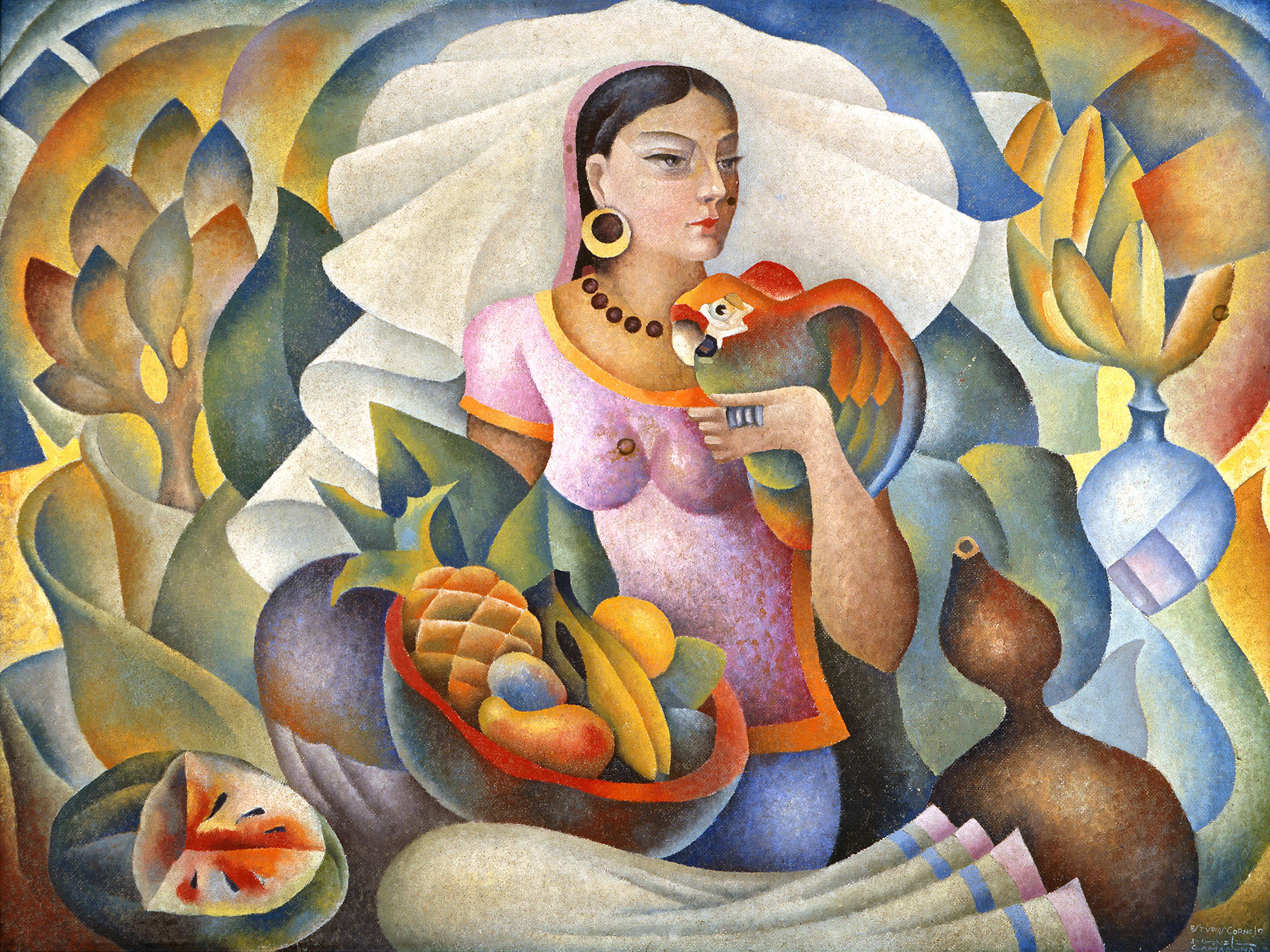
Jorge González Camarena, El Perico, 1927, National Museum of Art, INBAL.
The journey begins at a pivotal moment in the nation's modernization: the construction of the Pan-American Highway in 1936 and the development of new communication routes that connected previously distant regions. This infrastructure facilitated the movement of travelers, but also the circulation of images that disseminated an idealized vision of Mexican territory. Maps, travel guides, illustrated magazines, and postcards all contributed to projecting Mexico as an attractive destination for both domestic and international visitors.
The curatorial proposal is structured around four thematic sections. The first, Imaginaries, examines early representations of the country's landscape, heritage, and cultural diversity. Routes and Destinations addresses the growth of tourism and the development of itineraries that solidified certain places as cultural landmarks. In Tourist Bodies, the focus is on clothing, customs, and human diversity as emblems of national identity. Finally, the Epilogue presents Miguel Covarrubias's Production Map of the Mexican Republic (maritime routes) , a work that allows us to understand the role of the hotel industry in disseminating an idyllic and modern image of Mexico.
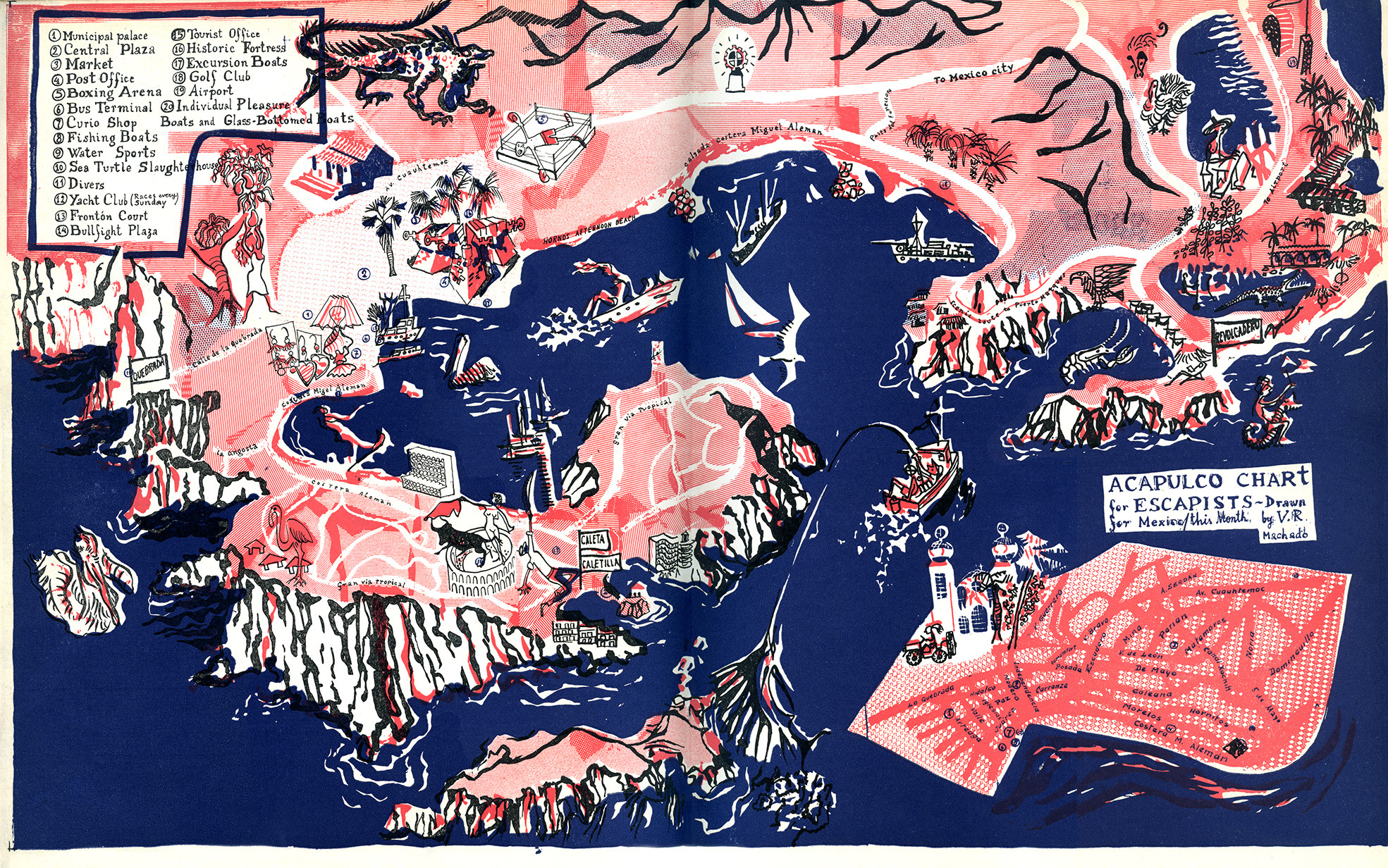
VR Machado, Acapulco Chart for escapists, 1957, National Museum of Art, INBAL.
The exhibition establishes a dialogue between artistic disciplines and objects of modern visual culture. Painting, photography, film, and design coexist with posters, maps, illustrated magazines, tourist guides, and postcards, as well as with pieces of furniture and jewelry that demonstrate the breadth of media used to shape popular imagery.
Among the represented artists are Angelina Beloff, Vita Castro, Cordelia Urueta, Diego Rivera, Miguel Covarrubias, Carlos Mérida, Gerardo Murillo “Dr. Atl”, Jorge González Camarena and Alfonso X. Peña, whose works allow us to observe different ways of interpreting and projecting Mexican identity.
Beyond its historical value, Mexico: Route and Destination poses a contemporary question: how do these images constructed during the last century engage with the current challenges of heritage conservation, environmental sustainability, and mass tourism management? The exhibition invites us to reconsider the relationship between representation, memory, and the tourism industry, reminding us that every idea of nationhood is also a cultural construct.
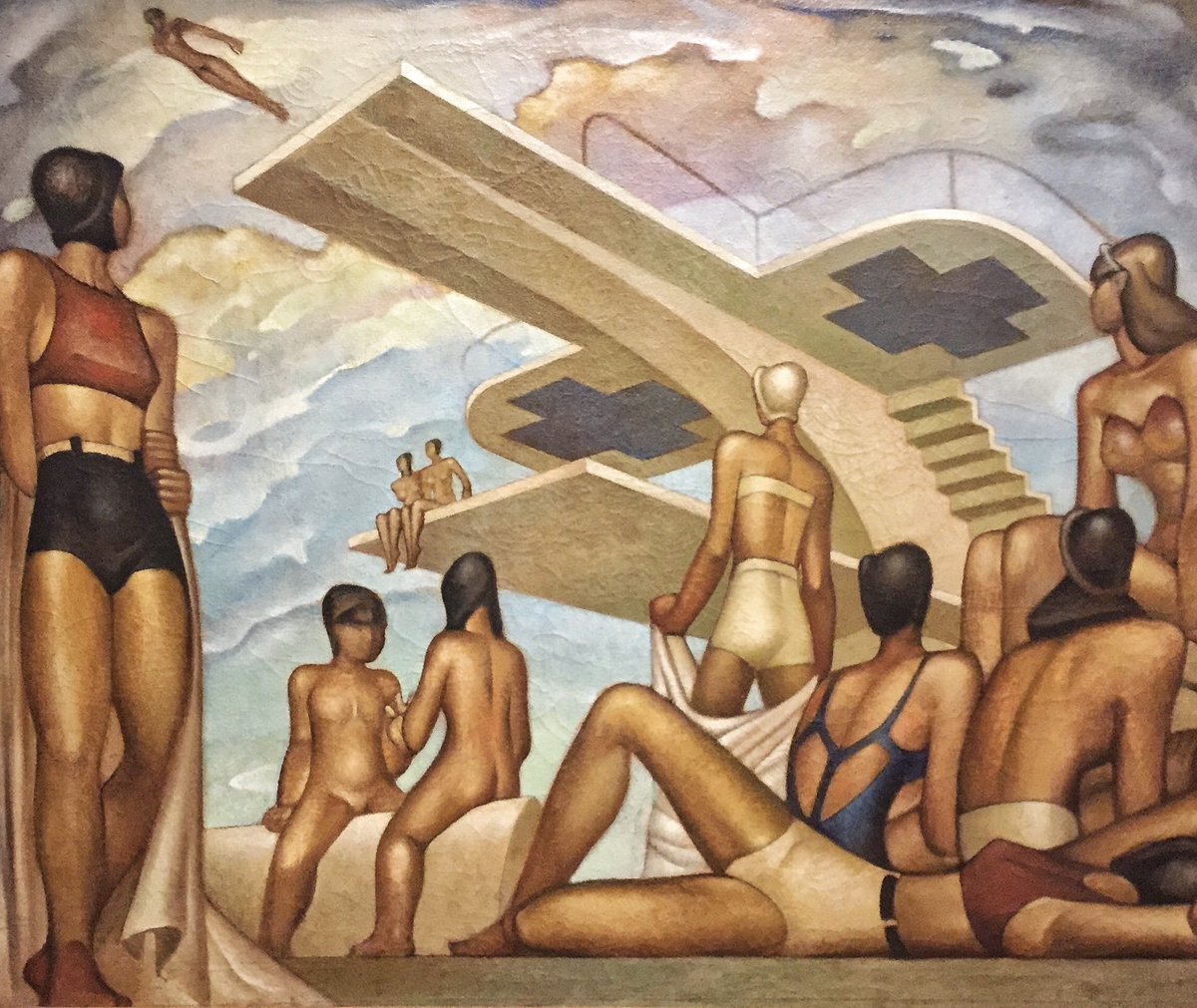
Jorge González Camarena, The Bathers, 1957, National Museum of Art, INBAL.
The exhibition will remain open until February 14, 2027 in the temporary exhibition halls on the ground floor of the National Museum of Art, offering an opportunity to revisit the visual history of Mexico and understand how art contributed to defining the image of a country that learned to look at itself and project itself to the world.

You may be
interested
...