Exhibitions
Vasarely 120 or the geometric vertigo that anticipated the contemporary world
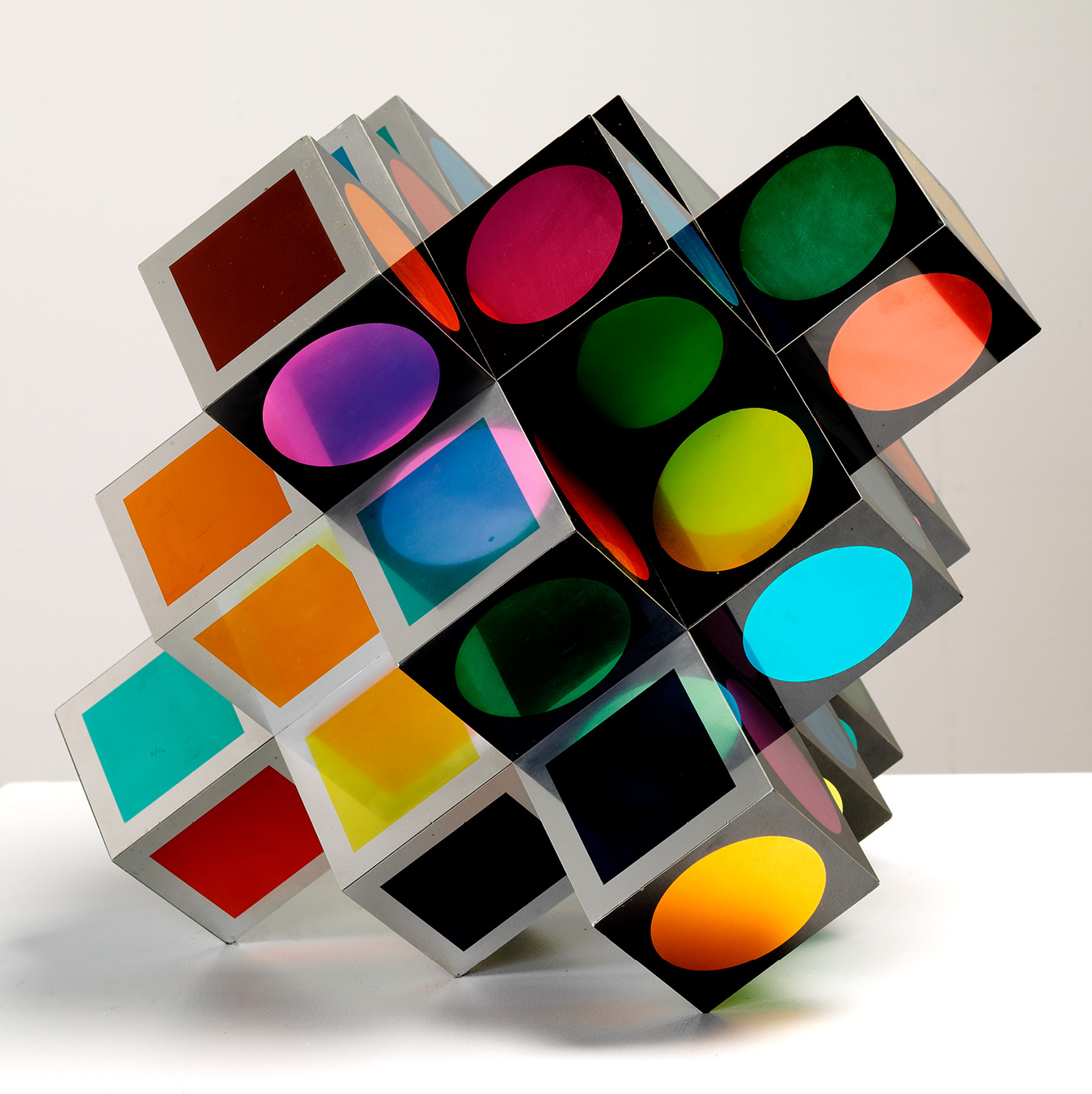
At the heart of Budapest's Museum of Fine Arts, the Vasarely 120 exhibition is more than just a celebration of Victor Vasarely's birth anniversary. This ambitious retrospective functions, above all, as a critical re-examination of one of the most influential—and paradoxically, most absorbed by popular visual culture—artists of the 20th century. Organized into five major chronological sections, over 140 works, accompanied by previously unseen documents, photographs, and audiovisual material, meticulously reconstruct the trajectory of a creator who understood, before anyone else, that the art of the future would be perception, system, and movement.
The exhibition proposes a clear thesis: Vasarely was not merely the 'grandfather of Op Art,' that convenient label that turned him into a decorative icon of the sixties and seventies. He was, in reality, a radical visual thinker who transformed geometry into an emotional language and turned science into a poetic tool. His work does not seek to represent the world; it attempts to reprogram our gaze.
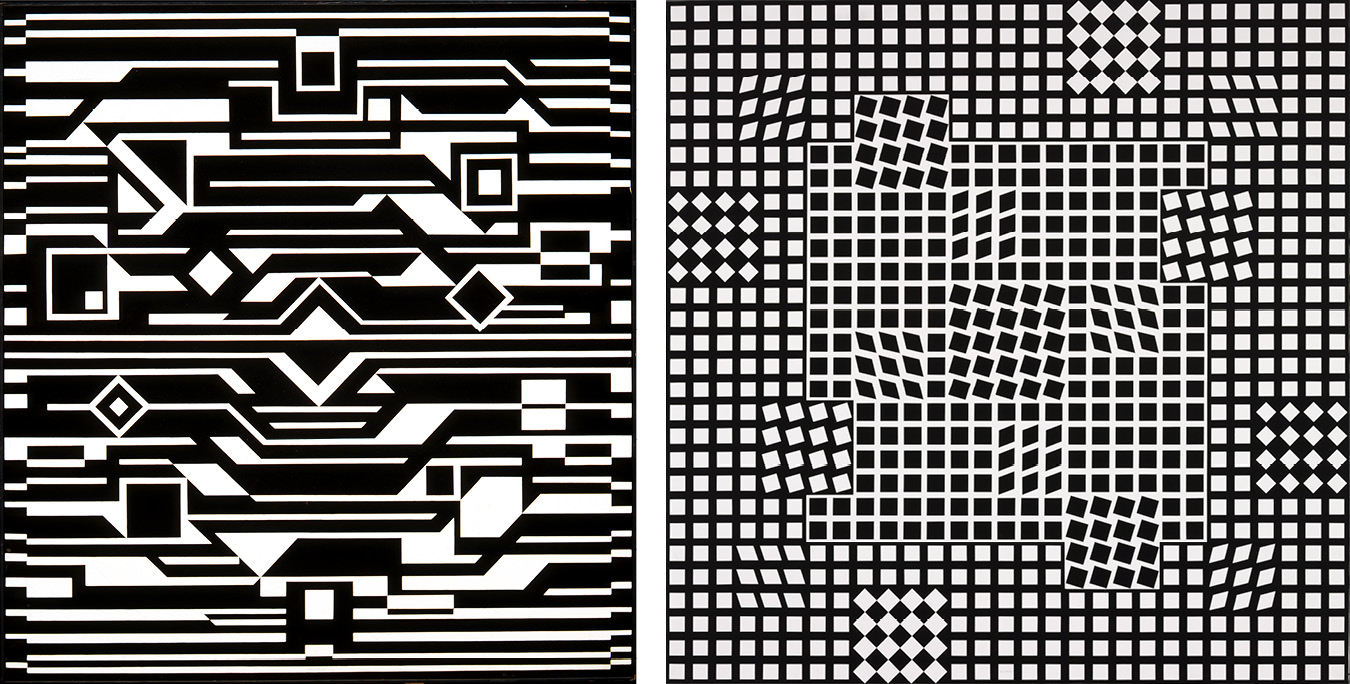
Victor Vasarely: Gizeh, 1955-1962 and Tlinko-F 1956-1962.
The exhibition begins with his figurative experiments and early graphic works, where his obsession with structure and formal synthesis is already evident. However, the true conceptual core emerges after his enrollment at the Mühely Academy in Budapest in 1929, considered at the time the Hungarian equivalent of the Bauhaus. There he absorbed the idea of a “total art” based on geometry, functionality, and the integration of disciplines. This training would mark all his subsequent work.
The exhibition aptly highlights how Vasarely understood early on that art and science were not opposing realms, but rather complementary systems. In his own words, both could “form an imaginary construction in harmony with our sensibility and contemporary knowledge.” That phrase runs throughout the retrospective like a programmatic statement.
In contrast to the celebrated optical compositions of the 1960s and 70s—those vibrant grids of squares, circles, and chromatic modules that seem to expand and contract before the viewer—the visitor experiences an ambiguous sensation, somewhere between fascination and disorientation. The surfaces appear to sink, rotate, bulge, or visually collapse. The painting ceases to be a static object and becomes a perceptual event.
What is extraordinary is that, even decades after their creation, these works still seem contemporary. In times dominated by screens, digital interfaces, and algorithmic realities, Vasarely's visual investigations acquire an unexpected relevance. His modular patterns anticipate both digital aesthetics and the mechanisms of visual saturation in contemporary culture. Long before generative design software, Vasarely already conceived of the image as a programmable structure.
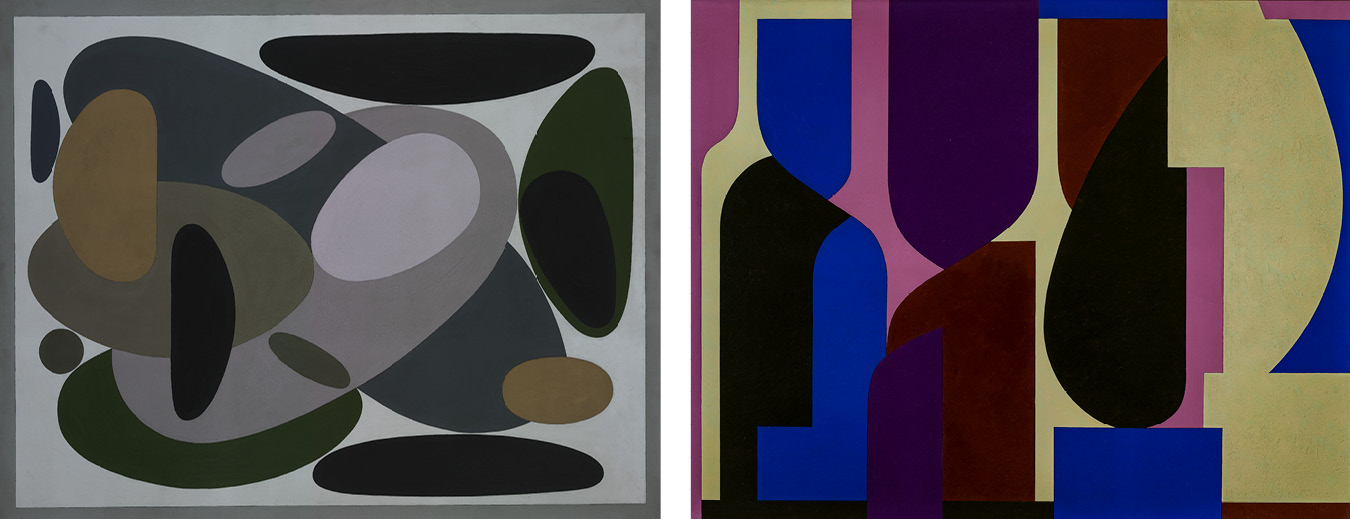
Victor Vasarely, Vessant, 1952 and Amir, 1953.
The retrospective also recovers a frequently overlooked dimension: the artist's profound social idealism. Vasarely dreamed of liberating art from the elitist space of the museum and integrating it into architecture, urban planning, and everyday life. He aspired to a democratic, reproducible, and collective art, capable of transforming the modern urban experience. His visual utopia was less about the exclusive object than about expanded design.
In this sense, Vasarely 120 avoids falling into decorative nostalgia and restores intellectual complexity to a body of work often reduced to mere optical illusion. The exhibition demonstrates that behind each chromatic vibration there existed a rigorous, almost mathematical, system of thought, where color, form, and movement functioned as variables in the same perceptual equation.
Veronika Pócs's curatorial work also achieves something rare: showcasing the complete coherence of an artistic career developed over decades without losing conceptual intensity. From exercises linked to the Bauhaus spirit to the monumental optical compositions of his later years, everything seems to stem from a unique and persistent investigation into the infinite possibilities of geometry.

You may be
interested
...