Exhibitions
Bernardí Roig facing the spiral of violence
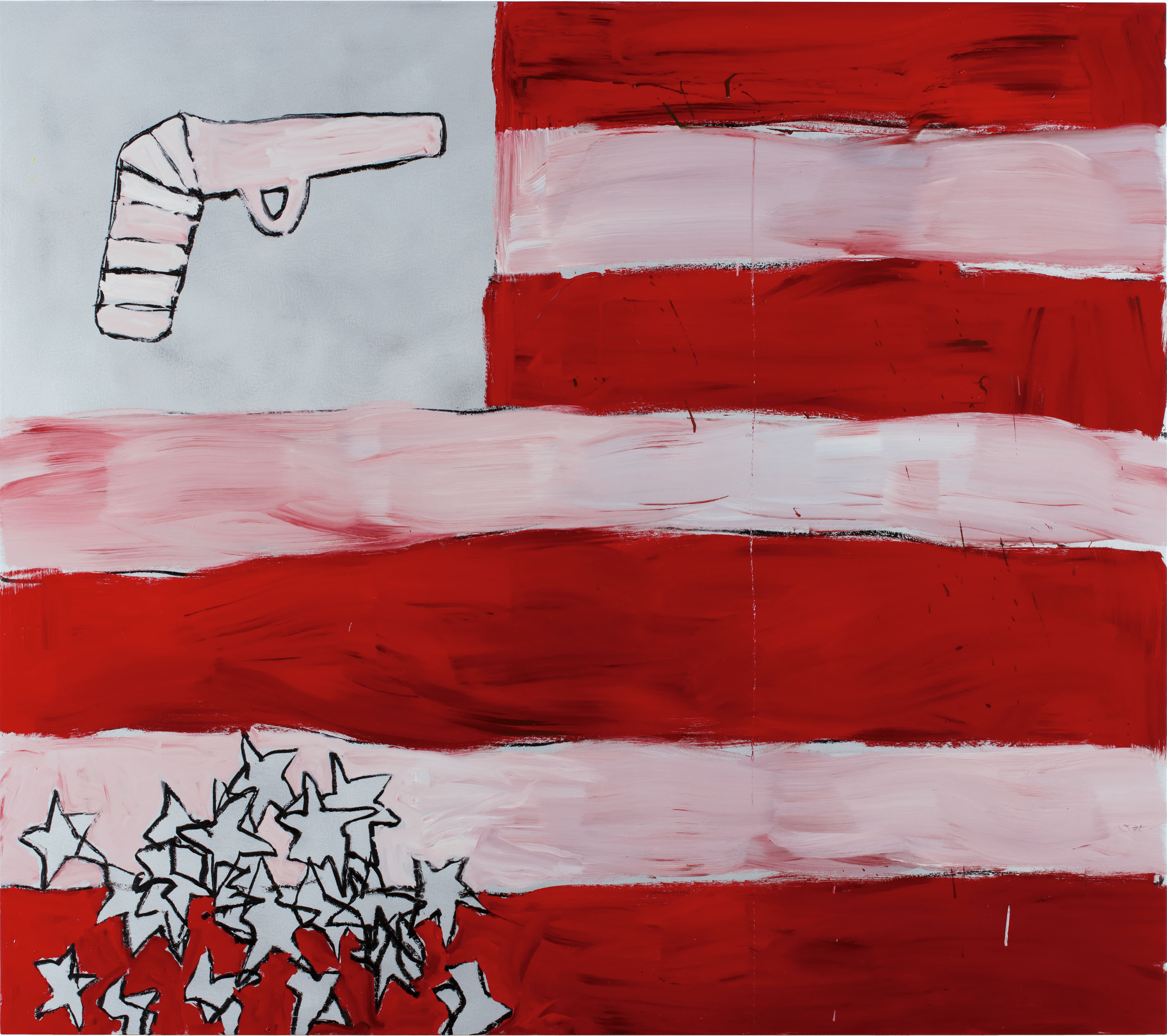
From April 16 to June 27, 2026, the Galerie Klüser in Munich will host Aggression. Against the Spiral of Violence , a group exhibition bringing together some of the most influential names in international contemporary art to issue a warning about the current political and social climate in the Western world. In this context, the artist Bernardí Roig (Palma, 1965) will participate with several of his most emblematic pieces, reaffirming his commitment to critical art that questions the mechanisms of power, censorship, and contemporary alienation.
The exhibition arises as a direct reaction to what the organizers describe as “the dark times in which we live,” noting in particular the rise of authoritarian rhetoric and the risk of degenerating into new forms of totalitarianism. Donald Trump’s return to the center of American politics appears as one of the exhibition’s conceptual catalysts, although the project broadens its scope to encompass an international landscape marked by violence, polarization, and the erosion of democratic consensus.
The director of Galerie Klüser also links the title and content of the exhibition to the most devastating contemporary conflicts: the Israeli offensive in Palestine and the war waged by Vladimir Putin in Ukraine. From this perspective, Aggression is presented as an urgent reflection on political aggression, media manipulation, and the progressive normalization of violence.
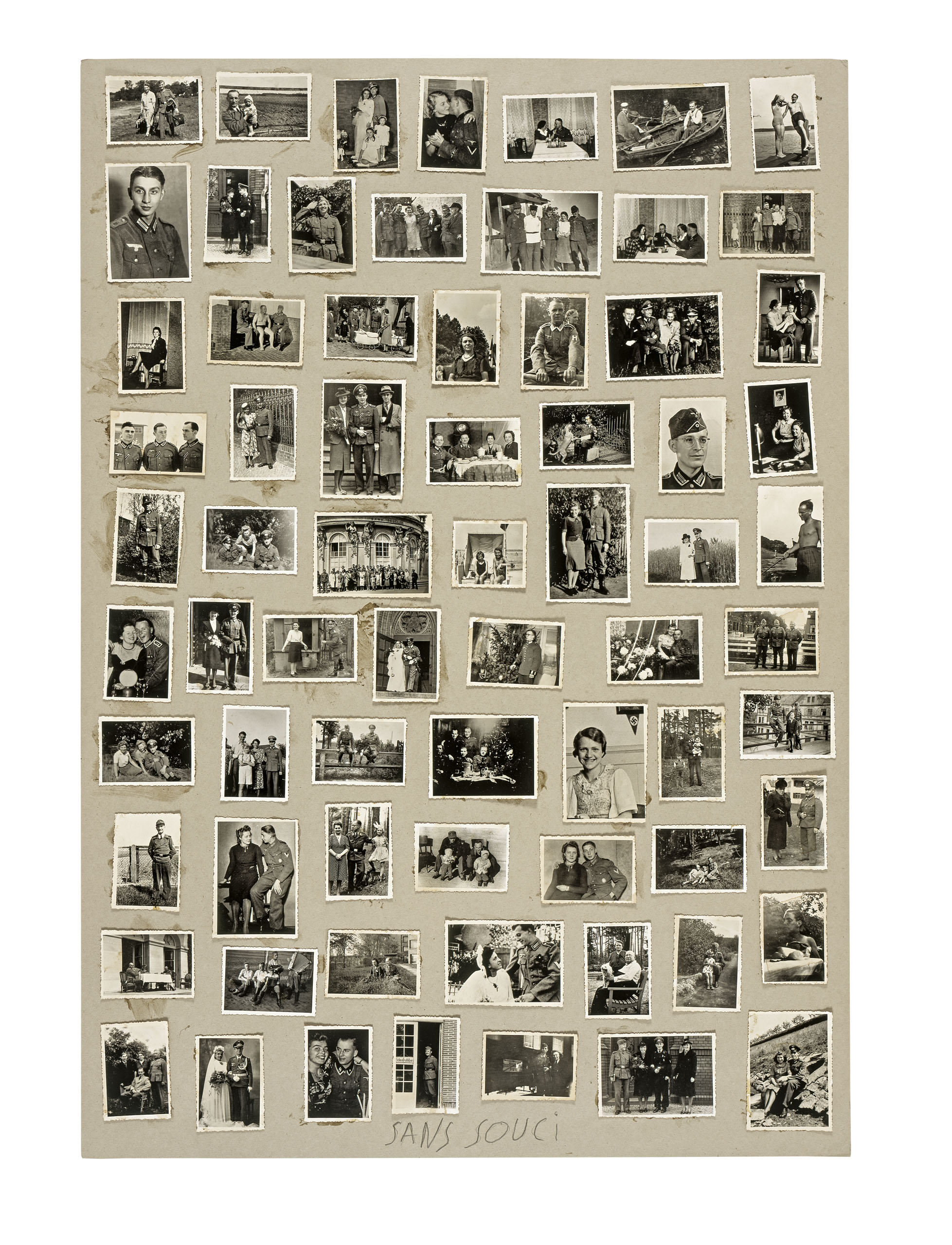
Christian Boltanski, Sans Souci, 1992.
Bernardí Roig presents in Munich some of the most recognizable images from his artistic universe: figures deprived of their voices, symbolically mutilated faces, and critical reinterpretations of cultural icons like Andy Warhol. These works, far from being mere aesthetic representations, function as metaphors for a society where freedom of expression and critical thinking seem increasingly threatened.
The exhibition also brings together works by Claudio Abate, Joseph Beuys, Christian Boltanski, James Brown, Tony Cragg, Jack Goldstein, Jannis Kounellis, Robert Longo, Olaf Metzel, Robert Motherwell, Mimmo Paladino, Sean Scully, Ernesto Tatafiore and Andy Warhol, forming a collective journey where different generations and artistic languages converge on the same concern: the weakening of democratic and humanist values.
“The rules-based international order and international law are being systematically undermined and replaced by the law of the jungle,” the organizers denounce. “Aggression, violence, anger, incitement, lies, and blackmail are spreading with little regard for the humanitarian consequences.”
The curatorial statement also underscores the close relationship between democracy and artistic freedom. According to the exhibition, individual freedoms can only be guaranteed within robust democratic systems, while totalitarian regimes have historically demonstrated their capacity to destroy independent creation through ideological control, political and economic pressure, and the elimination of cultural and academic spaces.
Drawing inspiration from Hannah Arendt's concept of vita activa and the critical thinking of Karl Popper and Joseph Beuys, the exhibition champions the role of art as resistance against the imposition of singular narratives. While the works may not produce immediate political transformations, they do generate images capable of remaining in the memory and altering the viewer's perception in the face of the constant flow of information and propaganda.

You may be
interested
...